


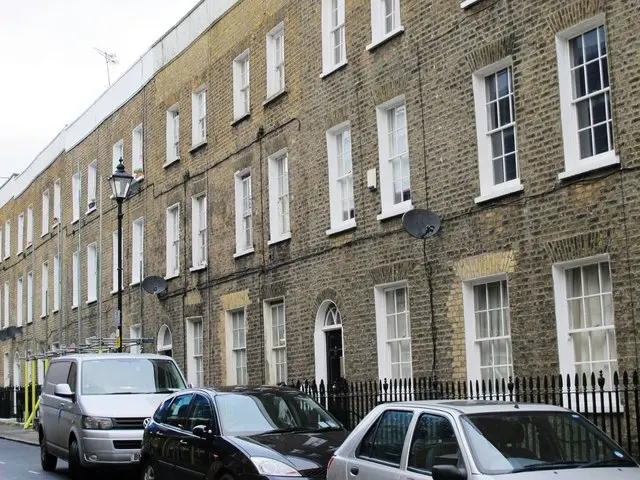
Londoners are under-paying £3.1 billion a year in property tax relative to the true value of their homes, according to a new report – with households in the rest of England over-paying in return.
The Resolution Foundation published a briefing note, “Home Economics”, today (Thursday 24 September 2026), examining how England taxes residential property and setting out a roadmap to replace council tax and stamp duty with a fairer proportional tax.
The £3.1 billion figure covers council tax and stamp duty combined for 2024-25, measured against homes’ true value, the think tank says. Because residential property taxes have become so far removed from modern house prices, the capital – where values have soared – ends up with a vast effective subsidy, while households in regions where prices have grown more slowly pick up the bill.
At the heart of the problem is council tax’s reliance on property valuations from 1991. Since 1995, prices have risen 7.3-fold in Inner London against only 4.2-fold in the North East, according to the foundation’s analysis. The Times reports that the system now fails to reflect a sevenfold price-rise in London since 1991.
The distortion is set to deepen further. By 2030-31, the average effective annual tax rate on a £100,000 home will be almost three times that on a £1 million home, the report finds – a regressive pattern that turns the usual logic of taxation on its head. Put simply, the less your home is worth, the heavier the relative burden is likely to become.
Around 80 per cent of households in London benefit from the current system; in the North East, 85 per cent of households are on track to overpay by an average of £710 a year by 2030-31. Looked at another way, by 2030-31 four in five London households would be paying an average of £950 a year too little in property tax, while 61 per cent of households across England would be overpaying by an average of £680 a year, per The Times.
“Our housing taxes fall heaviest on those least able to afford them and have turned into a huge £3.1 billion subsidy for those living in London – paid for by households across the rest of England,” said Hannah Aldridge, senior research and policy analyst at the Resolution Foundation.
The report also takes aim at stamp duty, which it says gums up the housing market by preventing around 100,000 house purchases a year – blocking moves such as downsizing or relocating for work. The foundation calls for the tax to be scrapped altogether, arguing that a levy which punishes people for moving cannot be reconciled with a healthy housing market.
Taken together, the two main housing taxes are set to raise £74 billion by 2030-31. The UK raises 3.7 per cent of GDP from property taxes, almost twice the OECD average of 2 per cent, the report notes – yet the way that money is collected is, in the foundation’s view, among the least fair in the developed world.
The think tank’s alternative is a revenue-neutral proportional tax charged at 0.7 per cent of a property’s value and paid by occupiers, with a rebate scheme protecting poorer households and a mechanism for deferring bills for those who are asset-rich but cash-poor. Under the proposal, a home’s tax bill would track its current value rather than a decades-old estimate, while the rebate and deferral options are intended to ensure poorer households are protected and that people who own valuable homes but have little income are not forced to pay bills they cannot afford in one go.
It is important to be clear about what this is: a think tank’s proposal, not government policy. No ministers have signed up to the roadmap, and any change on this scale would require legislation and political agreement. The report is intended to start a debate about reform, not to announce a decision.
That debate lands as council tax continues to dominate local politics in the capital, including a recent row over council tax rises in Wandsworth. And while the tax argument rages, the pressure on housing supply has not eased: east London recently saw grant funding released for 326 social rent homes in Ilford.
For now, the numbers in “Home Economics” make an uncomfortable read for a city where the price of a home has long since parted company with the bill that lands on the doormat. How – and whether – that gap is ever closed will be a political question for the years ahead.
Reporting based on the Resolution Foundation’s “Home Economics” briefing, published 24 September 2026.