


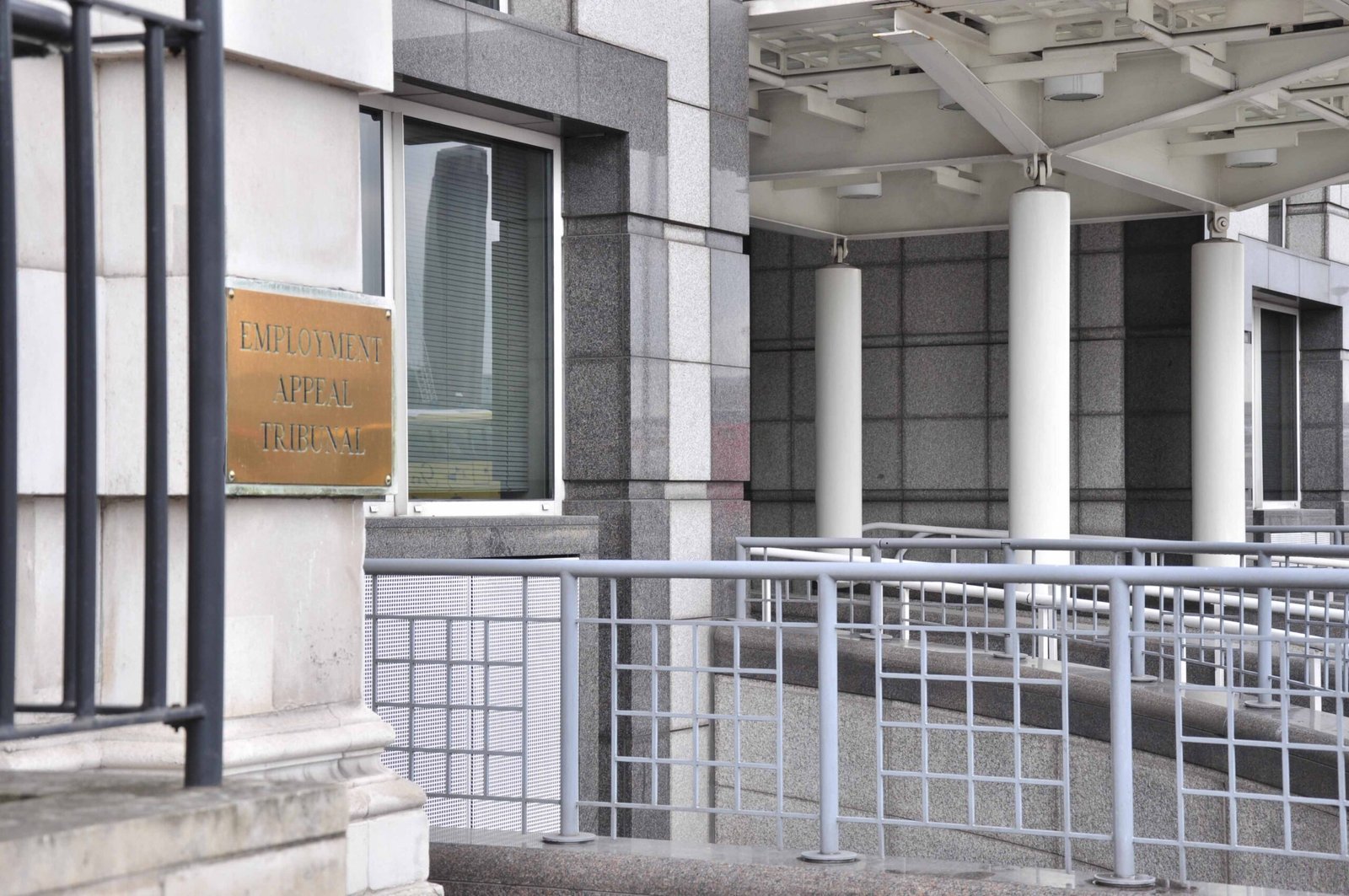
A former Metropolitan Police sergeant has been awarded more than £10,000 after an employment tribunal ruled the force discriminated against him on grounds of race and victimised him when it cancelled his internal appeal at the last minute.
Mr H Esealuka brought the claims against the London police force at the East London employment tribunal, arguing he had been discriminated against over the handling of an unsatisfactory performance process. Employment Judge Overton upheld his race discrimination and victimisation claims, finding the Met had victimised him in refusing to hear his appeal against the first stage of its Unsatisfactory Performance Policy (UPP).
The judge awarded Esealuka £10,349, comprising injury to feelings and interest. His remaining claims — including disability discrimination and harassment claims — were found not to be well founded and were dismissed.
Esealuka joined the Metropolitan Police in 2014 as a police constable and was promoted to probationary detective sergeant in late 2021. He is disabled due to diabetes and was diagnosed with bladder tumours in 2018. Following an occupational health report in March 2019, adjusted duties were put in place, including the flexibility to work from home — an arrangement he took up from March 2020. He later requested a move back to the Risk Reduction Unit in Stratford, where he had worked when first promoted, and offered to split his week between the Romford office and home working.
The dispute centred on how his line managers handled his sickness absence and performance review. In late 2022 his then line manager, DI Akhigbe, suggested he attend the office once a week. After being signed off work with anxiety and depression in November 2022, Esealuka applied on 4 January 2023 to work part-time to manage his health conditions. The request was rejected and he went off sick on 11 January.
DI Iqbal subsequently became his line manager. On 20 February, Esealuka was sent an informal action notification concerning unsatisfactory attendance, warning he could be subject to a formal process if there was no improvement. A personal development review completed in March 2023 found he “was not yet competent” in his role and that “he had not demonstrated competencies in the management of teams and could not yet be confirmed in the rank of Detective Sergeant” — a review Esealuka disputed as “inaccurate and unfair”.
On 23 March, Esealuka was invited to a UPP meeting on 12 April. Afterwards he received an outcome letter containing an improvement notice requiring his return to work and improved attendance by June 2023, alongside notice of his appeal rights — an appeal had to be lodged within seven working days. Esealuka said he had been told he would receive the outcome by post, in line with policy, as he did not check emails while on sick leave. He only saw the emailed outcome on 26 April — the appeal deadline.
His appeal, which referred to his anxiety and depression, was accepted and a hearing was arranged with Acting DCI Bishop. But on the day of the hearing, Bishop cancelled it on the basis the appeal had not been made in time. A stage 2 UPP began in October 2023. Esealuka returned to work in January 2024 and resigned from the Met in May 2024.
In her judgment, Judge Overton said “the decision at the last possible minute to refuse to accept his appeal is surprising and seems deliberately difficult and designed to obstruct the claimant”. She added: “Given the history of findings of institutional racism against the respondent, given the surprising nature and timing of this decision, we find that the burden of proof passes to the respondent and the respondent has failed to provide a cogent explanation for the behaviour.”
The judge found the second stage of the UPP had been commenced in line with Met policy, with “no evidence that this decision of Mr Iqbal was tainted by race or that a hypothetical white comparator would have been treated differently”.
Esealuka had also told the tribunal he knew of white officers who had been off sick for longer and had not been served with a UPP, though he gave no further details. His claims of discrimination arising from disability, indirect disability discrimination, failure to make reasonable adjustments and disability-related harassment were all dismissed.
The ruling adds to a string of employment cases involving the capital’s police force. Another former Met officer was recently jailed over a “crash for cash” insurance fraud, while a dismissed Met officer is challenging his sacking over podcast remarks. Separate discrimination cases continue to surface across London, including a Barnet school referred to the equality watchdog over its uniform policy.
Source: Personnel Today, 21 September 2026; Employment Tribunal judgment: Mr H Esealuka v The Commissioner of the Police for the Metropolis (3201639/2023), published on GOV.UK.