New all-female boxing promotion will turn fight nights into funding for abuse survivors
A new women-led boxing promotion launching in London will put a quarter of its profits into programmes for women affected by domestic abuse and gender-based violence. Fight Back Promotions has been set up by former GB boxer Lesley Sackey, three-time national champion Shelly Sweeney and former WaterBear executive Poppy Mason-Watts, and will stage its first fight night at Ladbroke Hall on 28 November 2026.
The inaugural event has been deliberately timed to fall within the international 16 Days of Activism against Gender-Based Violence, an annual campaign that runs from late November into December. The founders say every event the promotion puts on will follow the same funding model: 25 per cent of the profit made will go directly to Fight Forward CIC, the community interest company that delivers trauma-informed boxing programmes for women.
For Sackey, the launch is the latest chapter in a story that began with her own escape. After leaving an abusive relationship, she returned to competitive boxing at the age of 40, with her three daughters watching from the crowd. That comeback did more than restart a career she had set aside — it gave her the germ of an idea about what boxing could do for other women who had lived through abuse.
From one comeback to a community
Since 2023, Sackey has run Fight Forward CIC as a community interest company delivering trauma-informed boxing sessions for women in London. What started as one boxer’s return to the ring gradually grew into a community where women train together, learn to fight and rebuild their confidence side by side.
“I’ve watched women walk into our sessions carrying things nobody else could see, and walk out standing taller,” Sackey said. “Training together, learning a skill and choosing to step into the ring can mean a great deal.”
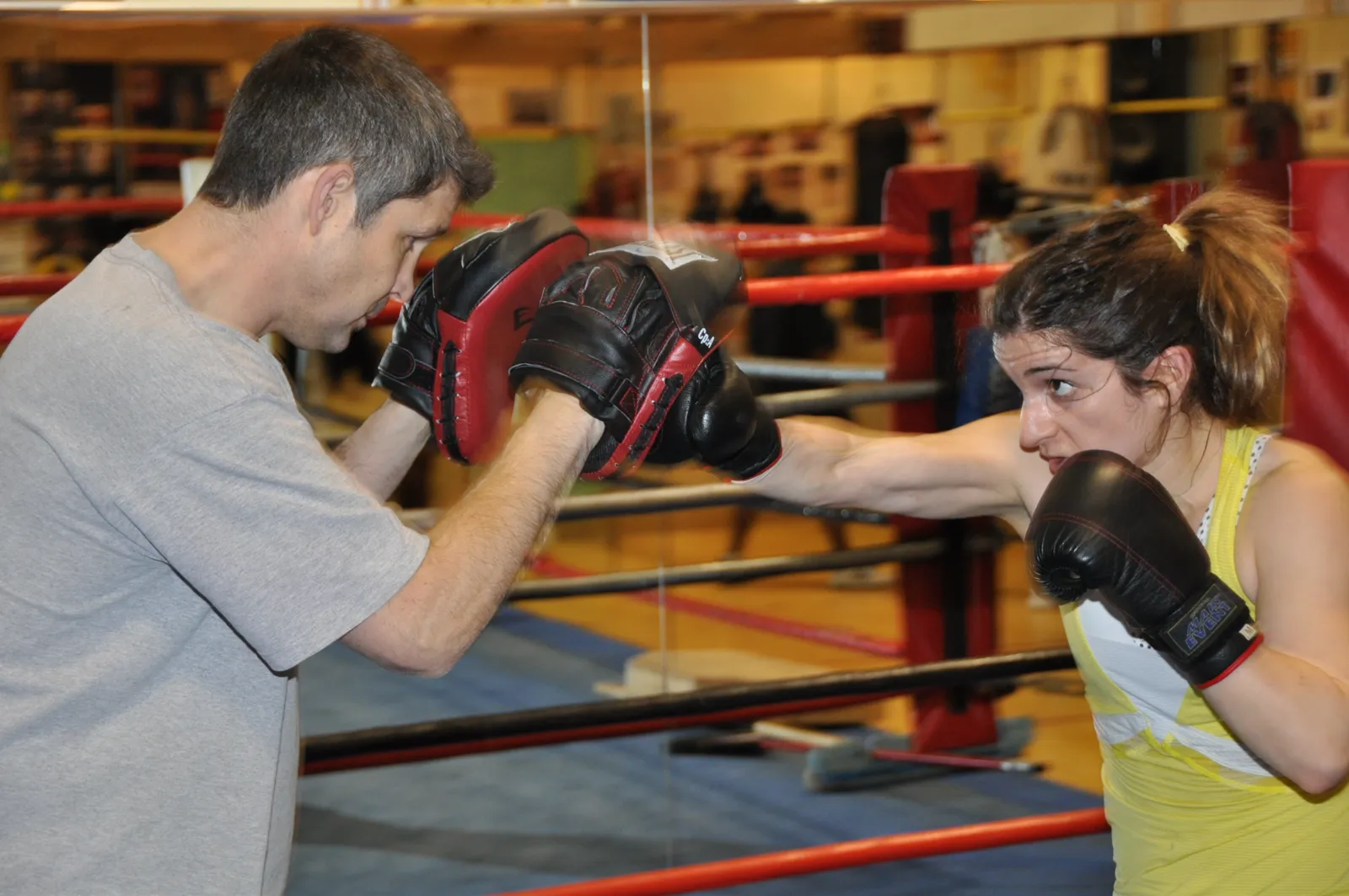
The CIC’s ten-week Fight Back programme combines boxing technique, controlled sparring and strength and conditioning work with workshops on resilience. Participants work towards a live fight night of their own, supported throughout by female coaches with competitive boxing experience. Funded places mean women affected by abuse can take part without paying programme fees.
The model is deliberately practical. Travel and childcare costs are covered, along with gloves, hand wraps, gum shields, coaching sessions and fight-night registration — removing the everyday barriers that can keep women out of sport long after the abuse itself has ended.
A team built from boxing and business
Sackey brings the boxing pedigree. A former GB international, she has spent her post-competitive years coaching and building programmes for women who have experienced trauma. Shelly Sweeney, a three-time national champion, adds elite fighting experience to the founding team. The third co-founder, Poppy Mason-Watts, comes from outside the ring: she previously served as Chief Growth and Impact Officer at WaterBear, the impact-focused media platform, and brings the commercial and organisational experience the promotion will need to run ticketed fight nights.
The split reflects the venture’s dual purpose. On the one hand it is a serious boxing promotion, intended to give women’s boxing a bigger stage in a sport that has historically been dominated by men. On the other, it is a funding engine for the CIC — a way of turning a commercial fight night into subsidised places for survivors.
Why boxing, and why now
The link between boxing and recovery from abuse is not new, but it remains underexplored. Survivors of domestic abuse often live with the physical and psychological effects for years: damaged confidence, hyper-vigilance, a sense of disconnection from their own bodies. Boxing — a sport built on footwork, guard, timing and controlled aggression — gives people a way to inhabit their bodies again on their own terms.
The scale of the need is enormous. According to the World Health Organization, nearly one in three women worldwide have experienced physical or sexual violence by an intimate partner, or sexual violence by someone else, at some point in their lives. In Britain, domestic abuse services have faced years of funding pressure even as demand has stayed high.
Fight Back Promotions is betting that a different funding model can help fill part of that gap — not charity galas or grant applications, but a night at the fights where a quarter of the profit quietly flows into the ring where the next cohort of survivors is training.
What happens next
The first event at Ladbroke Hall on 28 November will set the template: professional and amateur women’s bouts on the card, a London crowd, and a direct line between the ticket sales and the CIC’s next round of funded places. Further events are expected to follow through 2027.
The founders say they want the promotion to do for women’s boxing what the CIC has done for its participants — create a space where women are not a sideshow but the main event. If the funding model holds, every roar of the crowd will mean more women stepping into a gym for the first time, carrying things nobody else can see, and starting the slow work of standing taller.