A new plaque has been unveiled in Highgate’s Waterlow Park to mark the spot where one of England’s most celebrated 17th-century poets is believed to have spent much of his adult life.
The memorial to Andrew Marvell stands on Highgate Hill, close to where his long-lost cottage once stood. It was unveiled by the Mayor of Camden, Trisha Leman, on Thursday, October 8.
The plaque carries a colour illustration of the cottage, reconstructed from a photograph taken in 1869, alongside lines from Marvell’s verse. Among them is the celebrated line “Time’s winged chariot hurrying near”, together with a reference to a garden “with roses overgrown”.
As well as honouring the poet, the plaque recognises Marvell’s reputation as a fearless political satirist who evaded the censors of his day by publishing anonymous writings that attacked both religion and government.
Dr Matthew Augustine, of the Andrew Marvell Society, told those at the unveiling that Marvell partly prepared his satire The Rehearsal Transpros’d while living at Highgate, adding that his anonymous attacks were so feared that rewards were offered to anyone who could unmask the author.
“Prudent and self-effacing, he was also attracted to danger and enjoyed thwarting his enemies and pursuers,” Dr Augustine said of the poet.
He also recounted the claim of Marvell’s housekeeper, Mary Palmer, who said after the poet’s death in 1678 that she had secretly married him — raising the possibility that the couple’s domestic life played out within the walls of the Highgate cottage.
Dr Augustine described the plaque as a bridge connecting past and present, telling the audience that anyone who stops to read it becomes, however briefly, one of Marvell’s constituents — an heir to the liberties the poet championed.
A message was also read from Professor Julianne Werlin of Duke University, president of the Andrew Marvell Society, who said Marvell’s verse had the power to carry readers back in spirit to the Highgate of the 1600s.
The plaque was funded and commissioned by The Highgate Society, with members Francis Wilkinson, Michael Hammerson and Valerie Doulton leading the project. Francis Wilkinson said the society hoped the memorial would give everyone who passes a reason to find out more.
The original cottage was demolished in the late 19th century. Today, all that remains on the site is the bottom step of its entrance, still visible at the foot of the park wall.
A London County Council plaque has marked the location for 130 years, but the society felt it was easily overlooked. Members hope the new memorial will help far more people discover Highgate’s link with one of England’s greatest poets — and join a growing roll call of blue plaques across the capital marking the lives of notable Londoners.
Who was Andrew Marvell?
Born in 1621 in Winestead, Yorkshire, Andrew Marvell was a poet, satirist and politician whose work has endured for more than three centuries.
His best-known poems include “To His Coy Mistress” — the source of the famous “Time’s winged chariot” line — “The Garden” and “An Horatian Ode”. He served as MP for Hull from 1659 until his death in 1678, and was buried at St Giles-in-the-Fields in London.
The Highgate cottage is thought to have been his refuge during the years when his anonymous satires made him a marked man. The new plaque is the latest addition to Highgate’s rich literary heritage, which also includes a blue plaque honouring the Dickens family.
Finding the plaque
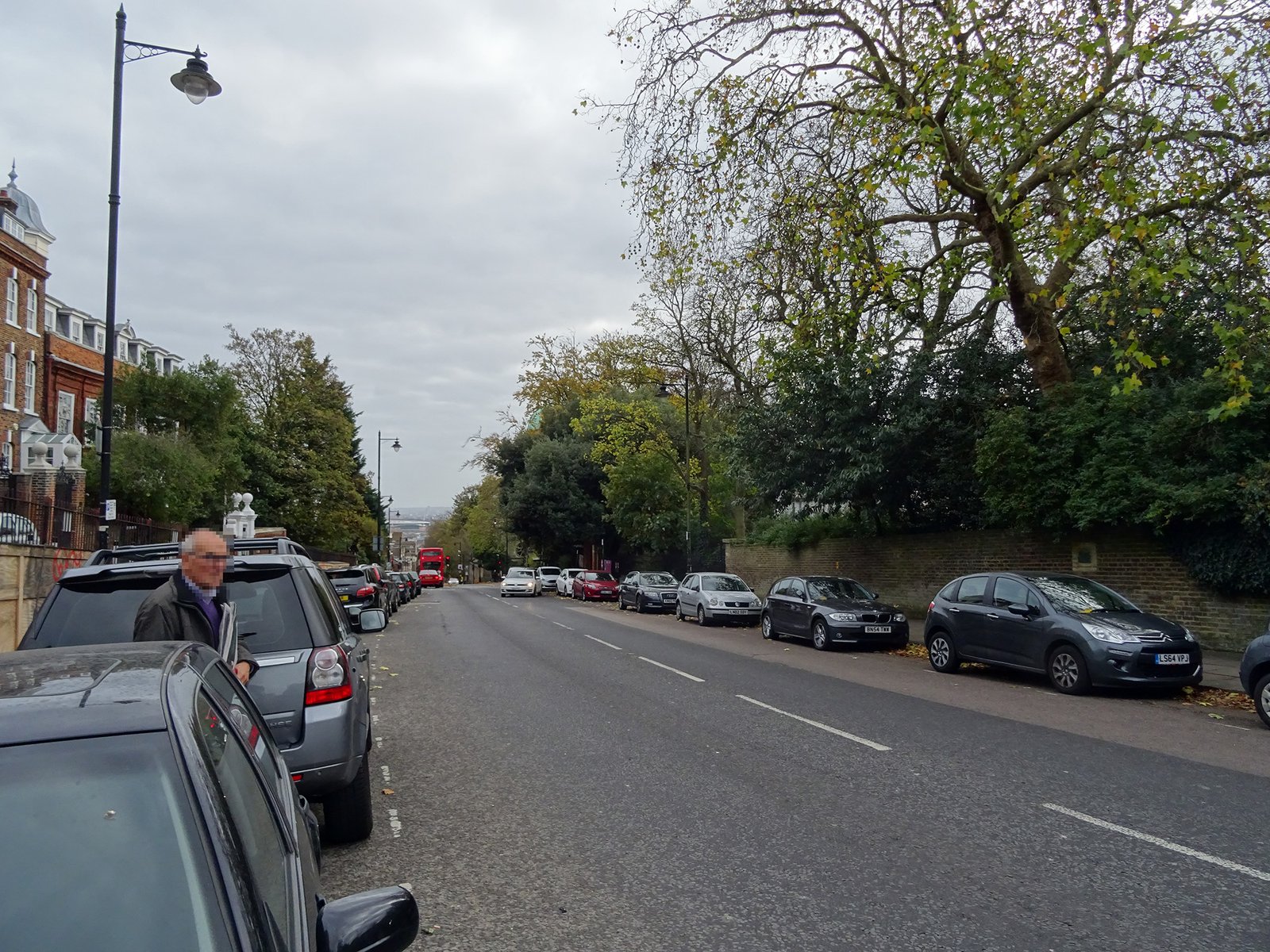
The plaque stands in Waterlow Park on Highgate Hill in north London. The park is free to enter. Look for the memorial near the park wall, close to the surviving bottom step of the cottage’s entrance — the last physical trace of Marvell’s Highgate home.
Marvell’s Highgate in brief
- 1621: Andrew Marvell is born in Yorkshire.
- 1678: Marvell dies; his housekeeper Mary Palmer later claims they secretly married.
- 1869: The Highgate cottage is photographed.
- Late 1800s: The cottage is demolished, leaving only the entrance step.
- c.1896: A London County Council plaque marks the site.
- 8 October 2026: The new Highgate Society plaque is unveiled by the Mayor of Camden.