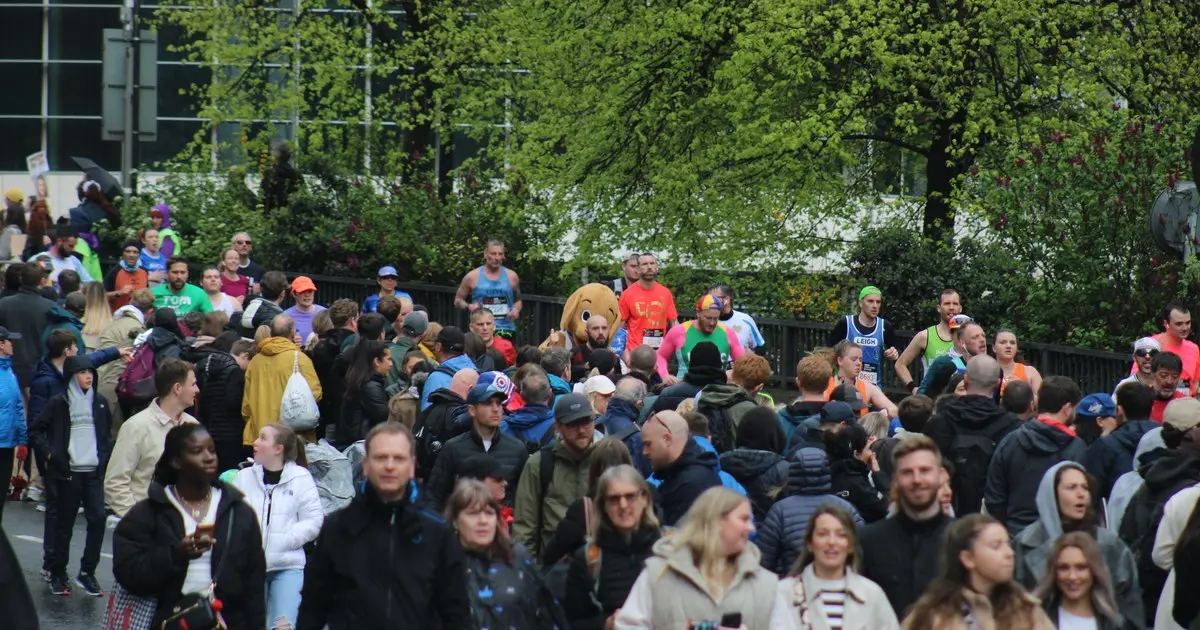
A mum who suffered a cardiac arrest after watching the London Marathon has been reunited with the paramedics and police officers who saved her life.
Mel Baker, 52, from Somerset, collapsed while travelling home with her 26-year-old daughter Nichea after spending the day in London supporting a friend running the 2024 marathon. She said meeting her rescuers face to face was something she had to do.
“It was amazing to meet the paramedics and police officers. I felt like I had to thank them and I’m so glad to have met them. They saved my life. I couldn’t write what I wanted to say, it just wasn’t enough — so this meeting was perfect. Their response was absolutely amazing. If it wasn’t for them, I wouldn’t be stood here today. I cannot thank them enough.”
Her daughter Nichea described the terror of the moment: “It was really scary. I was on my own and I panicked as I wasn’t sure what was going on. We had spent the day in London as one of our friends was taking part in the Marathon. And on our way back home my mum just dropped to the floor. Luckily there were people around and we called 999. And very quickly the paramedics and police officers turned up and did CPR on her. It happened really quickly — without the paramedics and police officers she wouldn’t be here today.”
A race against the clock
Paramedics from the London Ambulance Service and officers from the City of London Police, some of whom had been working at the event, rushed to help. Despite immediate chest compressions and defibrillation, crews could not restart Ms Baker’s heart at the scene — so they switched to a specialist treatment pathway instead.
Paramedics contacted the nearest ECMO centre at St Bartholomew’s Hospital to warn the team she was on her way. ECMO — extracorporeal membrane oxygenation — temporarily takes over the work of the heart and lungs, pumping oxygenated blood around the body while doctors treat whatever caused the cardiac arrest.
Ms Baker is the first survivor to benefit from a new protocol that lets paramedics take patients straight to specialist hospital teams and equipment without going through an emergency department first. Without that intervention, it is unlikely she would have survived.
Keir Rutherford, an advanced paramedic in critical care, said: “When we arrived, Mel had been defibrillated once by police officers but unfortunately remained in cardiac arrest. Timely intervention during cardiac arrest is key to maximise chances of survival. Mel is alive and back with her family today because of the fast actions of those who responded — including our paramedics, the police officers and the clinicians at St Bartholomew’s. Without them she would have died.”
Why minutes matter
Survival from a cardiac arrest outside hospital hinges on what happens in the first few minutes: someone calling 999, someone starting chest compressions, and a defibrillator being used quickly. Every minute without defibrillation reduces the chance of survival significantly, which is why the presence of police officers — many of whom now carry defibrillators and are trained to use them — at big public events can be the difference between life and death.
The LAS says cases like Ms Baker’s show why it keeps investing in clinical innovation, from the new direct-to-specialist pathway to closer working with police at major events. The reunion itself took place at the ambulance service’s Waterloo headquarters, where Ms Baker finally got to say in person what she said she could never quite put into writing.
Major running events remain a fixture of the capital’s calendar — half marathons regularly close roads around Hyde Park and Westminster, with bus diversions to match. For one Somerset family, though, the 2024 marathon will always mean something else entirely: the day strangers in uniform refused to let a mum slip away.