Dame Joanna Lumley has unveiled a plaque in Hampstead honouring Edith Durham — the Edwardian explorer known in Albania and Kosovo as “The Queen”.
The ceremony took place on Tuesday, October 13, outside 20 Ellerdale Road, where Durham lived for a decade. Ambassadors, historians and authors joined a 20-strong crowd for the unveiling.
Who was Edith Durham?
Edith Durham was a British traveller, artist and writer who journeyed through the Balkans at the turn of the 20th century — venturing into regions considered too dangerous for European men to visit, let alone a lone woman.
She became a passionate advocate for Albanian independence, lobbying for the country’s cause in the years leading up to 1912, when Albania declared independence from the Ottoman Empire. Her books on Balkan life and politics were widely read and influential.
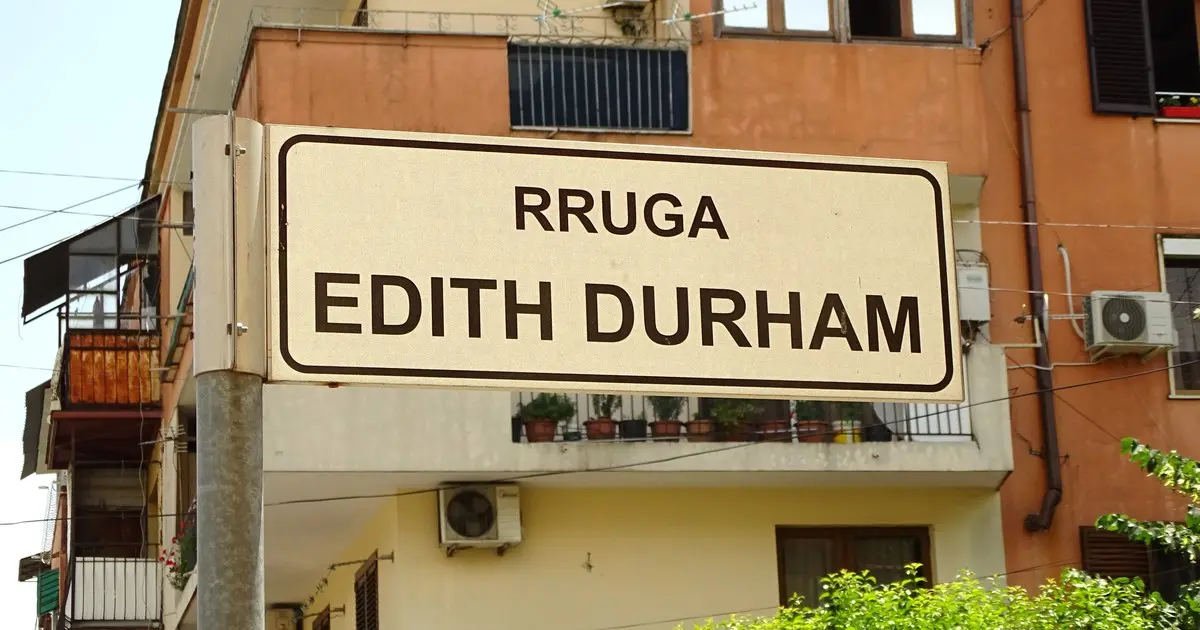
In Albania and Kosovo, her name is known to every schoolchild. Schools and streets are named after her — a legacy few British travellers can claim.
“The Queen”
Albanian ambassador Uran Ferizi told the gathering outside Durham’s former home that her name is known to every schoolchild in Albania and Kosovo, where she is referred to as “The Queen”.
He said Albanians are grateful for her advocacy at a pivotal moment in their nation’s history.
An honour, says Lumley
Dame Joanna — the Absolutely Fabulous and Amandaland star — told the crowd it was “an honour to commemorate such a remarkable woman”.
She has previously said: “My admiration for Edith Durham and her adventurous spirit and lovely prose is off the scale: and it is a huge privilege to be at the unveiling of the plaque commemorating this extraordinary traveller and passionate supporter of Albania.”
Lumley is a longstanding supporter of both Albania and Kosovo, the countries Durham travelled to and loved.
Historians in attendance
Also in attendance was historian Sir Noel Malcolm, president of the Anglo Albanian Association, who has written extensively on Albania and the Balkans.
He reminded the group that Durham travelled to parts of the Balkans considered too dangerous for European men to visit — and that without her support and advocacy, modern Albania would be much smaller than it is.
Kosovo ambassador Ilir Kapiti joined Lumley outside the Ellerdale Road address for the unveiling.
A Hampstead life
Durham lived at the Ellerdale Road address for 10 years. She later spent her final decades at a house in Glenloch Road, Belsize Park.
For a woman celebrated with streets and schools in the Balkans, she had remarkably few memorials in her native country — until now. The Hampstead plaque redresses that imbalance, placing her story literally on the map where she lived.
Hampstead’s plaque tradition
Hampstead has one of the richest concentrations of commemorative plaques in London, marking the homes of writers, artists, scientists and radicals who shaped the area’s bohemian character.
From Sigmund Freud to John Keats to countless literary figures, the plaques of Hampstead tell the story of a neighbourhood that has long attracted — and been shaped by — extraordinary minds.
Edith Durham’s plaque adds a new dimension to that story: not a writer of fiction or a painter of portraits, but a woman whose courage and advocacy helped shape the borders of a nation.
Why it matters now
The unveiling comes at a time when the contributions of women explorers and adventurers are being reassessed and celebrated. Figures like Durham — who operated in spaces closed to most women of her era — are finally getting the recognition they deserve.
For Hampstead, it’s another chapter in a long history of honouring remarkable residents. For Albania and Kosovo, it’s a reminder that their “Queen” is finally being celebrated in the city she called home.
London Streets has been covering Hampstead’s Christmas lights switch-on and the Tollington Arms fire.