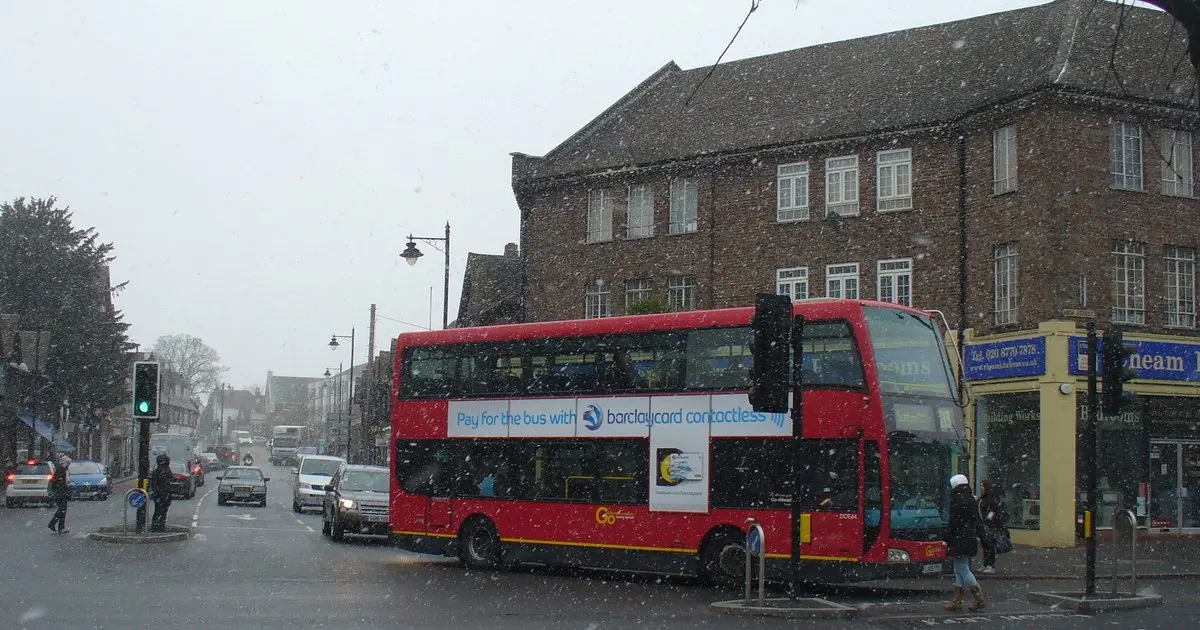
Residents in Isleworth say they feel forgotten by Transport for London after the frequency of their main bus route was cut earlier this month — a change they warn will leave elderly people struggling to reach hospital appointments.
The 267, which runs between Hammersmith and Fulwell, now comes every 12 minutes instead of every 10 on weekdays between 06:45 and 19:45, after TfL changed the timetable on 7 November. There is no change to the frequency at any other time.
For many people in the west London town, the bus is not a convenience but a lifeline. Janet Clarke, who uses the route regularly, used to take it every day to visit her late husband at Charing Cross Hospital in Hammersmith — and she says the buses were already so crowded that passengers were sometimes left behind.
“When my late husband was in Charing Cross, I took the 267 every day, and I had to vary sometimes if it was at a time when kids are coming home, because the bus was so full you couldn’t get on. If it was reduced, I’d have had to leave home a lot earlier,” she said.
“In that case, I didn’t have to be there at a specific time, but if you have an appointment at Charing Cross you may not make it.”
Speaking from West Middlesex Hospital, Ms Clarke said she believed TfL was overlooking people who depend on the route most. “I think they’re forgetting that the 267 being the only bus from Hammersmith to here — they are forgetting this is a major hospital, a new diagnosis centre is set to open here soon.”
Her concern is shared by Hounslow councillors, who say Isleworth has been steadily losing transport options. Locals permanently lost half of their off-peak train services after the Covid-19 pandemic, following changes by Network Rail, and with the 267 now running less often, residents and councillors say getting into central London is becoming harder.
Councillor Salman Shaheen, Hounslow Council’s cabinet member for environment, transport and public realm, said the town felt overlooked. “Isleworth is getting a bit forgotten about,” he said.
“If you’re in Chiswick or Brentford, it’s not the end of the world. Isleworth only really gets [this] one bus route. TfL has a target, which I agree with, of getting to 80 per cent of journeys by public transport. But if you are reducing services to areas with no other means of travel, what will people do other than get a car?”
Cllr Shaheen said TfL had not consulted councillors or residents in Isleworth about the change. Instead, he said, they were sent an email telling them about it 24 hours beforehand.
Labour councillors in Isleworth have now launched a petition calling on TfL to reverse the cut. It has gathered 416 signatures in just a week.
The route also carries schoolchildren, and several schools are served by the 267. Cllr Shaheen said one of the biggest causes of traffic congestion in the area was parents on the school run, and he would like to see more of them getting their children to school by public transport. With buses running less often, he admitted, he feared the opposite would happen.
Jennifer Prain, another Isleworth resident who uses the 267 regularly, said the service was already unreliable before the timetable changed. “Buses are usually fairly full, so I’m not sure why they’re [TfL] doing this… many weekends, the district line into central London isn’t running, so the 267 is the only way,” she said.
She described the service as “not reliable as it is” and said she wanted TfL to understand how important the route was to the local population.
Her point is sharpened by the state of the Tube at weekends. The District line is suspended west of Earl’s Court this weekend because of a walkout by service control staff, with no trains running to Richmond or Ealing Broadway until Saturday evening — leaving the bus as the only practical way into central London for many Isleworth residents.
TfL defended the change, saying it regularly reviews services to match demand. “We are committed to providing the best bus network possible for Londoners and regularly review our services accordingly to better reflect customer demand and offer value for money. As part of this work, we have identified that we are currently running more buses than are required to meet current and expected demand at certain times,” a spokesperson said.
“Route 267 now operates every 12 minutes instead of every 10 minutes between 06:45 and 19:45 on weekdays. There is no change to the frequency of route 267 at any other time.” The spokesperson added that TfL had carefully considered the network and believed the change would let buses serve customers efficiently, and that it would keep monitoring how the changes worked for passengers.
Isleworth is not the only part of London facing bus cuts. In Sutton, five bus routes are set to run less often from 28 November, in a separate round of TfL service reductions — a sign that the pressure on suburban bus services extends well beyond one town in the west of the capital.
For Isleworth residents, though, the argument is a local one: a town that has already lost half its off-peak trains now has fewer buses too, and the people who will feel it first are those with the fewest alternatives — older residents, hospital patients and schoolchildren.