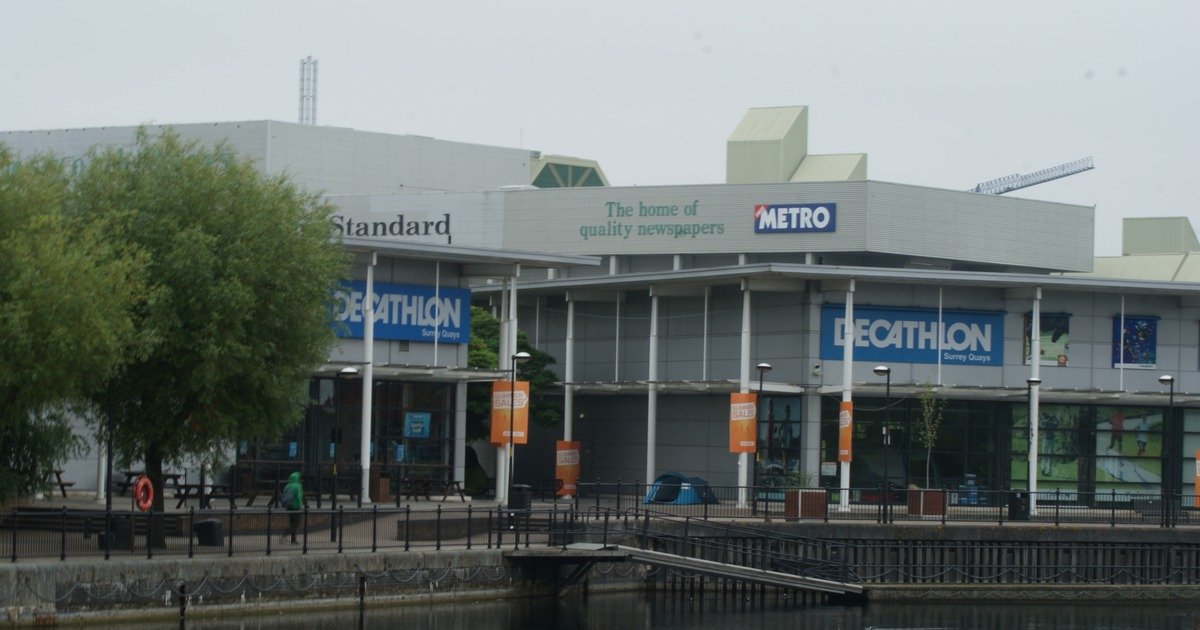
British Land has reportedly shelved the next construction phase of its flagship Canada Water regeneration in south-east London until market conditions improve, putting a substantial programme of new homes, workplaces and infrastructure on hold.
The 53-acre development, one of the largest regeneration projects in the capital, was expected to move into its next phase after the first phase was completed. Instead, the developer has paused work on what comes next, with rising construction costs, higher regulatory expenses and weak demand blamed for hitting the viability of the scheme.
The clearest sign of the slowdown is at the Founding tower, the 35-storey residential block that anchors the first phase. Only around 30 per cent of the first 186 apartments there have been sold, a pace that underlines how difficult the current market has become for large residential schemes, even in well-connected parts of London.
The pause is reported rather than confirmed. British Land and its joint venture partner AustralianSuper have declined to comment publicly on it, so the decision has not been formally announced by the developer itself. That distinction matters: what is known is that the next phase is not proceeding as planned, not that the developer has issued a statement explaining why.
March reset had already rewritten the plan
The reported pause comes despite a major planning reset approved in March, which was designed to rescue the next phase. Under that reset, British Land and AustralianSuper won permission to increase the height and massing of residential buildings, introduce alternative living uses and give themselves more flexibility over future development plots, responding to regulatory changes and worsening viability.
The revised scheme also cut the affordable housing commitment, with 20 per cent required in the next phase and a minimum of 9 per cent across the full masterplan. At the time, British Land said the changes would allow the next phase to start from 2027.
Even with those concessions, the numbers have not stacked up. The revised scheme allows around 4,200 homes, 2.5 million sq ft of workspace and around 1 million sq ft of retail, leisure and cultural space. That scale is precisely what makes the pause significant: when a scheme of this size stalls, it leaves a large hole in south-east London’s housing pipeline, not just a single delayed block.
Canada Water sits in a part of London that has already been transformed once, from working docks to a district of flats, shops and offices around the Jubilee line station and Surrey Quays. The regeneration was meant to complete that transformation, adding a new town centre for Rotherhithe and thousands of homes within a short Tube ride of central London. A pause at this stage does not undo what has been built, but it does leave the second half of that vision waiting on a market recovery that has not yet arrived.
Second major pause in a week
British Land is the second major developer to put a London scheme on hold in the last week. Landsec has also pulled its £1.5 billion Lewisham Shopping Centre redevelopment, after rising build costs collided with demands from the council’s new administration for more affordable housing.
Landsec said the push for a materially higher affordable housing offer, combined with difficult economic conditions, left it without a sufficiently certain route to delivery. Its consented masterplan covered more than 1,700 homes, including 98 social rent and 231 discounted rental homes, alongside 660 student beds, 445 co-living units, retail and a 500-capacity music venue.
Taken together, the two pauses point to a wider problem than any single scheme. Developers are finding that even after planning authorities agree to cut affordable housing and allow taller, denser buildings, the combination of build costs, regulation and soft demand still makes large projects hard to justify. For councils, that creates an awkward trade-off: loosening requirements to get building moving risks delivering fewer affordable homes, while holding firm risks getting nothing built at all.
Elsewhere in London, smaller commercial projects are still moving. In Kilburn, a restored row of railway arches has just reopened as a walkway for new shops and cafes, while in Thamesmead, another large south-east London regeneration story, new town plans continue to take shape. The contrast is telling: small, flexible commercial space can still find occupiers, while the biggest housing schemes are the ones stalling.
For now, the question at Canada Water is timing. The developer has not said when the next phase might restart, and with no public comment, there is no new start date to work to. Until market conditions improve, the second half of one of London’s biggest regeneration projects remains on hold.