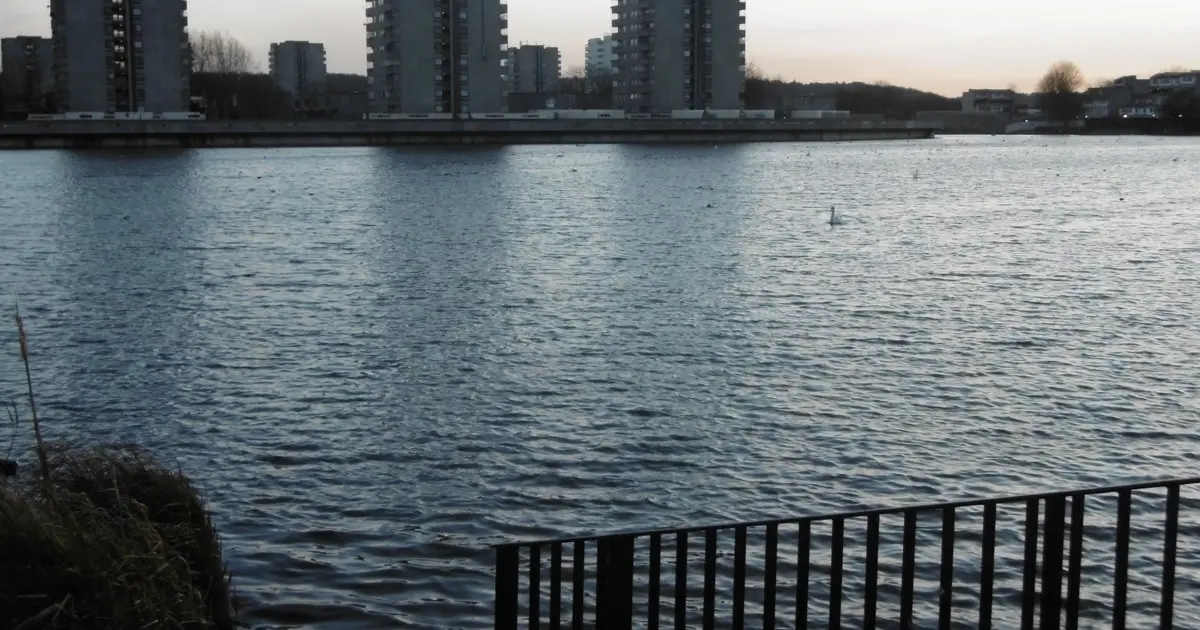
Thamesmead, the lakeside estate in south-east London that was once billed as “the town of tomorrow”, is preparing to become a new town all over again.
A huge stretch of land beside the River Thames could be transformed into a new neighbourhood with around 15,000 homes, thousands of jobs, an expanded town centre and new outdoor spaces — six decades after the first residents arrived in the 1960s utopia of concrete homes, lakes, green spaces and raised walkways.
Thamesmead Waterfront, the name given to the ambitious project, was included among seven locations named in a Government consultation on the next generation of new towns earlier this year.
The draft New Towns Programme, published by the Ministry of Housing, Communities and Local Government, lists Thamesmead, Greenwich, alongside Tempsford, Crews Hill and Chase Park in Enfield, Leeds South Bank, Manchester Victoria North, Brabazon and the West Innovation Arc in South Gloucestershire, and Milton Keynes.
According to the Government’s documents, development at Thamesmead has the potential to deliver up to 15,000 new homes, with the programme collectively able to provide hundreds of thousands of new homes in the decades ahead.
A second act for a Sixties dream
Thamesmead was conceived in the 1960s as an ambitious answer to London’s desperate need for new housing. Planners imagined a modernist town of tomorrow: brutalist blocks of concrete homes connected by raised walkways, set around man-made lakes and generous green space in a part of the capital otherwise known for industry and marshland.
For all its fame — and its starring role in films and television — the estate never quite lived up to the blueprint. Decades on, housing association Peabody, the area’s biggest landlord, has been regenerating parts of the neighbourhood, but much of the original concrete architecture and water landscape remains.
Now the attention has shifted to the waterfront. The Thamesmead Waterfront site, beside the river, is presented as the natural next chapter: a whole new neighbourhood of around 15,000 homes on land that is currently largely inaccessible, promising thousands of jobs, an expanded town centre and new outdoor spaces for south-east London.
The catch: getting there
The Government’s own assessment is frank about the scale of the challenge. Its consultation notes that development at Thamesmead will need upfront investment in site remediation and upgrades to existing flood and power infrastructure before homes can be built.
Transport remains the other big question. Thamesmead is famously one of London’s largest areas without its own railway station — the “no trains” tag that has followed it since the 1960s. The nearest station is Abbey Wood, on the Elizabeth line, but reaching much of the estate still means a bus ride. A proposed extension of the DLR from Beckton to Thamesmead has long been discussed as the missing link, though it remains at the proposal stage.
Good transport connections will be essential if Thamesmead Waterfront is to work as a genuine new town rather than an isolated estate. The Government has said it wants the next generation of new towns to be “well-connected, well-designed, sustainable and attractive places” — and it intends to get spades in the ground on at least three new towns in this Parliament.
What it means for south-east London
For the surrounding boroughs, a 15,000-home neighbourhood would be transformative. It would bring a far larger town centre, new jobs and new open space to an area that has long felt like the capital’s edge — while London’s housing crisis keeps the pressure on every available site.
For Tower Hamlets residents watching office blocks convert into temporary homes, or for families facing the empty-homes crackdown in Barking and Dagenham, the promise of 15,000 new Thamesmead homes will be welcome — if they arrive on time and at prices ordinary Londoners can afford.
Whether Thamesmead can finally become the “town of tomorrow” — sixty years late — depends on whether the transport, the flood defences and the funding line up. The concrete estate of the Sixties proved that grand visions need more than architecture. This time, the Government insists, the planning will come first.
Until then, the lakes, the walkways and the swans remain — and south-east London waits to see whether its most distinctive neighbourhood is about to be rebuilt for a second time.