


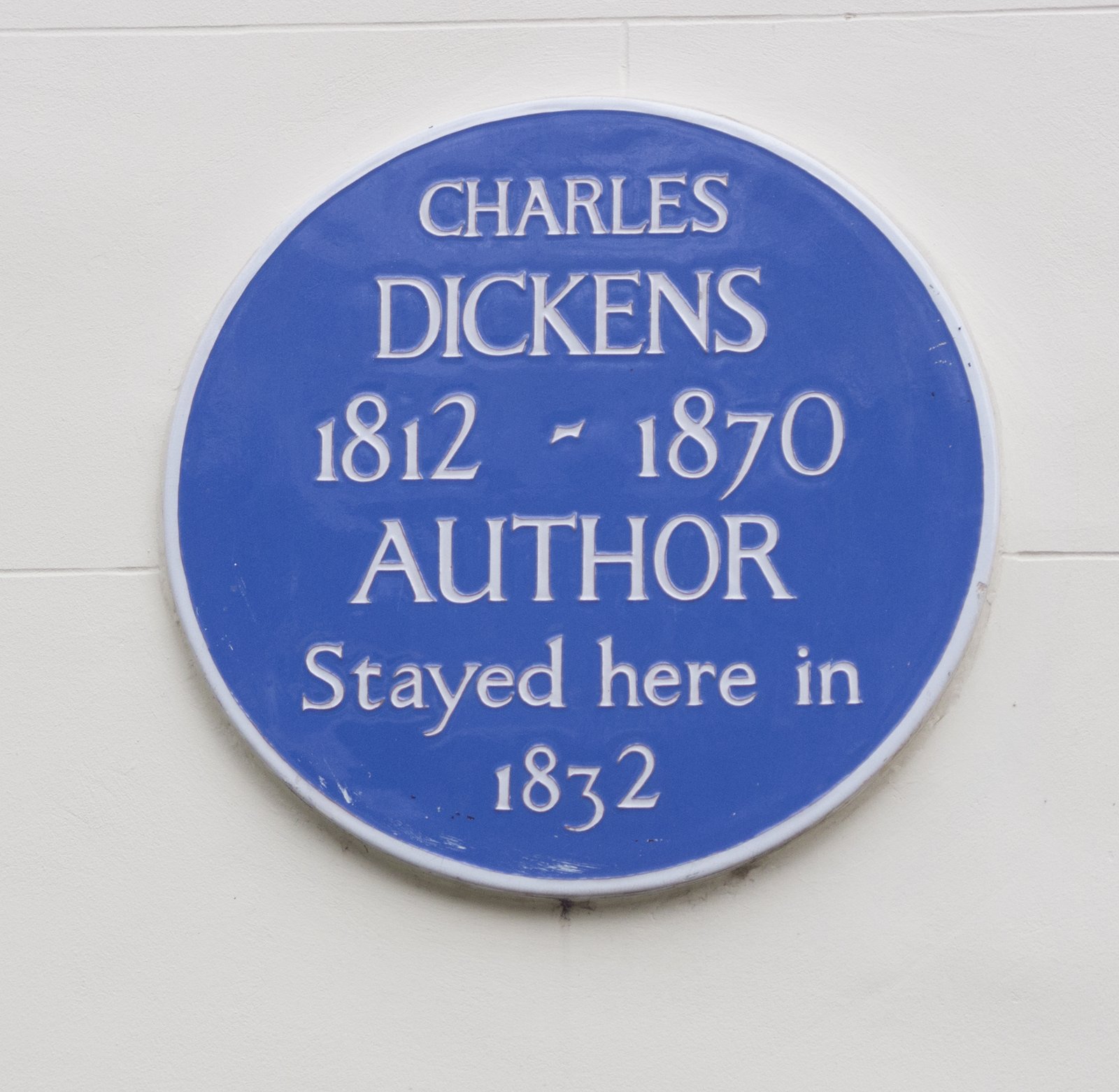
A blue plaque now marks the Highgate house where Charles Dickens and his family once hid from debt collectors. The plaque at 92 North Hill records that the entire Dickens family lodged there in August 1832, at a time when being caught by creditors would have landed the author’s father, John Dickens, in a debtors’ prison.
It was the summer of 1832, and the Dickens family were on the run from persistent creditors. The whole family took refuge at the Highgate address, lying low while John Dickens — already familiar with the inside of a debtors’ jail — stayed out of sight.
John Dickens knew exactly what awaited him. In 1824 he had been locked up in the Marshalsea Prison in Southwark for an unpaid debt of £40 owed to a baker. His wife Elizabeth and their younger children moved into the prison with him, while 12-year-old Charles was sent to work at Warren’s Blacking Factory. John was eventually released after a family inheritance helped clear the debt — an episode the author would later draw on in Little Dorrit.
The family’s money troubles left a deep imprint on Dickens’s fiction. Mr Micawber, the ever-optimistic debtor in David Copperfield, is widely believed to have been modelled on John Dickens himself. And the surname of Fagin, the criminal mastermind of Oliver Twist, was borrowed from Bob Fagin — a kindly fellow worker from Charles’s blacking factory days.
By the time of the Highgate stay, Charles was 20 and striking out on his own. He had left a job in a law office to pursue a career as a parliamentary newspaper reporter, and wrote to his friend Henry Kolle giving his new address: “The address is Mrs Goodman’s next door to the old Red Lion… I myself hang out at the Red Lion.” He added: “If you can make it convenient to come down, write to me and fix your own day. I am sorry I cannot oblige…”
The Highgate interlude came at a pivotal moment. Within a year of the family’s stay, Charles published his first short story; three years later, living in Doughty Street, Bloomsbury, he wrote his first novel, The Pickwick Papers. The Pickwick Papers was followed by Oliver Twist, and with it came fame and fortune.
Visitors to the Dickens Museum in Doughty Street can still see the grille from the Marshalsea Prison where John Dickens was incarcerated — a tangible link to the episode that sent the family into hiding in Highgate.
Despite the embarrassments his father’s finances caused him, Charles remained devoted to his parents, supporting them financially and covering John’s final expenses. John Dickens died in 1851 at the age of 65 and was buried at Highgate Cemetery — then one of the most fashionable burial grounds of the day. Elizabeth followed twelve years later.
The plaque adds another layer to Highgate’s rich literary heritage, giving residents and visitors a new reason to look twice at an otherwise ordinary house. It joins the many blue plaques across the capital marking the lives of notable Londoners, from a trailblazing motoring pioneer honoured in Hackney to one of England’s greatest novelists, once in hiding just up the road.
For Highgate, the plaque is a reminder of the area’s long pull on writers and artists — and of a chapter of Dickens’s life that might easily have been lost. It is also the latest chapter in an area that has seen residents campaigning for safer streets in recent months, as the community continues to shape the place it calls home.
The plaque stands as a quiet tribute to a family that, for one summer, made Highgate their refuge — and to the young writer whose hard years would soon give way to fame and fortune.