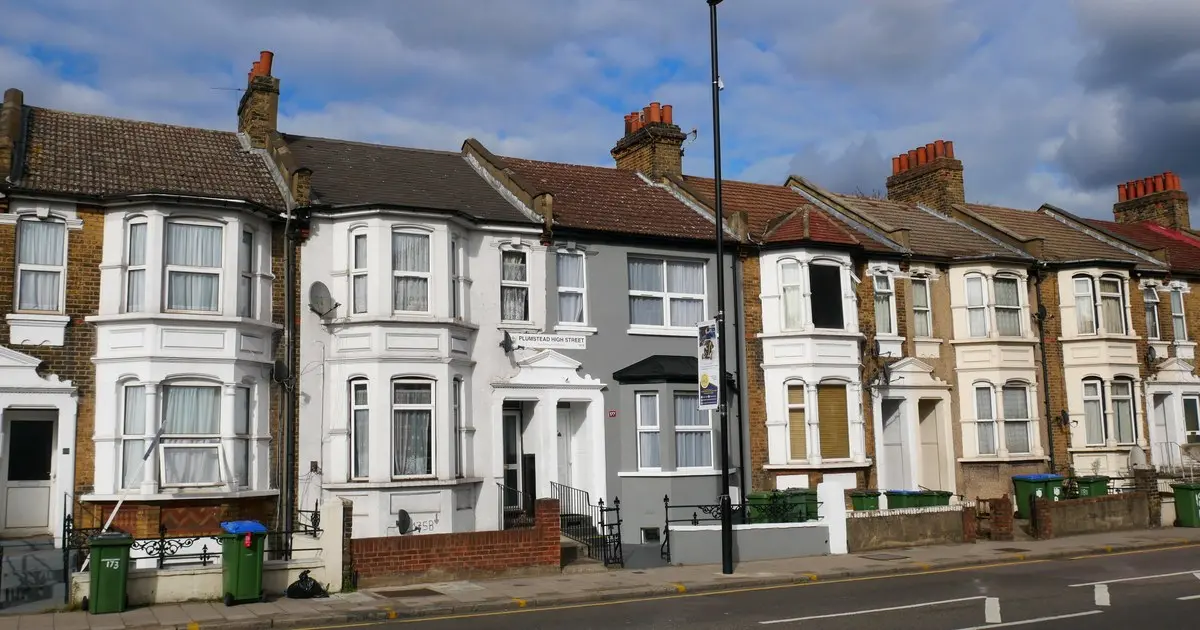
Planners in Greenwich have gained sharper powers to turn down house conversions, after the council adopted tougher rules aimed at stopping small family homes being carved up into shared housing.
Under the new measures, planning officers can refuse an application to convert a house into a house in multiple occupation (HMO) where the original home falls below 130 square metres of internal floor space. The council says the threshold is designed to prevent over-densification and to protect smaller family homes from being partitioned into cramped rooms.
Three applications have already been recommended for refusal under the new policies. The sites are 82 Bramblebury Road and 70 St Margarets Terrace in Plumstead, and 12 Halons Road in Eltham.
The council’s cabinet member for planning introduced the measures as an essential tool to “crack down on rogue HMO landlords” who prioritise profit over living standards. Council representatives have stressed that the policy carries significant weight in planning decisions.
Figures released by the council underline how far-reaching the change could be. Had the floor-space controls been in effect over the previous five years, 84 per cent of all HMO planning applications submitted in the borough would have been turned down on size criteria alone.
That counterfactual will be closely watched by landlords and developers. By ruling out properties under 130 square metres, the majority of standard two- and three-bedroom terraced houses will effectively be shielded from conversion into multi-let units, a shift the council hopes will stabilise the balance between permanent family households and transient private renters in areas like Plumstead and Eltham.
Residents welcome move but want more
Campaign group Local Voices on HMOs welcomed the new restrictions but said the council’s response does not go far enough on over-concentration. A spokesperson for the group said: “We welcome the move to restrict HMOs in properties under 130sqm, but more needs to be done to address over-concentration and protect family homes.”
Residents in Plumstead have long complained about the rapid spread of high-density shared housing, pointing to persistent problems including severe parking congestion, overflowing waste bins, fly-tipping and an erosion of community cohesion.
Speaking on behalf of affected households, the Local Voices on HMOs spokesperson added: “We have requested a meeting with the councillor but are still waiting for the opportunity to discuss our concerns. The council also needs to demonstrate better coordination between planning, licensing and enforcement to ensure policies are effective and properly implemented. We are not anti-HMO; we are residents who care about our community and are seeing first-hand how it is changing. We want a balanced approach that protects family housing and ensures residents’ voices are heard.”
Greenwich Council has not given a definitive timeframe for whether or when the relevant cabinet members will meet neighbourhood representatives to discuss their outstanding proposals.
How Greenwich got here
HMOs have been a major focus of planning debate across the Royal Borough of Greenwich for several years. Historically, under national permitted development rights in England, converting a single-family dwelling (Use Class C3) into a small HMO for three to six occupants (Use Class C4) did not require explicit planning permission.
To combat the unchecked conversion of terraced housing, Greenwich introduced a borough-wide Article 4 Direction in September 2022. That directive removed automatic permitted development rights across the entire borough, requiring developers to submit full planning applications for any proposed C3 to C4 conversion, regardless of tenant numbers.
Alongside the planning constraints, the council expanded its property licensing framework. On 1 January 2024, Greenwich implemented a borough-wide Additional Licensing scheme, making it mandatory for all private rented properties occupied by three or four unrelated tenants to hold a valid licence. That sits alongside Selective Licensing schemes in targeted wards, designed to enforce landlord standards, safety checks and waste management.
Despite those steps, planning committees continued to face legal hurdles when turning down applications for smaller terraced properties. Landlords frequently won appeals through the Planning Inspectorate when room sizes technically met national minimum space standards. The latest policy revision, introducing the 130-square-metre baseline, is designed to give local decision-makers clearer grounds to preserve traditional family-sized housing stock.
What it means for tenants and landlords
While the regulations aim to raise living conditions by ending overcrowding in small properties, tighter limits will also restrict the growth of low-cost bed-space in the borough. As smaller HMO conversions become legally unviable, shared accommodation may face increased price pressures, potentially pushing rental costs higher for low-income workers, young professionals and students who rely on HMO properties in outer south-east London.
Property developers and private landlords will face significantly higher planning entry barriers. Investor focus is likely to pivot towards larger properties above the 130-square-metre threshold, or away from Greenwich entirely to neighbouring boroughs with less stringent policies. The council has also highlighted penalties of up to £40,000 for unlicensed operations, with unapproved HMOs facing accelerated closure and enforcement action.
Community groups are expected to keep pressing for broader structural changes, including strict saturation limits to prevent multiple HMOs operating on the same street, and closer working between council planning officers and housing enforcement inspectors to stamp out unpermitted conversions.
The three Plumstead and Eltham applications now recommended for refusal will be the first test of whether the new floor-space threshold holds up in practice. For now, the message from the town hall is clear: in Greenwich, small houses are for families, not for carving up.
Elsewhere in south-east London, Greenwich has also been dealing with storm damage at Woolwich Arsenal Pier, while Bexley has emerged as the capital’s joint-cheapest borough for homebuyers on price-to-earnings figures.