


A hereditary peer from Islington has been banned from driving for six months after his fourth speeding offence in just over two years took him to 12 penalty points on his licence.
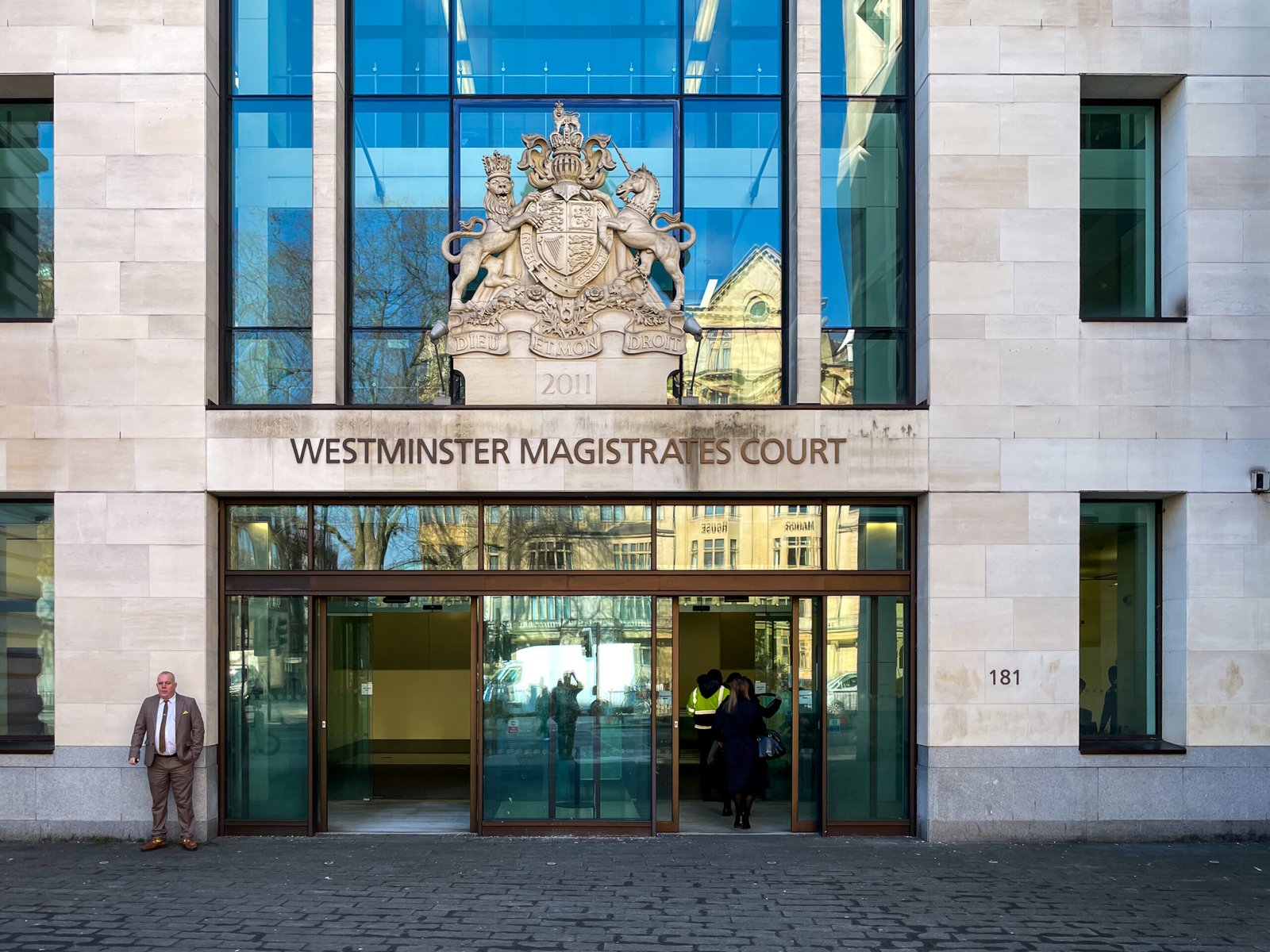
David Pollock, the 3rd Viscount Hanworth, appeared at Westminster Magistrates’ Court on Wednesday (7 October) having already admitted driving at 27mph in a 20mph zone through the single justice procedure.
The court heard it was his fourth speeding offence, with previous incidents in May and August 2024 and June 2026. Reaching the 12-point threshold triggered an automatic six-month disqualification under the totting-up rules.
The viscount told the court he only used his car to give lifts to his wife, who has dementia, and his daughter, who has a spinal injury. “The only thing I can offer is the fact that I am a cautious driver who only uses his car to take his wife to a clinic and to use for my daughter who has a spinal injury,” he said.
He had planned to argue that a ban would cause him exceptional hardship, but withdrew the application after learning he would need to provide medical evidence at a later hearing.
Chief Magistrate Paul Goldspring imposed a £250 fine and ordered him to pay £130 in costs plus a £100 victim surcharge. “Speed is an expensive business, don’t do it,” he told the peer.
What is a viscount?
A viscount is a hereditary noble title in the British peerage, ranking below an earl and above a baron.
How the totting-up ban works
Under the totting-up system, any driver who collects 12 or more penalty points within three years faces a minimum six-month driving ban. Speeding offences typically carry between three and six points depending on the severity, and points stay on a licence for three years.
The only way to avoid the automatic disqualification is to convince the court that losing the licence would cause “exceptional hardship” — a deliberately high bar. Everyday inconvenience, such as difficulty getting to work, is not enough on its own; magistrates look for concrete evidence that others would suffer serious consequences. Newly qualified drivers are treated more strictly still: totalling six points within two years of passing the test means the licence is revoked altogether.
Less serious motoring cases like this one are often dealt with under the single justice procedure, in which a single magistrate decides the case on the papers without a full court hearing — although defendants may still choose to attend in person, as Lord Hanworth did.
20mph limits and road safety in the capital
The latest offence happened in a 20mph zone, limits that now cover most residential streets across inner London. Islington was among the first boroughs in the capital to introduce a borough-wide 20mph limit more than a decade ago, part of a long-running drive — backed by Transport for London’s Vision Zero ambition — to reduce the number of people killed or seriously injured on the city’s roads.
For motorists, the lower limits leave little margin for error: at 27mph in a 20mph zone, a driver is travelling more than a third over the limit. While the zones remain a talking point among drivers, the legal position is straightforward — break the limit and you risk points that edge you closer to a ban.
The case is a reminder that penalty points add up quickly, and that even motorists who see themselves as careful can end up off the road once they hit 12. Drivers can check their own record through the DVLA’s online service, and points must be declared to insurers — with a totting-up disqualification likely to mean sharply higher premiums when the motorist is allowed back behind the wheel.