


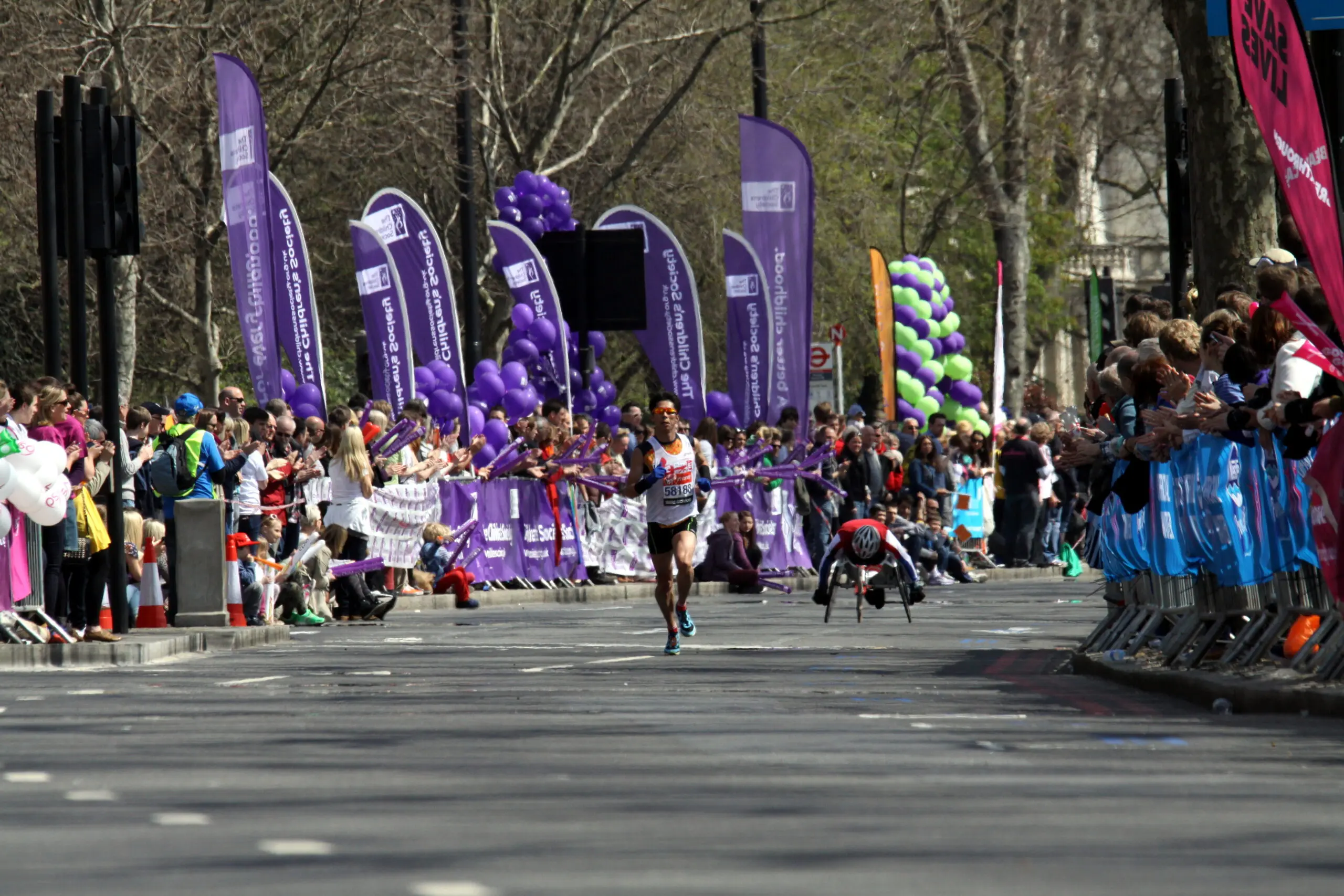
If you have ever dreamed of running 26.2 miles but feared the distance might break you, the capital’s famous spring race could be the perfect place to start. New analysis has put the London Marathon top of a ranking of Britain’s most beginner-friendly marathons.
The research, carried out by Betway, examined 27 marathons across the country and scored each one out of 100 for difficulty. London recorded just 16.7 — the lowest mark of any race in the study — while the Isle of Wight Marathon was judged the toughest in the UK with 67.1.
To build the table, the researchers weighed up three things: how hilly each course is, how much time runners are given to finish, and what the weather is usually like on race day. Every marathon was measured on elevation gain, cut-off pace and typical conditions, then handed an overall difficulty rating. The lower the number, the easier the race.
London’s pancake-flat profile did most of the heavy lifting. The course climbs a mere 75 metres from start to finish — the smallest elevation gain of any marathon analysed. Runners also benefit from one of the most generous time limits in the country, with a cut-off pace of 11 minutes 23 seconds per kilometre giving even the slowest participants plenty of breathing room over the full distance.
The capital’s April date helps too. The study found runners face average wind speeds of 16.9km/h and wet weather on only 31 per cent of race days — kinder conditions than most rival events can promise.
The London Marathon is one of the biggest mass-participation events on the planet. Tens of thousands of runners pour through the streets each spring, roared on by huge crowds along a point-to-point route that starts on the famous Blackheath in south-east London, sweeps past Tower Bridge and the Docklands, then follows the Thames to a finish on The Mall in front of Buckingham Palace. As one of the World Marathon Majors, it draws elite athletes chasing records alongside charity runners raising millions of pounds for good causes.
For first-timers, the atmosphere is half the appeal: live bands, screaming spectators and fully closed roads all the way. With the 2027 edition on the horizon — ballot results for the 2027 race have already started landing — the study’s verdict could tempt plenty of newcomers to throw their name in the hat.
Brighton was named the second-easiest marathon. The south-coast race, also staged in April, climbs 145 metres and boasts the lowest wet-day figure in the study at 27 per cent. The Shakespeare Marathon, Manchester Marathon and Boston Marathon UK were also rated among the more manageable options, praised for their flat routes and friendly spring conditions. It is a timely reminder of how lively the capital’s running scene is — 12,000 runners took on the first-ever Saucony Run Shoreditch Half last month.
At the opposite end of the scale, the Isle of Wight Marathon earned its billing as Britain’s hardest. The October race climbs 350 metres and runners must battle exposed coastal weather, with average winds of 27.3km/h and rain on around half of race days.
The Jersey Marathon, also held in October, was ranked the second toughest with a score of 64.1. Its 330 metres of climbing, 23.7km/h average winds and a much tighter cut-off pace of 8 minutes 32 seconds per kilometre make it a sterner test altogether.
Marathon Eryri in Wales was rated the third hardest, with 797 metres of climbing and the wettest conditions in the study — rain falls on an average of 60.3 per cent of race days. The Windermere Marathon, with 600 metres of elevation gain, and the Langdale Marathon, whose 1,035-metre climb was the biggest in the entire study, were also flagged as seriously demanding days out.
The researchers say the table is designed to help runners choose a race that matches their ability and ambition — whether that means a gentle first marathon in the capital or a brutal hill-fest on the coast.