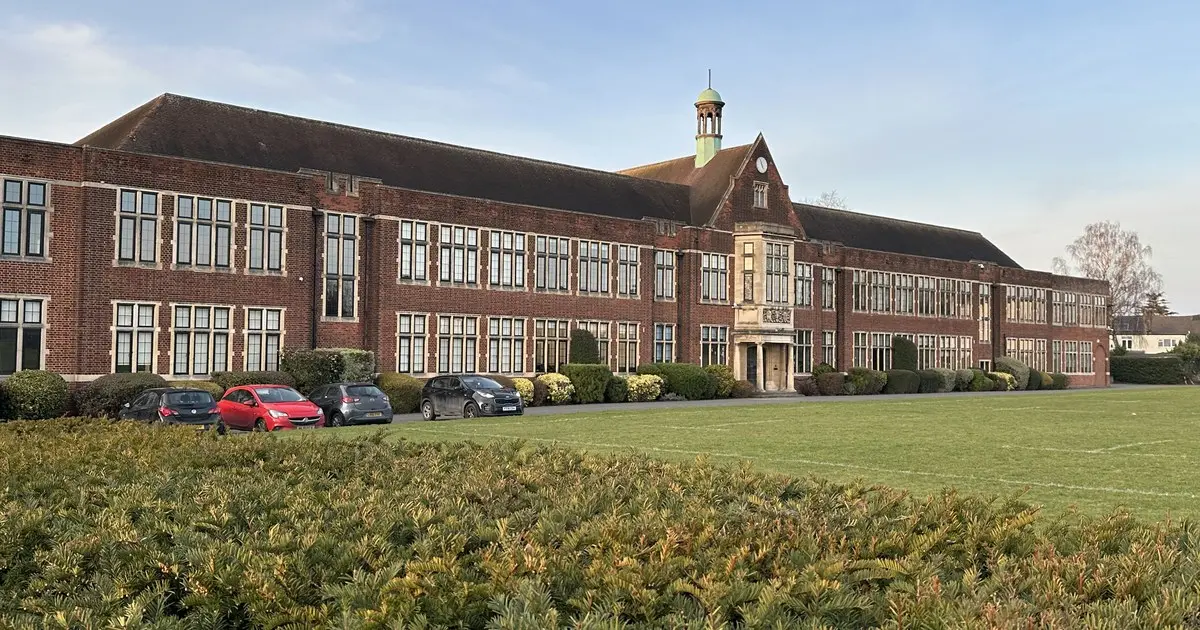
Residents in High Barnet have formally registered objections with Barnet Council over a planning application submitted by Queen Elizabeth’s Boys’ School for a new sports complex, raising concerns about the height of the proposed building and the pressure it could add to already busy local roads.
The application, reference 26/3400/FUL, has entered formal statutory consultation initiated by Barnet Council under Article 13 of the Town and Country Planning Act. The proposals have also been highlighted by The Barnet Society, the local civic group.
At the heart of the scheme is a four-storey development. The upper floor would house ten new classrooms, alongside changing facilities and a high-ceiling sports hall. Outside, the plans include six cricket practice nets, six Eton Fives courts and a tiered seating area for 64 spectators.
For objectors, the scale of the building is the central issue. They argue that a four-storey block would dominate the surrounding low-rise residential landscape, with an overshadowing and overbearing visual impact on neighbouring homes. The objections also point to existing traffic stress in the area, warning of additional congestion, parking problems and highway safety issues during peak times.
The school’s plans, however, also set out a community dimension that goes beyond the school day. Under a shared-use model, external sports clubs, recreational groups and community organisations would be able to hire the sports hall on weekday evenings, weekends and during school holidays.
That approach mirrors arrangements already in place at the school. Its 25-metre indoor swimming pool and the Friends’ Recital Hall are both hired out in the same way, opening school facilities to the wider community outside teaching hours.
Queen Elizabeth’s School, Barnet, is one of the capital’s best-known state-funded grammar schools. Founded in 1573 under a royal charter from Queen Elizabeth I, it has occupied its present position in the town’s educational life for more than four centuries.
The sports complex would be the latest in a series of capital projects at the school. Recent investment includes a £5 million performing arts development, comprising the Friends’ Recital Hall and Music Rooms, and the 200-seat Robert Dudley Studio for drama.
The application is now the subject of the formal consultation process, during which residents’ objections have been lodged. No decision on the scheme has been announced, and no timetable for construction has been set out in the proposals.
For High Barnet, the debate captures a familiar tension between a school’s need to expand and residents’ desire to protect the character of the streets around it. The school argues, through its plans, that new classrooms and a modern sports hall are needed; objectors counter that the height and massing of a four-storey building, together with the traffic it could generate, would change the area for the worse.
The shared-use element may prove significant in how the proposals are viewed. A sports hall open to clubs and community groups in the evenings, at weekends and in the holidays would give local organisations a new venue, while also bringing more people — and more vehicles — into the area at exactly the times residents say the roads are already under strain.
Similar community debates have played out across London, where school expansions and new facilities bring both opportunity and concern in equal measure. In Finsbury Park, two community-designed murals unveiled this week showed how local residents can shape the public realm around them when they are involved from the start.
In Barnet itself, residents have recently had to contend with sudden disruption of a different kind, after a man died when a tree fell in Finchley, closing Nether Street in both directions.
What happens next will depend on how the council weighs the objections against the case for the development. The consultation gives residents a formal route to have their say; the decision, when it comes, will determine whether the four-storey complex — with its classrooms, sports hall, cricket nets, Fives courts and 64-seat stand — goes ahead in its current form.