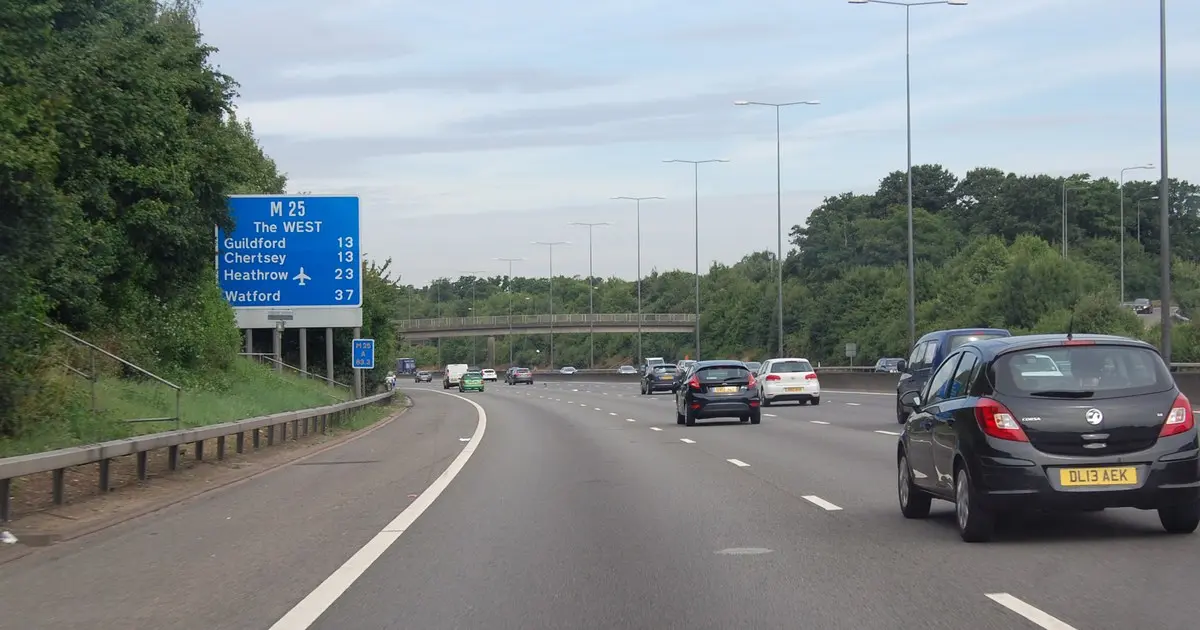
A Southall motorist has been ordered to pay £418 after his lorry was caught on the M25 carrying far more weight than the law allows.
M Bharat Singh, 26, of Regina Road, was found guilty of using a vehicle that exceeded the maximum permitted weight on the motorway on March 17. The offence took place near Leatherhead, where enforcement officers found his vehicle running 15 per cent over the 3,500kg limit — roughly 525kg beyond what it was built to carry.
Singh did not attend his hearing. He was convicted in his absence at Wimbledon Magistrates’ Court on September 2, fined £220 and ordered to pay £80 in victim services surcharge plus £118 in prosecution costs — a total of £418.
How weight checks work
Overloaded commercial vehicles are caught through roadside checks carried out by the Driver and Vehicle Standards Agency, often working alongside police. DVSA enforcement teams operate portable weighbridges and pull in vehicles at checkpoints on motorways and major A-roads, including regular operations around the M25.
The penalties escalate with the seriousness of the overload. Smaller overloads — typically between five and ten per cent over the permitted limit — can attract a fixed penalty of up to £300. Larger overloads, like the one in this case, go before the courts, where magistrates can impose fines, endorse licences and award costs. Where a business is involved, the consequences can extend further: a firm’s operator licence can be called into question by the Traffic Commissioner, and repeated offending can put the licence itself at risk.
Checks are deliberately unpredictable. National Highways and police forces around the country regularly join DVSA at roadside operations, and the M25 — one of the busiest stretches of motorway in Europe — sees repeated enforcement campaigns because of the sheer volume of commercial traffic it carries.
The vehicle in this case sits in a category that enforcement teams watch closely. At 3,500kg, it falls on the boundary between an ordinary van and a goods vehicle — a class that includes everything from large panel vans to small lorries. The permitted limit covers the vehicle and everything it carries, and individual axle weights must be respected too: a load that sits within the total limit can still be illegal if too much of it presses down on one axle.
Singh’s conviction in his absence is a reminder that motoring cases do not wait for the defendant. Magistrates’ courts can try summary offences without the accused present, and the sentence — the fine, the costs and the surcharge — stands regardless. The victim services surcharge, applied as standard in criminal cases, goes towards funding support services for victims of crime.
Why it matters
Overloaded vehicles pose a serious risk on motorways, affecting braking distances and vehicle stability. A vehicle carrying hundreds of kilograms beyond its limit takes noticeably longer to stop, handles less predictably in crosswinds and puts far greater stress on tyres, suspension and brakes.
Tyre blowouts are a particular danger at motorway speeds, and an overweight load raises the odds of one. The damage is not limited to the vehicle: repeated overloading chews up road surfaces, and there have been costly cases where overweight vehicles have struck bridges or damaged infrastructure never designed to carry them.
For professional drivers, the message from enforcement agencies is a simple one — know your vehicle’s limit before you load it, and check how the weight is distributed across the axles. The £418 handed down at Wimbledon is a reminder that the cost of skipping that check can quickly outstrip any time saved by cramming in one more load. With DVSA teams a regular sight on the M25, overloaded vehicles remain an easy catch on one of the most heavily enforced roads in the country.
London Streets has been covering M25 overnight closures and the M25 Cobham crash today.