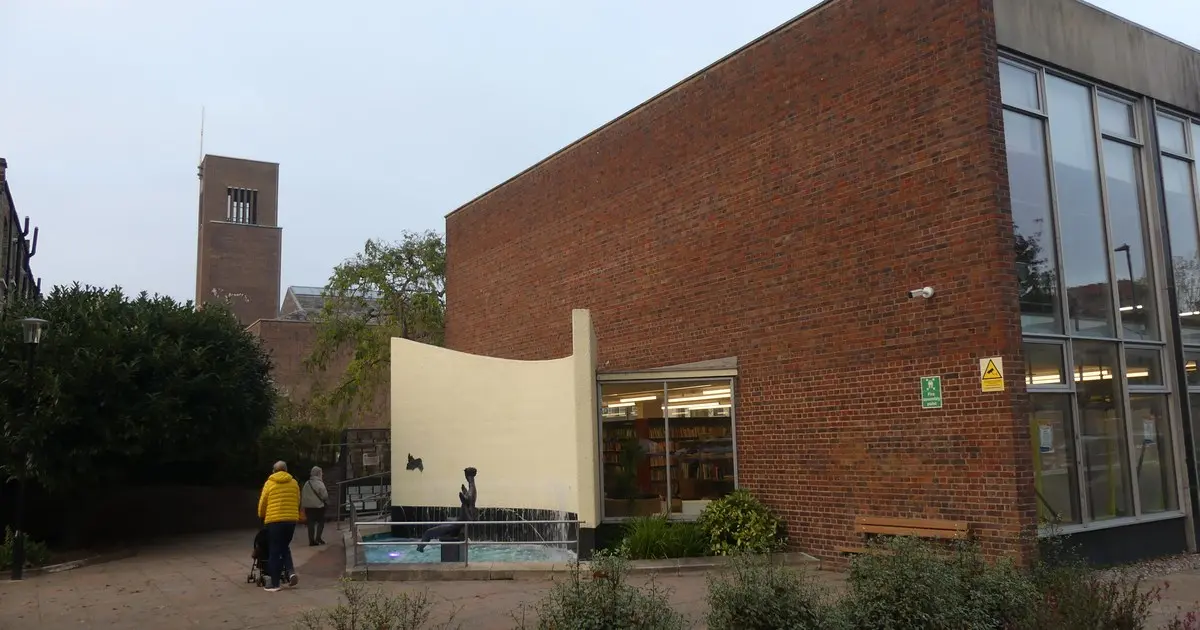
Hornsey Library’s adults’ section will close for 17 months from the end of next month while engineers strengthen and repair the reinforced autoclaved aerated concrete in its roof.
Haringey Council has confirmed the closure will begin on 27 November, with the adults’ library expected to reopen in spring 2027. The work is intended to make the roof safe while preserving the historic character of the building.
The rest of the library will stay open throughout the works. That includes the children’s library, the original gallery and the quiet study space, which will continue to welcome readers as normal.
What stays open and what moves
Key services will not disappear entirely. Book returns, public computers and a selection of books for borrowing will be relocated elsewhere within the building while the repairs are carried out.
Residents can also reserve books from any of Haringey’s eight other libraries and collect them from Hornsey Library during the closure, the council said.
A council spokesperson said: “We apologise for any disruption and inconvenience caused and thank residents for their patience while these essential improvements are carried out.”
Why RAAC is closing a library
Reinforced autoclaved aerated concrete, better known as RAAC, became a national concern in 2023 when more than 200 schools were ordered to close or partially shut buildings after surveys found the lightweight material at risk of sudden collapse.
RAAC was widely used in public buildings between the 1950s and the mid-1990s because it was cheap and easy to install. Its design life was only ever around 30 years, meaning thousands of roofs, walls and floors built with it are now decades past the point their makers intended.
The danger is not gradual decay but abrupt failure. RAAC panels can collapse with little or no warning when they absorb water or are disturbed, which is why engineers treat any confirmed RAAC in a public building as a job that cannot wait.
Hospitals, courts and council offices across London have all faced surveys and remedial work since the schools crisis. Hornsey Library’s roof is the latest to be caught by the sweep, and the council’s decision to take the adults’ section out of use for well over a year underlines how seriously the risk is now taken.
What readers need to know
The closure affects the adults’ lending and reference areas only. Anyone who uses the children’s library, the gallery or the quiet study space will notice little change, apart from services shuffled around the building to keep them running.
For borrowers, the practical advice is simple: reserve online or at another Haringey library and collect at Hornsey, or move your regular visits to one of the borough’s eight other branches while the work goes on.
The council has promised the repairs will preserve the building’s historic character, a point that will matter to readers who know the library as one of the borough’s best-loved public buildings.
The 17-month timeline reflects the scale of working on a RAAC roof above a live library. Strengthening has to be done carefully, panel by panel, while parts of the building stay open — which is why a job that sounds straightforward stretches from this November into the spring after next.
Pressure on council buildings
Hornsey’s library is far from the only public building forcing difficult decisions on councils this year. In Tower Hamlets, the council is buying four Canary Wharf office blocks to turn into temporary homes, while Chelsea’s World’s End estate faces a £20m refurbishment of its own.
And in Croydon, a failed chief executive recruitment has underlined how thinly stretched some boroughs’ resources have become.
For Haringey, the immediate task is keeping readers reading. With eight other libraries in the borough and collection available at Hornsey throughout, the council will be hoping the closure of the adults’ section is an inconvenience rather than a reason to stop borrowing.