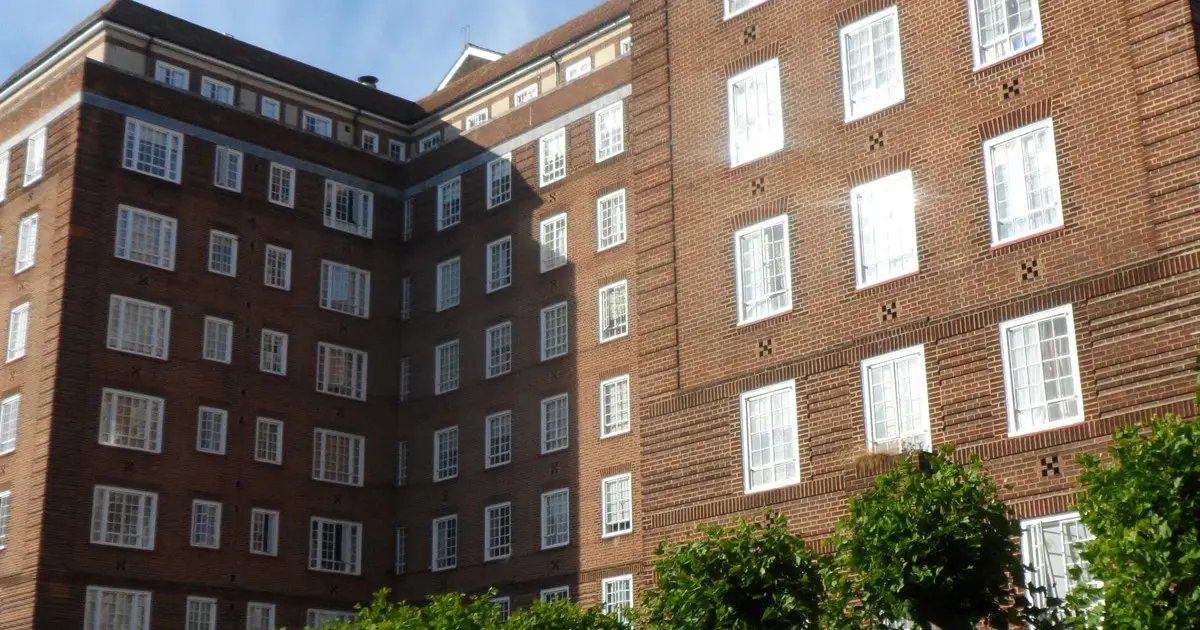
A man has died after an incident at Chelsea Manor Court in Chelsea, prompting a large emergency response including specialist paramedics trained to work in hazardous environments.
The London Ambulance Service was called at 5:04pm on Wednesday to reports of an incident at the address in south-west London. An ambulance crew, an incident response officer and paramedics from the service’s Hazardous Area Response Team — known as HART — were sent to the scene.
“Very sadly, despite the best efforts of our crews, a man was pronounced dead at the scene,” an LAS spokesperson said.
A forensic tent was later seen erected at the location as emergency workers remained in attendance.
What the ambulance service has confirmed
The LAS statement is the only official account of what happened so far. It confirms the time of the call, the resources deployed and that the man died at the scene.
The cause of the incident has not been disclosed. No further details about the man have been released, and it is not yet known how old he was or whether he was a resident of the building.
The Metropolitan Police had not issued a statement on the incident at the time of writing. Enquiries are understood to be at an early stage.
What is HART?
The Hazardous Area Response Team is a specialist unit within the London Ambulance Service whose paramedics are trained and equipped to provide care in challenging or dangerous environments — from incidents involving hazardous materials to hard-to-reach locations where standard crews cannot safely operate.
HART teams are dispatched alongside regular ambulance crews when an incident is judged to need their specialist skills. Their presence at Chelsea Manor Court indicates the call was treated as a significant and potentially complex response, though it does not by itself reveal the nature of the incident.
The deployment of an incident response officer alongside the HART paramedics is also standard practice for serious calls. These officers provide on-scene command and coordination when multiple crews are working together, and can liaise with other emergency services including the police and fire brigade.
The appearance of a forensic tent at the scene suggests that investigators want to preserve and examine the immediate area. Forensic tents are used routinely by police and ambulance services to screen scenes from public view and to protect potential evidence while examinations are carried out.
A quiet residential corner of Chelsea
Chelsea Manor Court sits in the Chelsea area of south-west London, close to Chelsea Manor Street and the King’s Road end of the borough. The area is largely residential, made up of mansion blocks and quieter side streets.
The estate has also been in the news this week for very different reasons, with £20 million of refurbishment work announced for the nearby World’s End estate, where 750 homes across seven towers are set for renewal.
The death comes in a week when London’s emergency services have been stretched by Storm Austen, which brought heavy rain and strong winds across the capital.
What happens next
With no police statement issued and the cause of the incident undisclosed, the circumstances of the man’s death remain unclear. Further details are expected once formal identification is complete and the coroner is informed, which is the standard procedure when a death occurs in circumstances that are not immediately explained.
Residents with information about what happened at Chelsea Manor Court on Wednesday afternoon are likely to be asked to assist police enquiries once an investigation is formally opened. A separate investigation is under way in Woolwich, where a man is fighting for his life after a suspected shooting.
This is a developing story and this article will be updated as more information is confirmed.