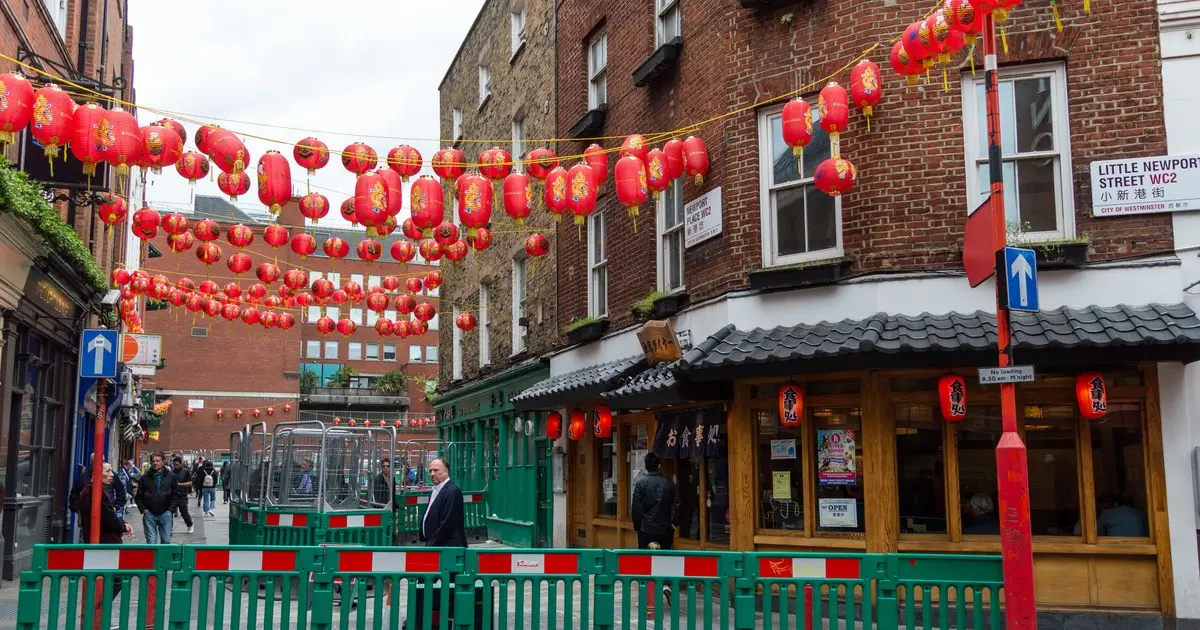
Two fire engines raced to a Japanese restaurant in London’s Chinatown last night after reports of smoke coming from the building.
Firefighters were called to High Yaki on Newport Place at 6.45pm on Tuesday (October 13) after smoke was seen issuing from the premises in the heart of Leicester Square’s Chinatown district.
The call came during the busy evening service, when the narrow streets around Gerrard Street and Newport Place are at their most crowded with diners, shoppers and theatre-goers heading to nearby Leicester Square.
What happened
Two fire engines from Soho and Euston fire stations attended the scene. A London Fire Brigade spokesperson said: “Firefighters were called to reports of smoke issuing from a building on Newport Court in Leicester Square. The Brigade was called at 1845 (13/10). Two fire engines from Soho and Euston fire stations attended the scene.”
High Yaki, located in London’s Chinatown, is known for its grilled meats, sushi and other Japanese dishes. The extent of any damage and whether anyone was injured have not been immediately reported.
Chinatown disruption
The incident brought emergency vehicles to one of central London’s busiest dining districts during the evening service. Newport Place sits at the heart of Chinatown, where dozens of restaurants serve thousands of diners every evening.
For the tightly packed streets around Gerrard Street and Newport Place — where kitchens operate in historic buildings with limited ventilation — any fire scare prompts a swift response. The London Fire Brigade treats all reports of smoke in commercial kitchens as potentially serious, given the combination of open flames, hot oils and dense occupation.
Restaurant fires in central London
Commercial kitchen fires are among the most common callouts for the London Fire Brigade in the West End. The combination of high-volume cooking, grease-laden ventilation and historic building stock creates particular risks.
Chinatown’s restaurants face specific challenges. Many occupy Victorian-era buildings on narrow streets where access for fire appliances is constrained. Kitchens often run at full capacity from lunchtime through to late evening, with woks and grills operating at extremely high temperatures. The area’s popularity means evacuation of diners — many of them tourists unfamiliar with the layout — adds complexity to any incident.
The Brigade advises all food businesses to maintain their extraction systems, keep fire suppression equipment serviced, and ensure staff are trained in emergency procedures. Regular deep-cleaning of kitchen extract ductwork is a legal requirement, and failures in this area are a frequent cause of restaurant fires. Grease buildup in ducting can ignite with devastating speed, turning a manageable kitchen incident into a building fire in minutes.
Westminster City Council’s environmental health team works alongside the fire service, inspecting food premises and enforcing fire safety standards. Businesses found with inadequate precautions can face prohibition notices shutting them down until faults are rectified — a serious threat in an area where margins are tight and reputation is everything.
The wider picture
For diners, the incident is a reminder of the unseen work that keeps London’s hospitality sector safe — from the firefighters who respond within minutes to the environmental health officers who inspect kitchens behind the scenes.
Chinatown, centred on Gerrard Street and spilling onto Newport Place, Lisle Street and Wardour Street, is one of London’s most distinctive dining quarters. Its restaurants — ranging from Cantonese dim sum houses to Japanese grill restaurants like High Yaki — draw millions of visitors a year. Keeping that dense concentration of commercial kitchens safe requires constant vigilance from both operators and the emergency services.
London Streets has been covering breaking news across the capital and developing stories in central London. We will update this article if further details emerge.