


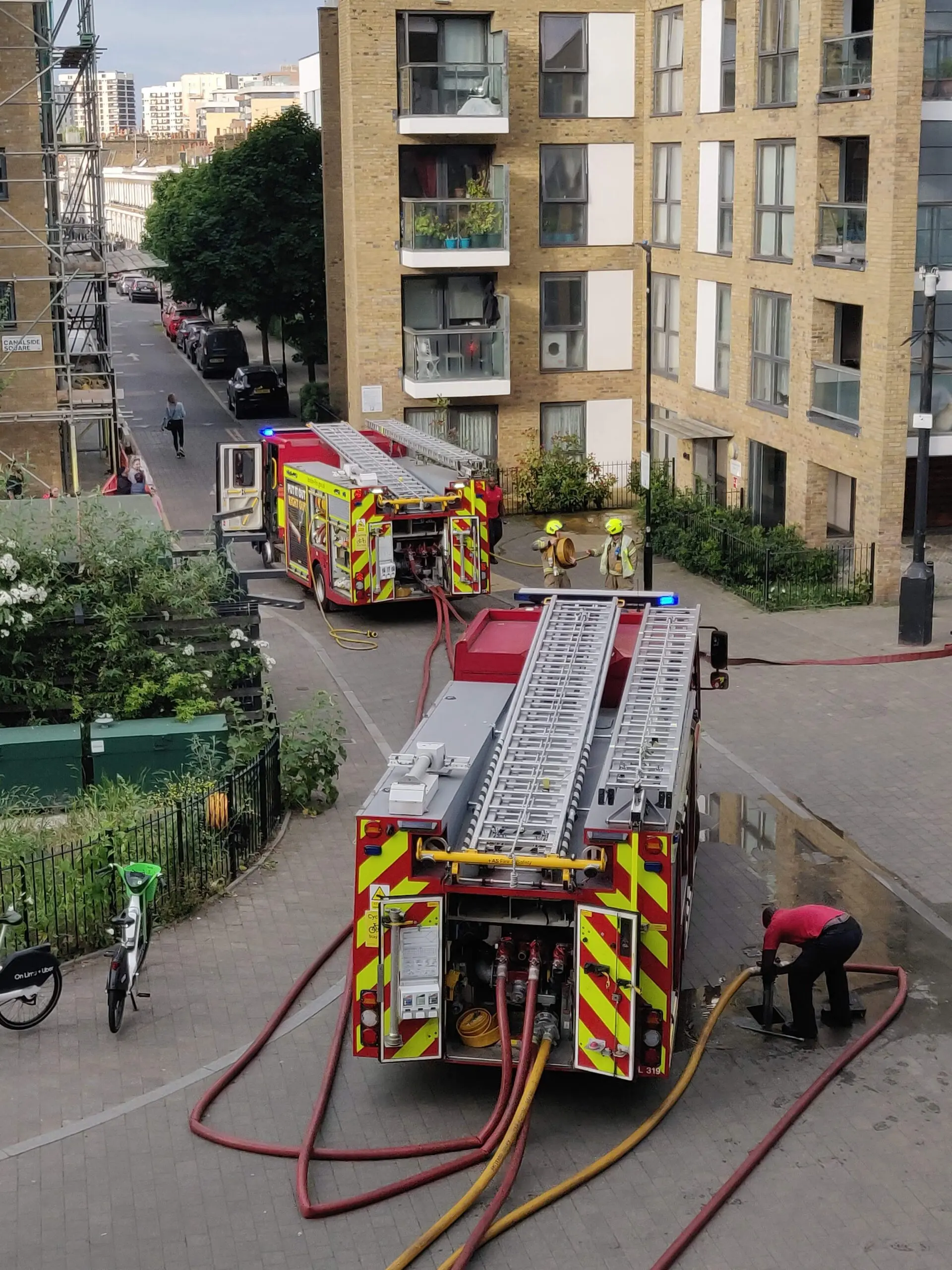
Around 40 firefighters spent the early hours of Tuesday morning tackling a major blaze at an industrial unit in Harefield after a lithium-ion battery ignited around 15 tonnes of mixed waste.
The fire broke out at a facility on Newyears Green Lane shortly after 3am on Tuesday, 29 September. Six fire engines were mobilised to the scene, with crews arriving from Ruislip, Hillingdon, Harrow, Northolt and other nearby stations.
The London Fire Brigade said the blaze was brought under control by 6.10am. No injuries were reported and the fire is believed to have started accidentally.
The early-morning call-out was a major test of resources, with six appliances and around 40 firefighters needed to bring the waste fire under control within just over three hours. Fire chiefs say incidents like this underline why batteries must be kept out of general waste streams — and anyone who spots a battery beginning to smoke, swell or overheat should move well away and call 999 rather than trying to tackle it themselves.
Battery fires a growing concern at waste sites
Lithium-ion battery fires have become a growing concern for the capital’s firefighters, particularly at waste disposal sites, where batteries discarded with ordinary rubbish or mixed waste can be crushed or damaged during collection and processing — often enough to set them alight.
“Although lithium-ion battery products that have been built to a poor standard are a higher fire risk, any battery is at risk of exploding and catching fire if it has been crushed or becomes damaged,” a London Fire Brigade spokesperson said.
It follows a string of serious fires across the capital in recent weeks, including the fatal Neutron Tower blaze in Poplar and a garage fire behind a Ladbroke Grove mews that briefly forced the closure of the nearby Tube station.
Why lithium-ion fires are so dangerous for firefighters
Unlike ordinary blazes, lithium-ion battery fires can go into “thermal runaway” — a chain reaction in which one overheating cell triggers the next, releasing intense heat, flammable gases and toxic fumes within seconds. Damaged cells can even reignite hours or days after they appear to have been extinguished.
That makes them especially hazardous for crews, who must commit large numbers of firefighters, huge volumes of water and breathing apparatus to bring them fully under control — and then keep monitoring the scene long afterwards to guard against flare-ups. “Lithium-ion battery fires can be ferocious and can spread in seconds,” the Brigade spokesperson said.
Fires at recycling centres and scrap yards “can be very time consuming for our firefighters and often require a high level of resources to put the fire out”, the spokesperson added. “We’ve also seen the detrimental environmental and societal impact these fires can have on local communities.”
The Brigade’s specialist fire investigation work has been in the spotlight recently, with a new four-legged recruit joining its arson investigation team earlier this month.
How to dispose of batteries safely
The Brigade is urging Londoners never to put lithium-ion batteries — or electrical items with hidden batteries inside — in their regular rubbish or recycling bins. “Instead, check with the retailer or your local authority’s website for the safest way to dispose of lithium-ion batteries in your area and reduce the risk of fires occurring,” the spokesperson said.
Its wider fire-safety guidance for batteries includes storing them at room temperature and away from anything that could catch fire, never leaving them to charge unattended or overnight, avoiding charging them on beds or sofas, unplugging chargers once devices are fully charged, and never using or charging a battery that is swollen, leaking, excessively hot or visibly damaged.
Small household batteries can usually be dropped off at supermarket collection points or household waste recycling centres, while larger batteries — such as those from e-bikes, e-scooters and power tools — should be taken to specialist recycling facilities rather than left in wheelie bins or dumped on the street.