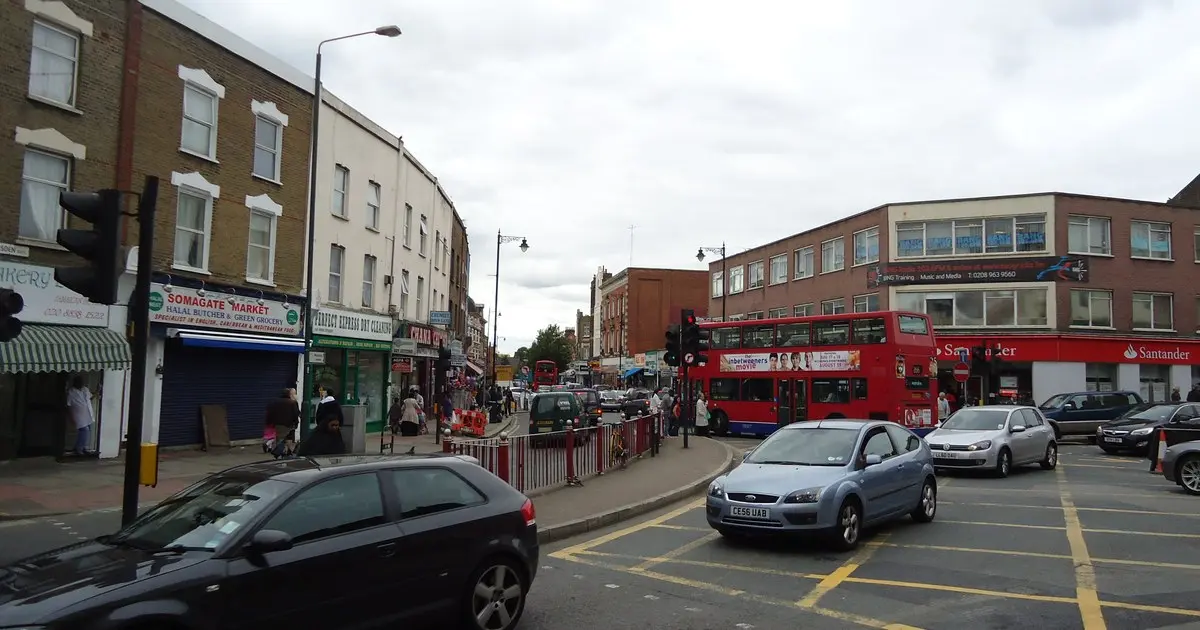
Brent has been named one of the UK’s childhood asthma hotspots, with emergency admission rates for children double the London average, according to a new report by campaign group Mums for Lungs.
The report records 115,357 asthma-related A&E and hospital admissions among children aged 0 to 18. Brent’s rate stands at 333.8 admissions per 100,000, double the London average, with the highest concentration of cases recorded in Harlesden and Kilburn.
Alexandre Amandine, a Green Party councillor for Harlesden and Kensal Green and a campaigner with Mums for Lungs, said: “We cannot tolerate that childhood asthma admission rate in Brent is twice the London average. Brent council needs to have much higher health ambitions to protect children from asthma and other pollution-related illnesses. That requires tackling all sources of air pollution head on, as well as tackling mould and damp in dwellings.”
“Concretely, as a priority, I advocate for Brent Council to adopt World Health Organisation (WHO) air quality standards as they are much stricter than the UK ones. That would drive a much more ambitious clean air strategy. Other London boroughs such as Camden have already adopted the WHO standards. As Brent Council is currently reviewing its Air Quality Action Plan (AQAP) that will be implemented from 2028, now is the time for Brent to prioritise clean air for the health of all residents, and especially children.”
A 12.4% decrease in admissions was recorded in this year’s figures compared with the previous year, but Brent remains the second-highest borough in London for emergency admissions in both the 0 to 9 and 10 to 18 age groups.
The Brent Community and Wellbeing Committee identified poor housing conditions, overcrowding, air pollution and deprivation as key factors behind the elevated asthma rates.
Jermima Harthorn, founder of Mums for Lungs, said: “This has to be a wake-up call for our Mayor to continue the work he started which has seen pollution levels fall.”
Brent Council has highlighted progress in air quality improvement, with nitrogen dioxide levels at monitoring stations falling by an average of 45% since 2019, supported by measures including School Streets, better cycling infrastructure, greener transport and planting more trees across the borough.
Councillor Liz Dixon, cabinet member for community safety and public health, said: “Every child deserves to grow up breathing clean air, and for families living with asthma and respiratory conditions, this is about their health, quality of life and the kind of borough we want to leave to future generations. We’ve made real progress in Brent, with nitrogen dioxide levels at our monitoring stations falling by an average of 45% since 2019. However, we recognise there is still a long way to go, and while meeting national standards is important, we share the World Health Organisation’s ambition to go further. Our next Air Quality Action Plan will build on that progress, but cleaner air is something we all have a part to play in delivering. Whether it’s walking to the shops, cycling to school or choosing public transport instead of driving where possible, small changes in our everyday lives can make a lasting difference to the air we all breathe.”
The council confirmed that nitrogen dioxide concentrations have met the national annual mean objective since 2023. A review of the Air Quality Action Plan is scheduled for 2028, with targeted interventions planned for areas with the highest pollution levels. Councillor Amandine has urged the council to use this review as an opportunity to adopt the tougher WHO air quality standards.
School Streets schemes, which restrict traffic outside schools at drop-off and pick-up times, are now widespread across London, with a record 1,057 schools winning gold awards for greener and safer journeys, while Islington is pressing ahead with liveable neighbourhoods designed to cut traffic and pollution by 2030.