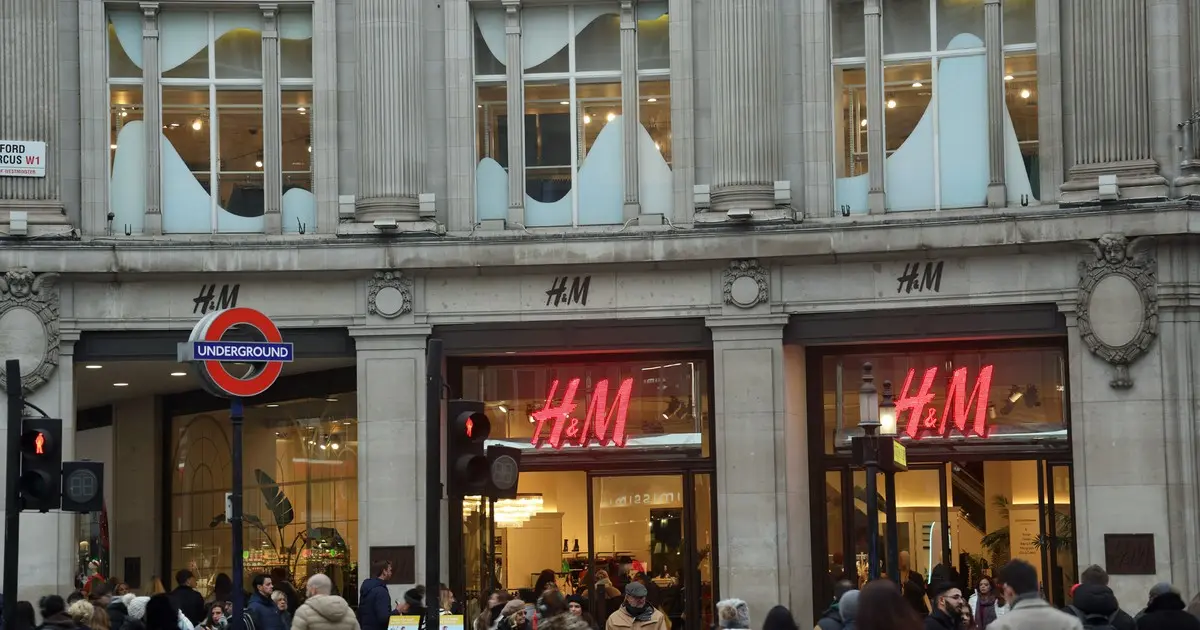
Hours after Oxford Street went traffic-free, the new rules were already being tested. Cyclists rode straight past the green bollards put up overnight to keep vehicles out, while security guards stationed at the entrances tried to wave them down and get them off their bikes.
It was the first morning of the pedestrian zone, and the picture at street level was messier than the launch ceremony suggested. Guards could be seen gesturing at riders to dismount and walk, but plenty of them carried on regardless — delivery riders and commuters on e-bikes among them, threading between the bollards and heading down the newly cleared road.
Signs along the route tell cyclists they must dismount and walk their bike through the zone. Transport for London has confirmed that e-bikes, pedal bikes and e-scooters are no longer allowed through the area at all, and must instead be funnelled onto surrounding routes. That message, on day one at least, did not reach everyone — or did not stick.
The ban itself is sweeping. The road is closed to all traffic between 7am and midnight, every day of the week. Cars, buses, taxis, private hire vehicles, cycles, scooters and pedicabs are all barred from the pedestrianised stretch, which runs for almost a kilometre between Orchard Street and Great Portland Street, taking in Oxford Circus. The only exceptions are deliveries, allowed between midnight and 7am, and emergency vehicles, which keep access at all times.
Overnight, the changeover caught some road users by surprise. One member of the public described the scene as “absolutely pandemonium” as buses kept arriving at the new bollards and meeting the diversion. The bollards went in overnight, and by the morning commute the street looked very different from the day before.
Early on Monday morning, commuters coming out of Oxford Circus station found workers putting the finishing touches to the new layout, including one final road marking welcoming people to the transformed street. Security guards stood at the station exit, flagging down cyclists as they approached. Some pedestrians, confused by the new barriers, asked whether the street was closed to them too. It is not — the whole point is that people on foot now have the run of it — but old habits die hard, and almost all the early commuters stuck to the pavements rather than stepping out into the middle of the road.
The first section to be pedestrianised runs from Selfridges, near the Marble Arch end, to Great Portland Street, and it arrives just as the festive period approaches — the busiest weeks of the year for the West End’s shops. As we reported when the scheme came into force today, the Mayor has hailed it as a new era for the street, which sees around £3.1 billion of annual spend, with the ambition of putting Oxford Street alongside global shopping destinations such as Times Square and the Champs-Élysées.
But the first day also showed the practical problem with a scheme of this scale: a ban is only as good as its enforcement. The guards on duty today had no powers beyond persuasion — waving riders down, asking them to dismount, and pointing them towards the surrounding routes. Nothing has been said about fines, arrests or any police enforcement role, and no figures have been given for how many cyclists ignored the ban. Whether the approach changes as the zone beds in — with firmer barriers, clearer signage, or a different enforcement presence — is not yet known.
For now, the pattern of the first day is clear enough. The traffic is gone, the bollards are up, and the street belongs to pedestrians in principle. In practice, the cyclists who used Oxford Street as a through-route are still finding their way through it, and the people tasked with stopping them are, for the moment, relying on a wave and a word.
Londoners face a busy week of travel disruption elsewhere too. The M25 has 29 overnight closures across four nights this week, and the Elizabeth line faces a ten-day Christmas shutdown between Liverpool Street and Shenfield from 27 December.