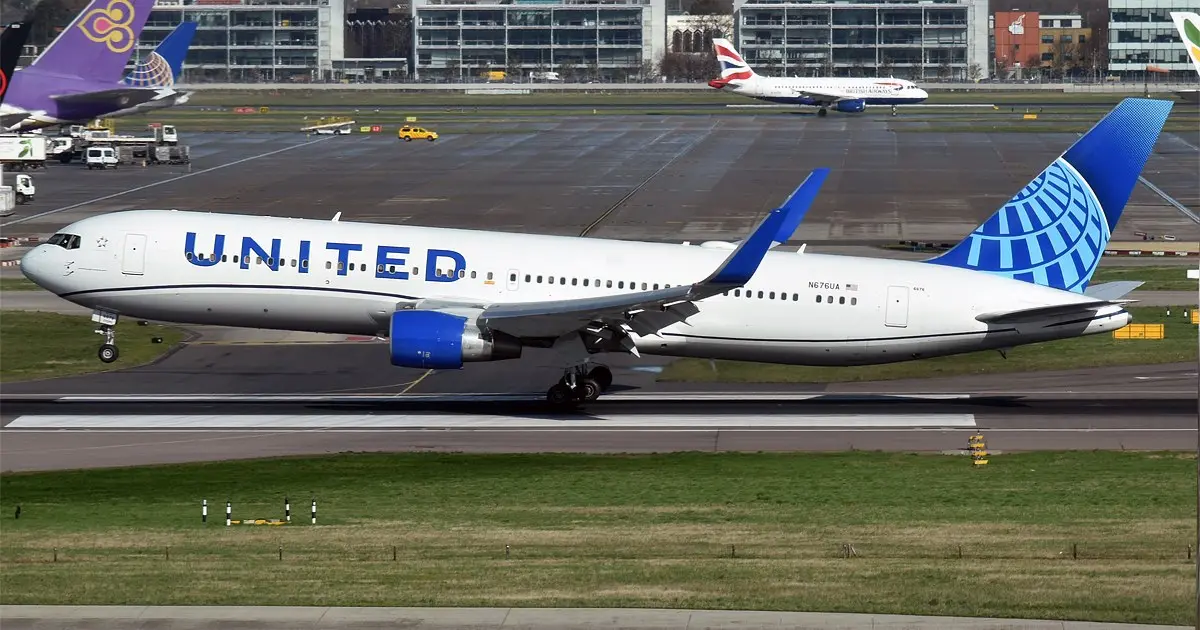
A United Airlines flight was forced to make an emergency return to Heathrow Airport this afternoon after reporting a technical fault mid-air.
The UA941 service departed Heathrow’s 27L runway just after 4pm, bound for Newark, before the emergency was declared. Flight tracking showed the aircraft turning back toward London shortly after its initial climb.
According to aviation data provider AirNav Radar, there was an “acrid burning smell” on board. This has not been confirmed at this time.
The aircraft landed back at Heathrow just before 6pm. United Airlines is yet to announce the nature of the technical fault.
What happens during an emergency return
Emergency returns are a standard safety procedure. When flight crews detect a potential issue, they turn the aircraft back to its departure airport rather than continue across the ocean. Depending on fuel levels, the plane may circle to burn fuel before landing, or head straight in with emergency services on standby.
An unusual smell in the cabin is one of several triggers that prompt crews to return. Aircrew are trained to treat any report of smoke or fumes seriously, and the decision to turn back is taken as a precaution. The aircraft will now be inspected by engineers before it is cleared to fly again, and United is expected to confirm the cause in due course.
Second Heathrow turnback in ten days
It is the second time in ten days that a transatlantic flight has been forced to turn back to Heathrow.
On October 5, British Airways flight BA295, bound for Chicago, squawked 7700 — the internationally recognised transponder code for a general emergency — after descending 28,000 feet over Ireland. The Boeing 777 circled over the Bristol Channel for several hours to reduce its fuel load before landing safely back at Heathrow shortly after 5pm, some four hours and 47 minutes after takeoff.
Reports from the time said oxygen masks were deployed in the cabin as the aircraft made its rapid descent. The aircraft, a Boeing 777-200ER registered as G-VIIA, had departed Heathrow’s Terminal 5 at 11:50am for what was meant to be an eight-hour, 40-minute journey to Chicago O’Hare.
As the plane headed back to London, emergency response teams were placed on standby at potential diversion airports as a precaution — standard practice when an aircraft squawks 7700.
British Airways said the flight returned following a technical issue and that passengers disembarked normally, adding that teams were working to get travel plans back on track as quickly as possible.
In September, a separate BA flight from Dublin to Heathrow issued the same 7700 code. The internationally recognised code alerts air traffic control to a general emergency and gives the aircraft priority handling.
Neither incident resulted in injuries, and both aircraft were returned to Heathrow as the nearest suitable airport. No passengers or crew were harmed in either turnback. Transatlantic aircraft carry large fuel loads, and an early return often requires careful fuel management before landing — which is why the BA flight spent hours circling before its final approach.
What happens next
Passengers on board UA941 are expected to be rebooked onto alternative services. Under aviation rules, airlines must provide care and assistance to passengers affected by cancellations and significant delays.
Serious incidents can be investigated by the Air Accidents Investigation Branch, which examines reports from crews and flight data to establish what happened. United Airlines has been contacted for comment. This is a developing story and London Streets will update it as more details emerge.
Heathrow continues to handle normal operations. The airport has been expanding its contactless eGates this year, and London City Airport recently hosted its annual charity race.