Amey has been appointed to carry out the first stage of early works on the proposed Docklands Light Railway extension to Beckton Riverside and Thamesmead, in the latest step for a cross-river link that has been discussed for years.
Docklands Light Railway Limited, the Transport for London subsidiary that operates the DLR, has awarded the firm a call-off contract under TfL’s Infrastructure Improvement Framework. The award notice carries a value of £41.8 million excluding VAT, usually reported as around £42 million — but that figure needs careful reading.
Only the first stage of the work is actually committed so far. Stage 1.1 covers mobilisation, a review of the scheme programme and its assumptions, the identification of risks and mitigations, the definition of the early works themselves, and survey scoping. In other words, this is the stage that establishes what needs doing and what it might cost, before any bigger spending is agreed.
The later stages are not yet committed. A second phase would deliver agreed surveys and investigations, develop the enabling works scope and firm up costs, programme and commercial arrangements, and a final stage would deliver the defined early works ahead of any main construction programme. Each of those steps depends on affordability being confirmed, the necessary approvals being secured and contractual conditions being satisfied, and their price has yet to be agreed. The £41.8 million is therefore the value of the whole award notice, including estimates for work that may follow — not money already committed to building a railway.
The initial contract is due to start on 10 November 2026 and run to 31 October 2028, with a possible extension to October 2030.
What the extension would look like
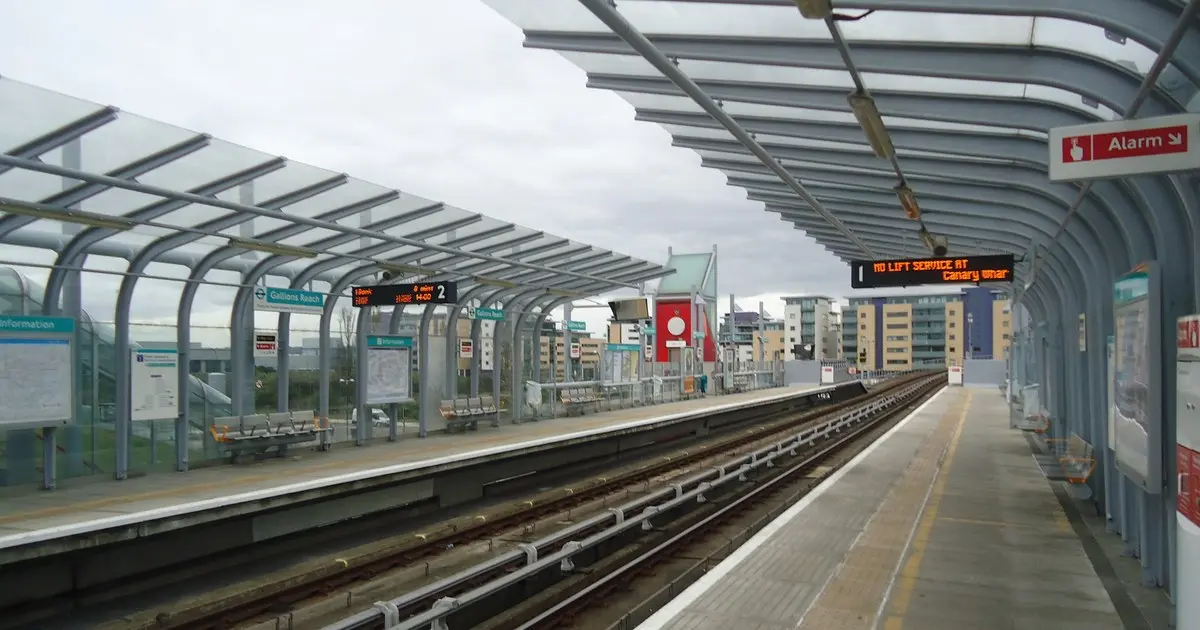
The proposed route runs for about 3km. It would branch from the existing DLR at Gallions Reach in the Royal Docks, serve a new station at Beckton Riverside, then cross the Thames through a viaduct and a 1.5km twin-bore tunnel to a new station in north Thamesmead, in the Cannon Retail Park area.
Scheme forecasts suggest the extension could support around 30,000 new homes and deliver a £15.6 billion boost to London’s economy. Those are forecasts for what the completed railway might unlock, not guaranteed outcomes, and they depend on the scheme being built in full.
What this stage actually means for residents
For people living in Thamesmead and Beckton Riverside, the honest reading of this appointment is that it brings surveyors and planners, not tunnelling machines. Stage 1.1 produces the programme review, the risk register and the defined scope of early works that later decisions will be based on. Nothing in this award authorises construction of the railway itself, and no construction start date has been confirmed.
That matters because early works contracts are often misread as construction starting. Here, the staged structure is deliberate: TfL’s framework lets the client test affordability and firm up costs before committing to the larger sums that surveys, enabling works and eventually main construction would require.
Why Thamesmead has waited so long
Thamesmead has no railway station of its own, and its residents have long relied on buses to reach the wider transport network. The proposed DLR link is intended to change that, connecting the area directly to the Royal Docks and, through the existing network, to Stratford, Canary Wharf and beyond.
The station site in north Thamesmead sits close to Peabody’s large regeneration site at Thamesmead Waterfront, and the extension is closely tied to plans for thousands of new homes on both sides of the river. The area’s past as a town built without a rail connection is a large part of why the scheme carries so much local expectation — and why each new step is watched closely.
What happens next
TfL plans to apply for a Transport and Works Act Order in early 2027, the legal powers needed to build and operate the line. Construction could begin by 2029 if funding and permissions fall into place, with trains possibly running in the early 2030s. None of those dates is a promise: the scheme still needs final funding arrangements and approvals.
The award follows the third public consultation on the extension, which showed broad support for the proposals. That consultation outcome shaped the scheme’s next steps, but it was not itself permission to build — the Transport and Works Act Order application is the formal step that seeks those powers.
It also comes as TfL presses ahead with other long-planned extensions across the capital, including the Bakerloo line extension towards Lewisham, where new funding powers announced in the Budget could change how major transport schemes are paid for. For Thamesmead, the Amey appointment moves the DLR scheme from consultation documents into contracted preparatory work — a modest step, but a concrete one.