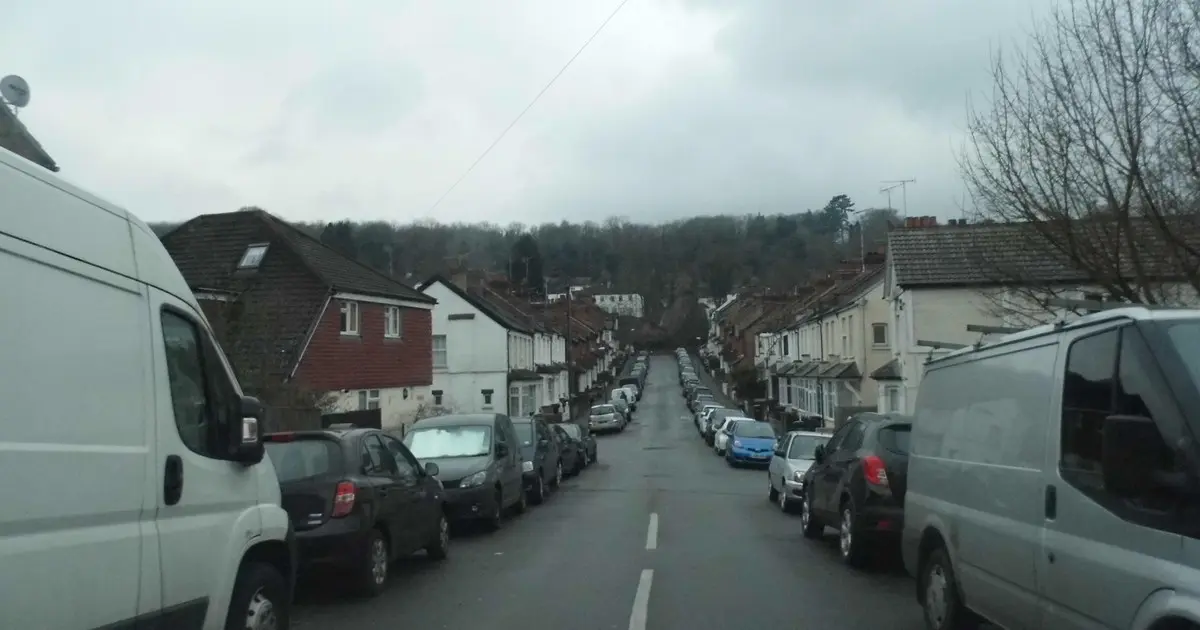
The Sunnydene Road HMO plans in Purley are dead. Croydon Council has thrown out proposals to turn a family home on the quiet street into a five-bedroom house in multiple occupation, after 65 residents wrote in to object and not a single person backed the scheme.
The proposals for 14 Sunnydene Road would have converted the three-storey house into shared accommodation for five people. Croydon Council refused the application on October 8, setting out four detailed reasons why the scheme failed to meet its planning standards.
Officers said the conversion would mean the loss of a three-bedroom home, smaller than 130 square metres, at a time when the borough has an identified need for houses of that size. Removing it, they concluded, would run directly against Croydon planning policy.
The standard of the rooms on offer was the second ground for refusal. Bedroom 1 would have suffered from a poor outlook because of where refuse storage was placed, alongside poor ventilation, a lack of privacy, noise and disturbance and what the council called a “cramped living environment”. Bedrooms 3 and 5 would also have been cramped, the council said.
Parking was the third reason. The applicant had given no legal undertaking to stop future residents applying for parking permits, and had submitted no transport assessment containing a parking stress survey. Officers warned the HMO could therefore cause a “harmful increase in car parking stress”, with more congestion and “anti-social parking” on surrounding streets. The cycle storage proposed was judged inadequate as well, with officers saying it was not sufficiently well-designed or accessible for future residents.
Residents and councillors united in opposition
The scheme proved controversial from the start. All 65 representations received by the council objected; none supported it.
Croydon Conservatives said they “object strongly” to an HMO at the site, describing it as “considerably out of character” in an area they said almost exclusively consists of family homes. They raised concerns about parking and waste storage, adding: “As ward councillors, we will always stand up against inappropriate applications.”
The rejection comes during a difficult period for the town hall, which recently failed to recruit a permanent chief executive, leaving an interim in post on £1,500 a day. The council’s planning department, however, continues to decide applications against adopted policy regardless of the leadership vacuum at the top.
What the applicant argued
Plans showed the existing house would have been converted without any extension or change to its external appearance. One bedroom would have sat on the ground floor alongside a communal kitchen, dining and living area, with two bedrooms and a bathroom on the first floor and two more bedrooms and a bathroom in the loft.
HED Architecture, which prepared the design and access statement, argued the scheme would provide “high-quality shared accommodation” while keeping the character and appearance of the property. It said the development would make efficient use of existing housing stock and help meet demand for shared accommodation close to local services and public transport.
The planning statement also contended there would be no overlooking, loss of privacy, overshadowing or visual harm to neighbours, precisely because nothing outside the house was due to change. But officers noted in the refusal that no pre-application discussions had taken place and that improvements suggested by the local planning authority had not been adopted.
Why the Sunnydene Road HMO split opinion in Purley
Houses in multiple occupation sit at a fault line in London’s housing debate. For renters, they are often one of the cheapest routes to a room near work and transport links; councils in outer London acknowledge there is genuine demand for shared accommodation.
For neighbours, though, they can mean more cars competing for the same kerb space, bins overflowing on collection day, and a faster churn of residents with less stake in the street. That is why applications like the Sunnydene Road one tend to attract intense local opposition even when the building itself would barely change.
Croydon’s policy tries to balance the two: it does not ban HMOs outright, but it requires them to meet standards on room sizes, amenity space, parking and waste storage, and to avoid harming the character of residential areas. Schemes that lose family-sized homes are treated with particular scepticism where the borough has identified a need for them.
What happens next
A refusal is not necessarily the end of the story. Applicants can appeal to the Planning Inspectorate, which appoints an independent inspector to reconsider the application on its merits. Appeals against a refusal must normally be lodged within six months of the decision date.
The applicant could also submit a revised scheme addressing the reasons for refusal, or seek pre-application advice from the council before coming back, something officers noted was skipped this time. For now, though, 14 Sunnydene Road remains a family home, and the 65 objectors have their answer.
File photo: Sunnydene Road, Purley — David Howard, CC BY-SA 2.0, via Wikimedia Commons.