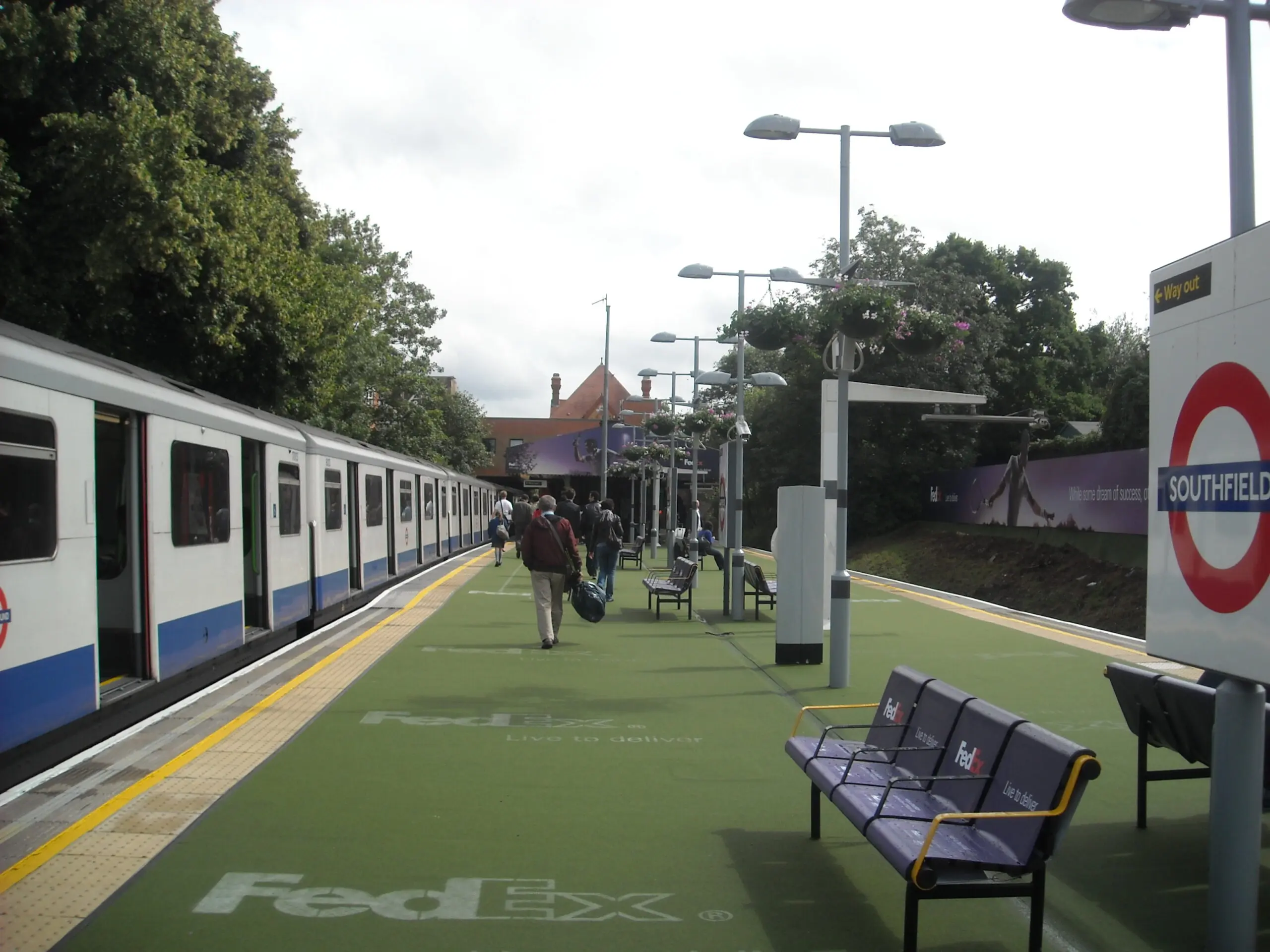
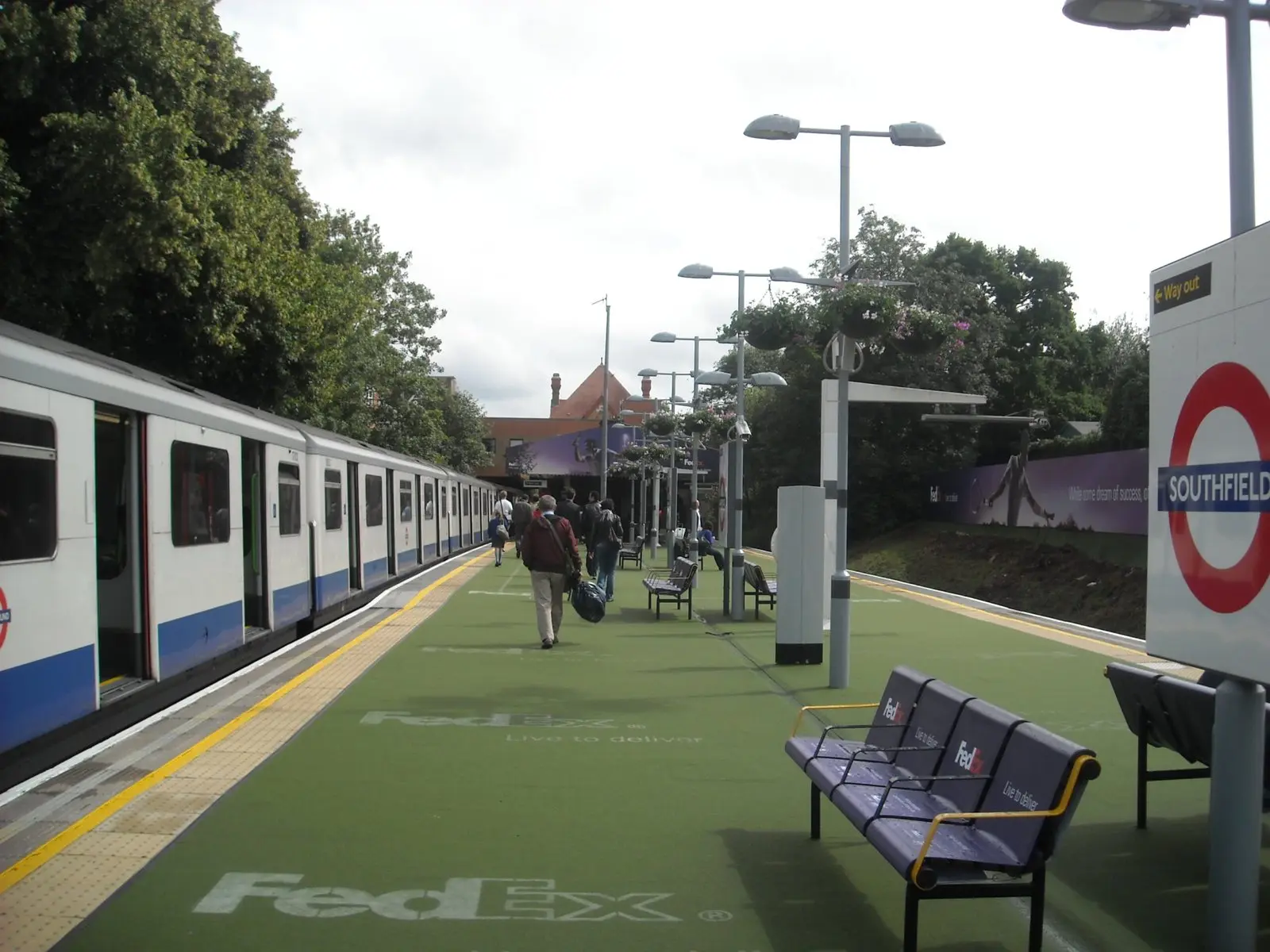
You could not have scripted it. As campaigners packed the forecourt outside Southfields station on Thursday night to protest about the District line’s chronic unreliability, Transport for London was reporting delays on the very same stretch of track — at the very same station.
The problem, according to TfL’s own status page, was “a track fault at Southfields”: the station the protesters were standing outside. TfL described it as “minor delays between Earl’s Court and Wimbledon”, while passengers turfed off trains at Parsons Green were told the fault lay at Wimbledon Park.
It was the second protest by Fix The District, a volunteer passenger campaign set up to demand action on the Wimbledon branch’s failing reliability. Following a first rally at Wimbledon in September, the campaign took its fight to Southfields — and drew a crowd that crossed party lines.
Wandsworth Council leader Robert Morritt attended, along with Nick Austin, the council’s cabinet member for transport, councillors from both the Conservative and Labour groups, and Putney’s MP Fleur Anderson. Staff from TfL also came along — unofficially — to listen.
The campaign’s central demand is modern signalling for the Wimbledon branch, which runs through East Putney, Southfields and Wimbledon Park. TfL has said in writing that it has no plan or funding to replace the signals, which date back to the 1980s — though it says the work “will be assessed in the next financial year”, which begins in April 2027.
The petition, which asks the Government, the Mayor of London and TfL to fund the resignalling, had reached 2,464 signatures by Thursday night — more than 800 up since the first protest. The campaign said more than 500 people signed during the evening itself.
Its next aim is to get TfL to put a feasibility study — a first look at what could be done — into its plans for next year. The campaign’s organiser, Max Barber, said the money would have to come from central government. “TfL don’t want an unreliable District line, but equally they can’t afford it,” he said. “So the government will have to fund it, that’s obvious.”
Anderson said some realism was needed: people ask her whether the protest means TfL will fix the line next week. But she said the campaign’s data was helping her make the case to Seb Dance, the Deputy Mayor for Transport. “They love data in Transport for London, and understandably so,” she said. “So this gives us the data to say how bad it is for people.”
That data makes grim reading. The campaign now counts 47 days with a signal failure on the branch between 11 February and 12 October — still one day in five. Nearly half the delays passengers have logged came while TfL’s status page was insisting the service was good.
TfL’s answer so far has been a £500,000 package of fixes for the branch. Anderson says it has not been enough: “This £500,000 hasn’t proved to be the fix that we were promised. So it needs something bigger than that.” She told the crowd that one constituent had come to her surgery to say she was moving out of the area. “This is the last time you’re going to see me, ’cause I’m moving out of the area,” Anderson recalled being told. “Because it’s not reliable enough. I don’t know that I can get to work.”
The human cost of the disruption was underlined by other speakers. One local Airbnb host said she had spent a closure weekend getting guests from Poland, whose English was poor, around by bus. “It’s an absolute nightmare,” she said. “It’s two buses minimum.” Guy Humphries, a councillor for Southfields, said he was pleased to see a grassroots campaign on a problem that has gone on for years. “Everybody blames everybody else and nothing happens, and it goes round and round and round,” he said. “It’s so deeply frustrating.”
Barber said the campaign was not trying to “heap blame” on TfL, and preferred a more collaborative approach. He said TfL and Network Rail have a working group trying to improve things on the line, which he believes is behind the improvements TfL credits to the £500,000. The campaign is also working on a way to put a figure on the cost of the poor service: the hours passengers lose, and from that the cost to the local economy.
The branch was left out of TfL’s signalling upgrade in 2020. “In a way it’s frustrating, because they take it out and it’s hard to get back in,” Anderson said. “But in another way, there is hope, because there is something for us to go back into.”
What happens next: Anderson is meeting South Western Railway’s managing director, Lawrence Bowman, in two weeks — the company’s trains share the branch’s track and would also need adapting for any resignalling. Barber expects TfL to decide by 9 November whether it will disclose what leaving the branch out of the upgrade saved it, or treat the figure as commercially sensitive. He is already planning the next protest — one station further down the line, and one stop closer to Westminster: East Putney. The branch itself shuts again for engineering work on the weekend of 24 and 25 October.