


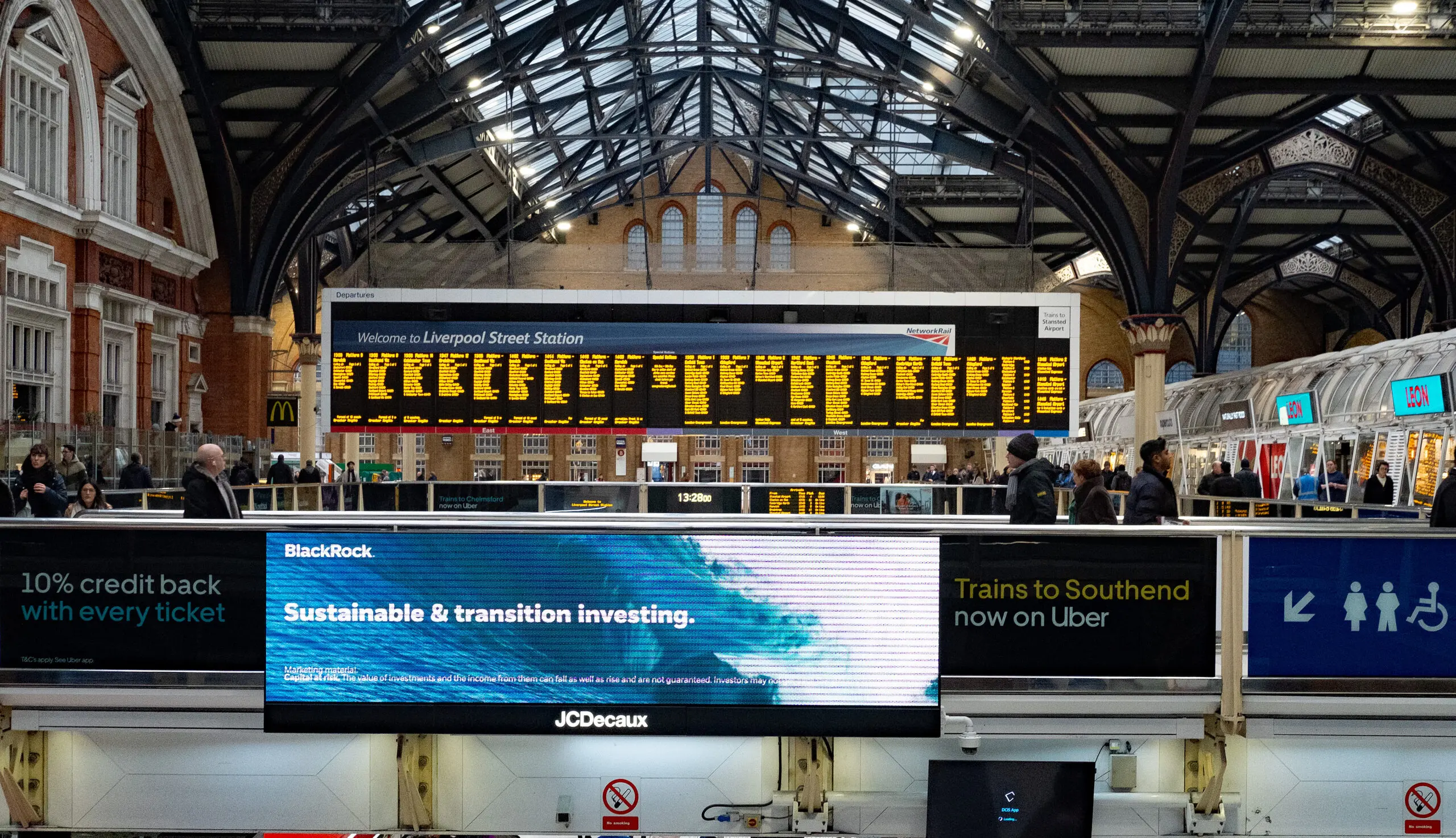
Britain’s busiest railway station has just got a whole lot brighter. The Liverpool Street station roof makeover has given the grand Victorian trainshed a spectacular new lease of life after a two-year restoration project, flooding the platforms below with natural light for the first time in decades.
Network Rail and its contractor Morgan Sindall Infrastructure have replaced 770 ageing glass panels above the station’s main concourse and platforms 1 to 10. The old panes had grown discoloured and were coated in lichen, blocking out most of the daylight — but light meter readings taken by engineers show the platforms are now up to 56 times brighter than before.
The scale of the work is striking: the new panels cover 11,000 square metres, roughly the same area as 8.8 Olympic-sized swimming pools. Alongside the glazing, engineers installed new guttering and boosted rainwater capacity to cut the risk of leaks and make the roof more resilient against heavy downpours.
Martin Beable, chief operating officer for GBR Anglia, said: “This project has lit up our previously dingy trainshed, delivering a major improvement for passengers while keeping disruption to a minimum. Liverpool Street is Britain’s busiest station and one of the rail network’s most historic and iconic landmarks. It now has a roof to do it justice.”
The project also lovingly restored one of the station’s most characterful heritage features — the decorative timber valance that has adorned the trainshed since 1874. More than 800 timber slats were repaired or newly crafted at a specialist workshop in Bristol, each one individually numbered so it could be returned to its exact original position.
Despite the scale of the operation, passengers barely noticed. Engineers worked from innovative sliding scaffolding decks suspended above the platforms, allowing most of the work to happen during normal operating hours without scaffolding cluttering the concourse at ground level.
The scheme was delivered by the unified GBR Anglia team, which brings together c2c, Greater Anglia and Network Rail Anglia as the industry prepares for the creation of Great British Railways.
The roof revamp follows hot on the heels of another passenger-focused upgrade: 21 new ticket gates installed between platforms 1 and 10 by contractor Spence, after retail units were removed to free up space. The total number of gates has jumped from 36 to 57 — a 58 per cent increase — while five manual wide gates were converted to automatic operation to improve accessibility. Around 450 speakers are also being replaced to make announcements clearer.
A station with history
Liverpool Street’s story stretches back to 1874, when it opened as the London terminus of the Great Eastern Railway beneath the vast trainshed designed by engineer Edward Wilson. A century later the station faced the wrecking ball: 1970s redevelopment plans threatened to sweep away the Victorian building, until a celebrated campaign led by poet John Betjeman and the Victorian Society secured its future. The station was Grade II* listed and rebuilt in the 1980s — a rescue that makes today’s roof restoration feel like the latest chapter in a long love affair between Londoners and their station.
London’s stations are having a moment
Liverpool Street is far from the only London terminus getting attention. Euston is in line for a £50m upgrade as Avanti West Coast prepares for nationalisation, while across town London Victoria is set to host the UK’s first train station food hall. TfL, meanwhile, has launched a year-long pilot to bring station cleaning in-house across the Tube and bus network — another sign that the passenger environment is firmly back on the agenda. The revival extends beyond the platforms too: the buzzing Broadgate quarter beside the station, where £5 pints recently arrived, is thriving.
Bigger changes are still to come at Liverpool Street itself. Earlier this year the City of London resolved to grant planning permission for a major redevelopment designed to cope with passenger numbers expected to hit 158 million a year by 2041. The plans promise eight new lifts and an increase in escalators from four to ten, with Network Rail now working through the Section 106 agreement before the proposals go to the Greater London Authority. Crucially, the Victorian trainshed — and its newly gleaming roof — will be preserved at the heart of it all.