


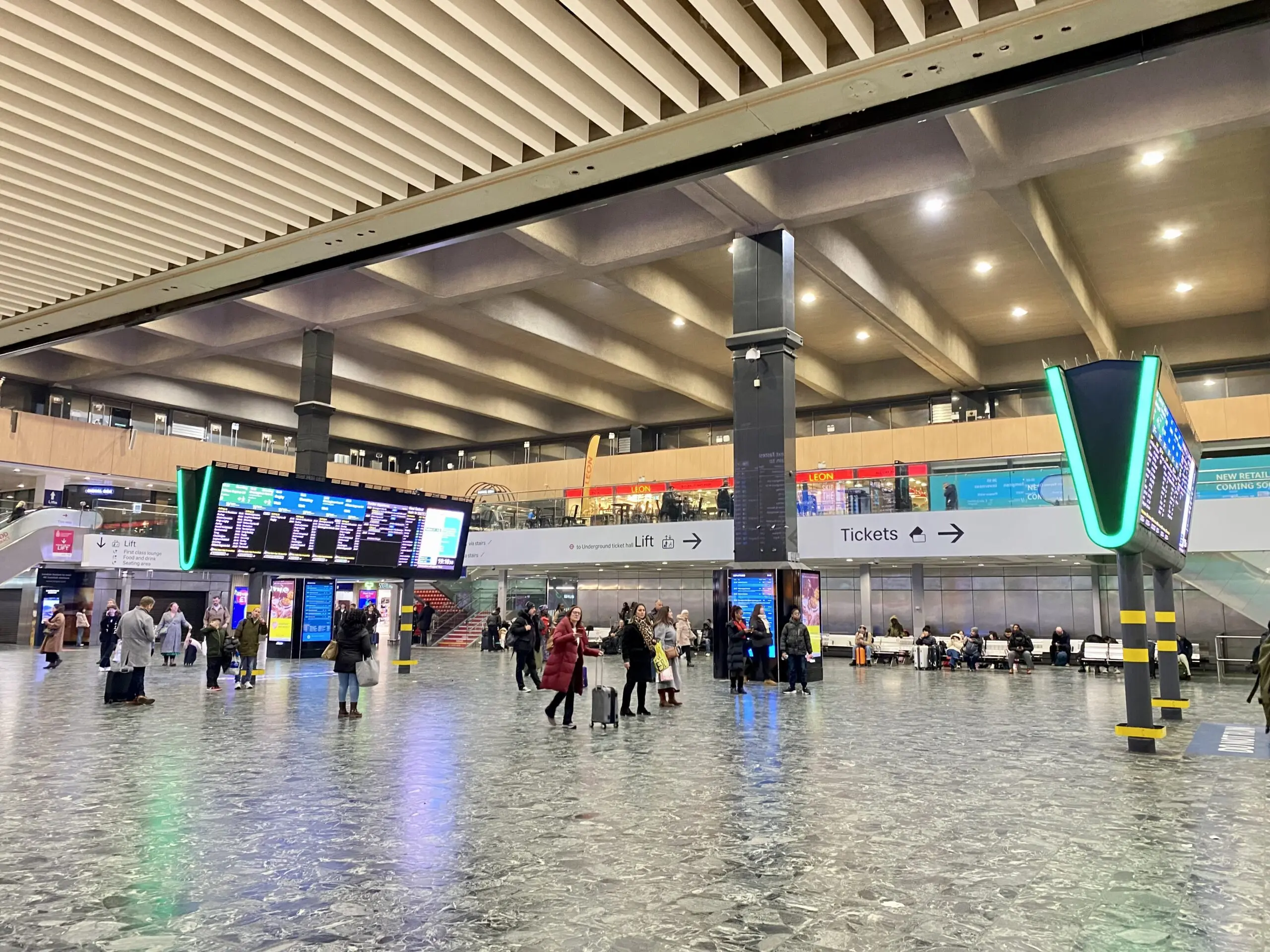
Avanti West Coast is to be brought into public ownership from 7 March 2027, the government has confirmed, in a move that will end private operation of Britain’s busiest intercity railway line.
Transport Secretary Heidi Alexander announced the decision as part of a wider drive to return passenger rail services to public control, saying she was calling time on years of delays, cancellations and passenger frustration on the West Coast Main Line.
The announcement was paired with a £50 million upgrade programme for London Euston over the next three years, aimed at transforming the passenger experience at the London terminus that has become a byword for overcrowding and last-minute platform announcements.
What the government announced
According to the Department for Transport, Avanti West Coast’s services will transfer into public ownership at the first opportunity after the expiry of its current contract — 7 March 2027.
Avanti is currently run by First Trenitalia West Coast Rail, which was awarded the contract in October 2023 to run services until 2032 at the latest. The government is exercising a termination right in the contract to bring the end date forward by five years.
Ms Alexander said: “For years, we’ve heard stories of Avanti underperforming, with passengers left paying the price. Enough is enough. That is why we will bring Avanti into public ownership at the earliest opportunity, in March next year.”
Prime Minister Andy Burnham backed the move, saying passengers had been failed “time and time again” and writing that the government was “putting essential services back in public hands and building a railway that actually works for the people who use it.”
The Department for Transport says performance on the route remains behind the industry average, with infrastructure problems on the West Coast Main Line — caused by long-term underinvestment — the biggest source of disruption for passengers.
£50m for Euston: what passengers will get
The Euston package is the most immediately visible part of the announcement for Londoners. The £50 million will be spent over three years, with £11 million going in first towards more seating, better waiting areas and refurbished toilets.
Within the next year, passengers should also be able to get to their train further in advance of departure, streamlining the boarding process — a direct answer to the notorious last-minute platform announcements that send hundreds of passengers sprinting across the concourse at once.
A further £10 million will be invested in other stations along the West Coast Main Line to improve comfort and cleanliness before the end of 2027.
The Euston upgrade lands alongside other passenger-focused changes already in train. TfL has launched a year-long pilot bringing station cleaning in-house across its network, and the Euston investment suggests the capital’s major termini are finally getting sustained attention on the basics passengers actually notice: seats, toilets, waiting areas and clear information.
Beyond Euston: the wider improvement plan
Nationalisation will be supported by what the government calls a dedicated improvement plan to “fix the basics”. The headline measures include:
£10 million extra for power and signalling maintenance, to be delivered by the end of 2027 — on top of an existing £840 million infrastructure programme. Infrastructure faults account for around a third of all delays on the West Coast Main Line.
Timetable changes from December 2026, focused on routes in and out of Manchester, aimed at faster and more reliable services.
Better onboard connectivity through low earth orbit satellite technology, promising faster and more stable wifi and 5G coverage along the route — a frequent complaint from passengers working on the move.
The government also argues the structural change matters: bringing track and train closer together ends what it calls the fragmentation that has contributed to infrastructure problems, “making it everyone’s business to get it right for passengers”.
What it means for passengers
For the millions who use Avanti services between London Euston, Birmingham, Manchester, Liverpool, Glasgow and Edinburgh, the practical timeline looks like this. Timetable improvements begin this December. The transfer to public ownership happens on 7 March 2027. And the new Great British Railways body, which will eventually oversee the whole network, is expected to be set up after all public ownership transfers complete by the end of 2027.
The government points to early evidence from operators already in public hands: on average, publicly owned operators perform better than those still privately run, fares have been frozen for the first time in 30 years, and 76,000 extra seats a week have been introduced on public operator services.
Whether nationalisation delivers the reliability passengers want will be judged on the things travellers actually experience: trains that run on time, seats that exist, toilets that work, and information that arrives before the platform does. On that measure, the Euston upgrade — unglamorous, practical, focused on seating and toilets — may turn out to be the most telling part of the whole announcement.
London’s rail network has had a difficult run of disruption stories lately, from Monday morning rail chaos into Victoria to the long-running debate over the best value operators out of Euston itself — London Northwestern Railway’s cheaper fares have made it a favourite for budget-conscious travellers on the same corridor Avanti serves.