


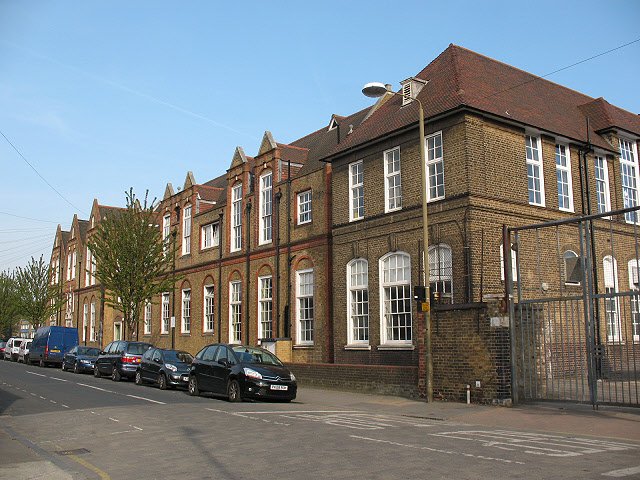
A Greenwich primary school is investigating a safeguarding incident after a pupil went missing from its campus during breakfast club last week.
James Wolfe Primary School has told parents that the child slipped away from its Randall Place building — which caters for nursery children up to Year 3 — on Monday, September 28. The child was found safe later the same day.
In a letter to parents and carers, headteachers Ms Gallagher and Mrs Simpson said they wanted to reassure families that “all safeguarding emergency procedures” were followed once the child’s absence was discovered, and that staffing ratios had been “well maintained”.
The headteachers did not downplay what had happened. “This was a breach of security and we are treating this matter with the utmost seriousness,” they wrote, describing the safety and security of children as the school’s “absolute priority”.
The school has ordered what it calls a “comprehensive review” of how its breakfast club operates. Procedures for the club and the routines used to move children between spaces are being examined to decide whether further safeguards are needed.
Some changes have already taken effect. The school is moving to single gate access, adjusting the hours its gates are open, and splitting breakfast club into two separate groups — one for nursery, reception and Year 1 pupils, the other for children in Years 2 and 3.
A council spokesperson said the authority does not comment on individual safeguarding cases. “However, we have every confidence in our borough’s schools that they follow the appropriate safeguarding protocols, as well as taking measures to ensure the safety and security of their pupils,” the spokesperson added.
Why breakfast club transitions matter for safeguarding
Schools in England have a legal duty to keep pupils safe whenever they are in their care — and that duty extends to wraparound provision such as breakfast clubs, which often run before the formal school day begins. Under the Department for Education’s statutory guidance, Keeping Children Safe in Education, schools are expected to have clear procedures covering registers, handovers between staff and the security of their premises.
Breakfast clubs bring their own particular challenges. Children frequently arrive at staggered times, are dropped off by different adults, and are then moved between rooms, halls or playgrounds as lessons begin. Safeguarding professionals have long identified these transition points as the moments when rigorous systems matter most: accurate registers, a named adult responsible for every group, and gates and doors that are properly supervised.
Ofsted, too, looks closely at safeguarding culture during inspections — not just the paperwork, but whether staff understand the procedures and apply them in practice. When something goes wrong, inspectors expect leaders to act quickly, communicate honestly with parents and put lasting changes in place.
The incident comes as education continues to make headlines in the borough: a new £45 million college campus recently opened its doors in Greenwich, the first of its kind in the UK to achieve the highest green building rating. Wider debates about school life in the capital also continue, with the Mayor’s Inclusion Charter credited with helping bring school exclusions down to half the national average.
What parents should know
For families, any incident involving a young child going missing at school is deeply worrying. There are practical questions parents can put to any school:
- How are children signed in and out of breakfast club, and who checks the register?
- How are school gates supervised while they are open?
- If a child cannot be found, at what point are parents called — and when would the school contact the police?
Most schools follow a clear escalation: an immediate search of the premises, the headteacher informed, parents contacted without delay, and the police called if the child is not found quickly. Parents can help by keeping emergency contact details up to date, making sure the school knows exactly who is authorised to collect their child, and talking to young children about staying with staff and telling an adult if they feel unsure.
Child safety charities advise raising any concern with the school’s designated safeguarding lead in the first instance — the member of staff every school must appoint to deal with precisely these worries.
James Wolfe Primary School has not said when its review will conclude. Its message to families for now is that immediate changes are in place, the investigation is under way, and its leaders regard the breach as a matter of the utmost seriousness.
Primary schools across London continue to be recognised for the difference they make to young lives — a Dagenham primary school recently won UNICEF UK’s highest Gold award for its work on children’s rights.