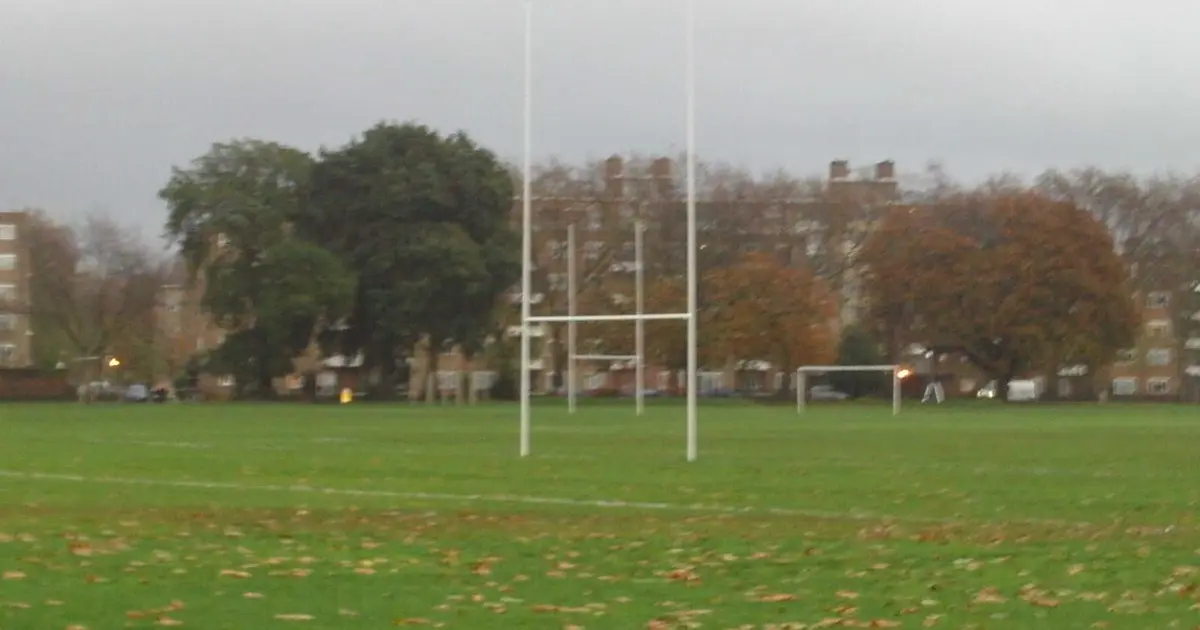
Police carried out two controlled explosions in a Fulham park on Friday afternoon after a suspected piece of historic ordnance was discovered.
Specialist officers were called to Hurlingham Park at 12.59pm on Friday, 16 October, following reports that an item believed to be wartime ordnance had been found. A cordon was put in place while officers assessed the item, and two controlled explosions were carried out to safely neutralise the device. All cordons have since been lifted and the incident has concluded.
Residents reported hearing the explosions as police maintained a presence in the area during the operation.
A Metropolitan Police spokesperson said: “Police were called to Hurlingham Park, Fulham, at 12:59hrs on Friday, 16 October following reports that an item believed to be historic ordnance had been found. A cordon was put in place as specialist officers attended the scene to assess the item. Two controlled explosions were carried out to safely neutralise the device. All cordons have now been lifted and the incident has concluded.”
Why wartime bombs still turn up
Finds like this are a recurring feature of London life, more than eighty years after the Blitz. During the Second World War, tens of thousands of bombs fell on the capital — and a small but significant proportion failed to explode. Buried in mud, riverbanks and parkland, they can lie undisturbed for decades until building work, landscaping or erosion brings them back to the surface.
Parks are among the likelier places for such discoveries. Open ground that escaped post-war redevelopment may never have been thoroughly searched, and items dropped on soft earth can bury themselves deep enough to evade detection for generations. The Thames foreshore, construction sites and allotments produce similar finds with regularity — so much so that specialist military bomb disposal teams remain on call for the capital around the clock.
Most turn out to be exactly what they appear: corroded shells, incendiary devices or fragments of anti-aircraft ammunition, long since inert but impossible to declare safe without proper examination. Every suspected item is treated as live until proven otherwise, which is why even a single rusted cylinder can close a park and bring out the cordons.
What a controlled explosion involves
When specialists decide a device cannot be moved safely, they destroy it where it lies. A controlled explosion uses a small additional charge to detonate or disrupt the suspect item in place — deliberately, on the bomb squad’s terms, rather than leaving anything to chance.
The cordon is the part the public sees most of. Officers clear a wide area around the site, close nearby paths and roads, and ask residents to stay indoors and away from windows. The bangs that people heard in Fulham on Friday were the controlled detonations themselves — loud, but planned, and a sign the operation was going as intended rather than anything going wrong.
Once the device is neutralised, officers sweep the area, confirm there is no remaining hazard, and lift the cordons. In this case the whole episode was over within the afternoon, and Hurlingham Park was back to normal by the evening.
Anyone who comes across a suspicious object — whether in a park, on the foreshore or during building work — is advised not to touch or move it, to keep others away, and to call 999. What looks like scrap metal may be anything but.
Hurlingham Park itself is one of Fulham’s best-known green spaces, sitting between the Thames and the King’s Road and home to sports clubs as well as casual visitors. Friday’s operation was a reminder that even the most familiar local park can hold surprises beneath the surface — and that the systems for dealing with them, from the 999 call to the final all-clear, are well rehearsed.
London Streets has been covering crime trends across south-west London and the Deepak Sandhu conviction this week.