


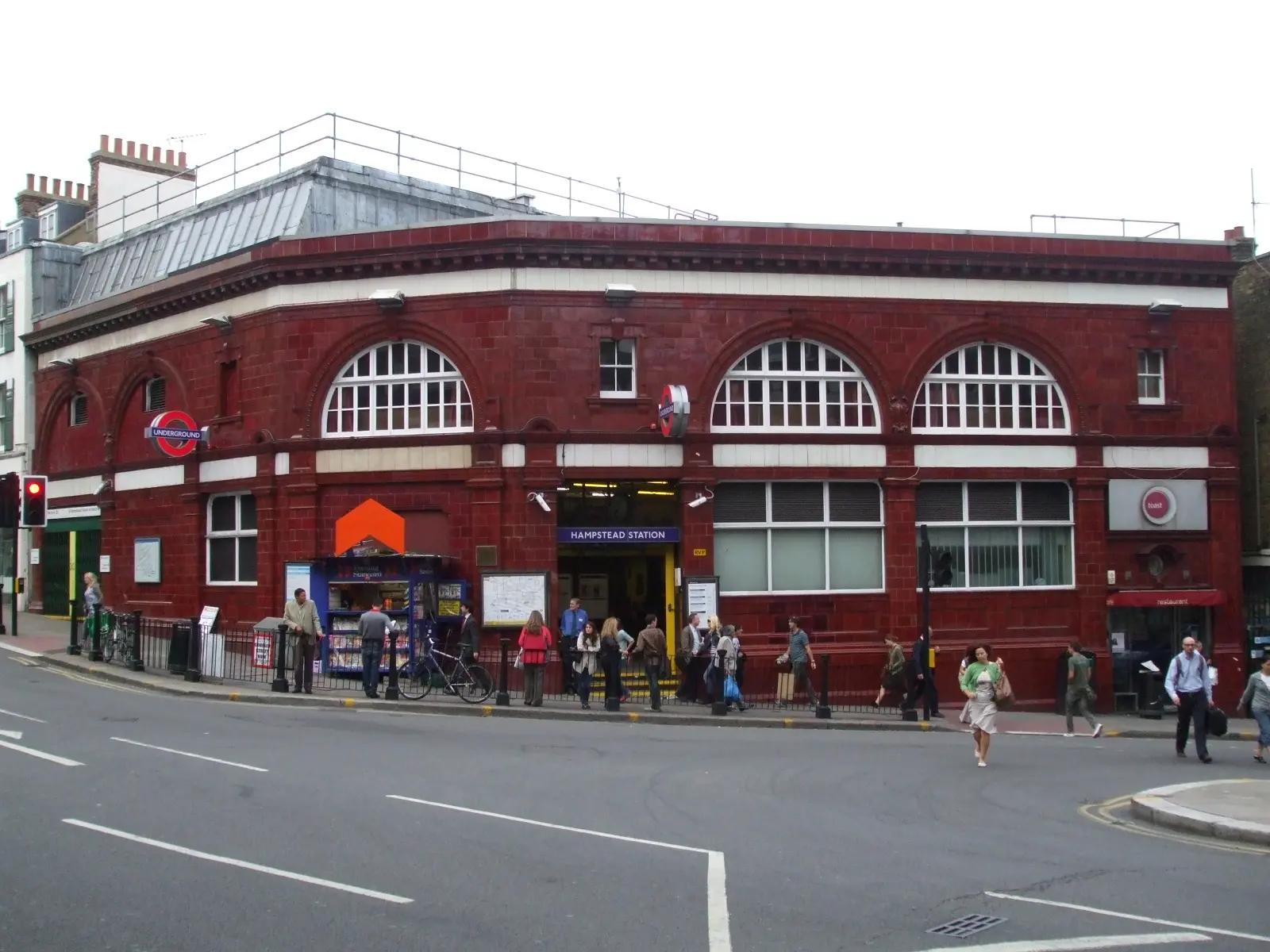
Next time your ears pop on the Northern line, spare a thought for Hampstead. The station’s platforms sit around 58.5 metres — 192 feet — beneath the streets of north London, making them the deepest of any station on the Underground, as confirmed by the London Transport Museum.
And here’s the kicker: there are no escalators. More than a century after it opened, passengers still make the long vertical journey by lift. That reliance on lifts makes step-free access at Tube stations a live issue across the network — with improvements still being delivered, such as the new step-free entrance at Surrey Quays.
Why so deep?
Blame the hill. The railway tunnels run deep beneath Hampstead while the station building sits high above them on the area’s famously hilly terrain — creating an unusually large vertical gap for passengers to bridge.
Transport for London runs lifts as the primary way between the ticket hall and the platforms. The station also holds another record: its lift shaft, at around 181 feet, is the deepest on the entire Underground — just four feet shorter than Nelson’s Column in Trafalgar Square.
The absence of escalators is partly down to age. Hampstead opened on June 22, 1907, as part of the Charing Cross, Euston and Hampstead Railway — four years before the first escalator arrived on the Underground at Earl’s Court in 1911. The station was designed around lifts from the start, and lifts it still uses.
Key facts: London’s deepest
Depth: 58.5m (192ft) — the deepest platforms on the Underground.
Lift shaft: ~181ft — the deepest on the network, nearly the height of Nelson’s Column.
Escalators: none — lifts are the primary route.
Emergency stairs: a spiral staircase with more than 320 steps (passengers only).
Opened: June 22, 1907, on the Charing Cross, Euston and Hampstead Railway.
Original name: it was almost called Heath Street — the old name still appears on historic tiled platform signs.
How does it compare?
Hampstead’s nearest rivals for depth include its Northern line neighbours and the deep-level stations of central London, but none quite match 58.5 metres. For context, the capital’s skyscrapers start to put it in perspective: the platforms sit deeper below the pavement than many office blocks are tall.
What makes Hampstead unusual isn’t just the depth — it’s the combination of record depth with no escalators at all. Most deep stations built later got escalators as standard; Hampstead’s Edwardian bones mean the lift remains king. On the Northern line, it’s a genuine one-off. The line has its own human stories too — including the colour-blind Tube drivers who work the Northern line.
The man who built the look
Hampstead is one of many stations designed by Leslie Green, the architect who gave the early Underground its visual identity. His oxblood-red faience tile exteriors — with their distinctive arched windows and green-and-white platform tiling — still mark out the network’s Edwardian stations across London, from Aldwych to Holloway Road.
Green died in 1908, just a year after Hampstead opened, but his designs outlived him by more than a century. Spotting a Leslie Green building is something of a sport for Tube enthusiasts: the deep-red tiles are the giveaway, and Hampstead’s is among the finest surviving examples.
The 320-step spiral staircase, meanwhile, is strictly for emergencies — but it hints at what the station’s first passengers faced in an era before escalators were even imagined. The lift, then as now, was the marvel: a smooth ride through 181 feet of London clay.
A living piece of Tube history
The station was designed by Leslie Green, the architect behind the Underground’s distinctive red-tiled station buildings — many of which still define the network’s early-1900s look. Look out for the historic tiling on the platforms, including those “Heath Street” signs from the name that never was.
Today Hampstead sits on the Edgware branch of the Northern line, between Belsize Park and Golders Green, on the boundary of fare zones 2 and 3. And every day, thousands of passengers step into a lift and sink the equivalent of a 19-storey building underground — the deepest commute in London.