


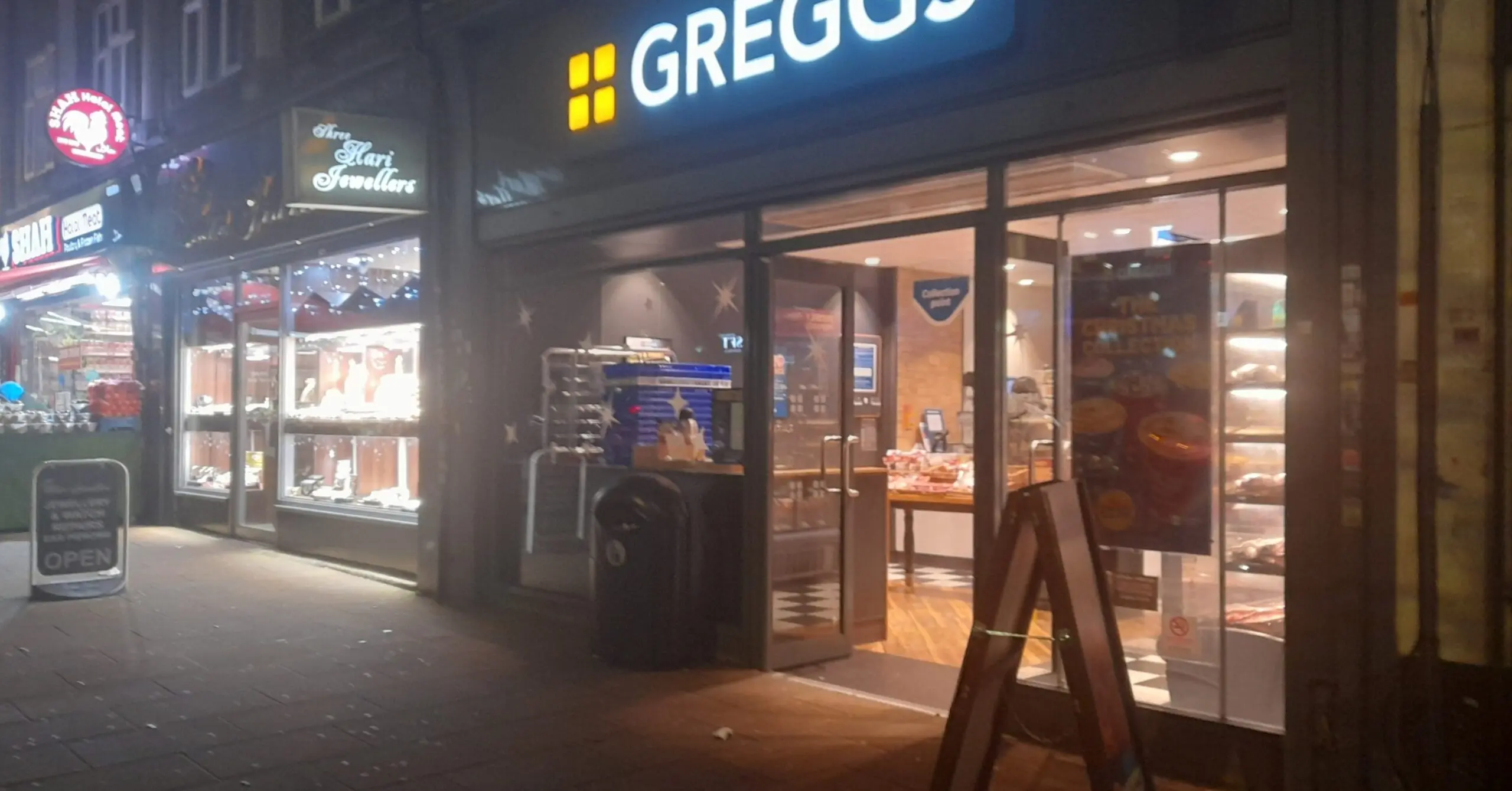
Greggs is proposing to close its Enfield bakery factory — putting about 740 jobs at risk across four manufacturing sites in what the high-street chain calls a major overhaul of how it makes its food.
The company said its Enfield factory in Greater London is among the locations marked for closure, although distribution operations will stay on the site. Three more factories face the same fate: North Lakes near Penrith in Cumbria, Pettigrews in Kelso in Scotland, and Seaham in County Durham.
Elsewhere, Treforest in Wales will change its manufacturing setup but continue as a distribution centre, while factories at Clydesmill in Glasgow and Manchester will make a smaller range of products. The company will also stop making tinned bread at Gosforth. High-street shops will not be affected.
Why the cuts are happening
The proposed closures form part of a manufacturing overhaul that would play out over the next two and a half years. Greggs said the changes are intended to strengthen its manufacturing network and improve efficiency — consolidating production, relocating parts of its manufacturing process and sourcing a small number of products from specialist suppliers.
Chief executive Roisin Currie said: “To continue building a successful business for the future, we must keep evolving alongside changing customer expectations.”
“We want to ensure Greggs remains a strong, sustainable business for decades to come,” she added. “Greggs manufacturing and logistics network remains a key strength of the business, and these proposals are intended to strengthen our manufacturing network, improve efficiency and ensure we remain well placed for the future while continuing to deliver the quality, value and service our customers expect.”
The company expects a “modestly improved outcome” for 2026. But behind the confidence lies a sobering price tag: the changes are expected to cost about £60 million, including disruption and redundancy payments, against forecast savings of about £20 million across the 2028 and 2029 financial years.
What it means for workers
A consultation with the workers involved and union representatives is due to start shortly. Greggs stressed that no final decisions have been made.
That will be scant comfort for staff at Enfield, where manufacturing roles are on the line even as the site itself survives in a distribution capacity. The Enfield factory has long been one of the company’s southern production hubs — and for many workers, the distinction between the site staying open and their own role disappearing will feel academic.
The announcement is a reminder that growth on the high street does not always mean growth behind the scenes. Greggs has opened 95 new shops and closed 38 so far this year, taking its estate to 2,796, and expects 100 to 110 net new openings by the end of the year — much like the discount supermarkets expanding aggressively across London. Meanwhile 100,000 retail jobs are being lined up for young people in a separate placements scheme — but manufacturing jobs, once gone, are far harder to replace.
A profitable business, tightening belts
What makes the cuts striking is that Greggs is not in trouble. Retail sales grew 7.7% in the three months to September 26 compared with a year earlier, with like-for-like sales up 3.4% in managed stores, helped by product launches and more settled weather in August and September. Cost inflation is said to be well managed, likely to stay around 2% in 2026.
But bosses warned of signs of greater inflationary pressure in 2027 as higher energy costs feed through — and shareholders clearly like the direction of travel. Shares rose 6.5% to 1,997p, their highest level for about two months.
For Enfield, though, the market’s verdict means little. The borough has had its share of good news stories in recent years — but today’s announcement is a bleak one, and the coming weeks of consultation will decide just how many of those 740 roles survive.