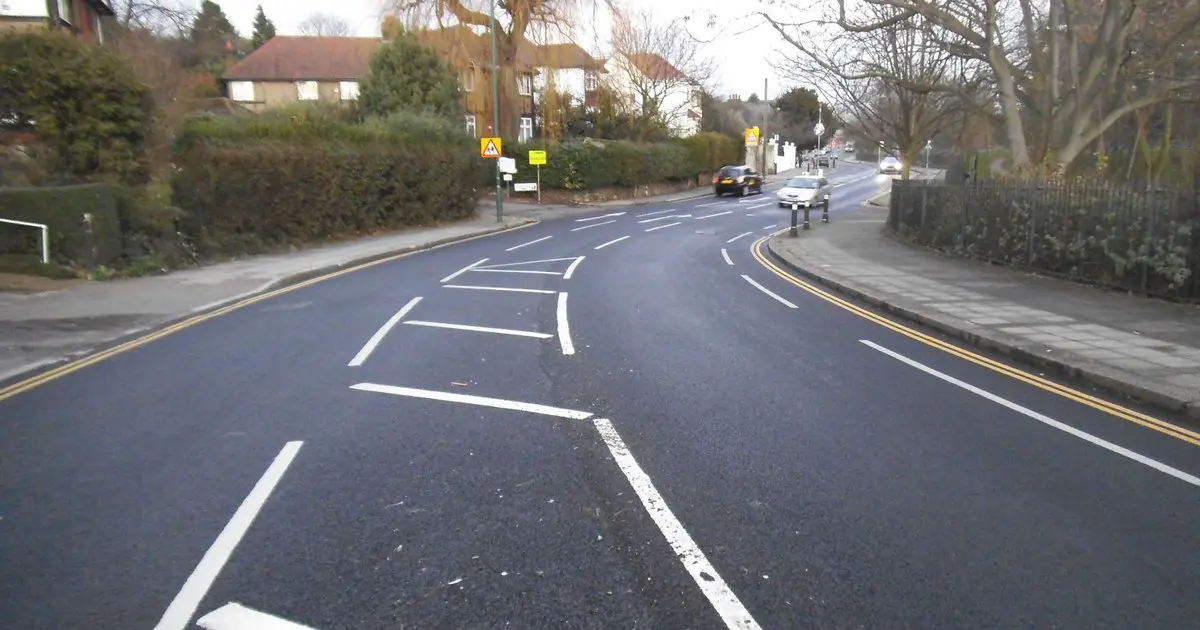
A crash in north London is causing major congestion this afternoon, with Dollis Hill Lane blocked in both directions and long queues building on the A5 Edgware Road.
This is a developing story — follow live updates below.
What we know so far
The AA reports that Dollis Hill Lane is blocked both ways between the A5 Edgware Road and Conway Road following the crash. Congestion is building on the A5 on either side of the closure, and diversions are in operation affecting bus routes 16 and 245.
The incident is adding to what has already been a difficult day on the capital’s roads, with live disruption also being tracked on the M25, Harrow Road in Wembley and the M23 near Gatwick.
Where this is — and why it clogs
Dollis Hill sits in the London Borough of Barnet, in that dense patch of north-west London where Victorian suburbs, major arterials and bus corridors all compete for the same tarmac. The A5 Edgware Road here is one of the great historic routes out of London — Watling Street, the Roman road — and it still carries enormous volumes of traffic between Kilburn, Cricklewood and Hendon.
Dollis Hill Lane itself is a narrower residential distributor, the kind of road that works fine until something goes wrong on it. When it closes, traffic has nowhere sensible to go: the surrounding streets are residential, parked-up on both sides, and quickly gridlock. Meanwhile the A5, which the lane feeds, backs up in both directions as drivers brake, gawp and attempt turns they would not normally make.
The bus diversions tell their own story. Routes 16 and 245 are workhorses through this part of London — the 16 running between Cricklewood and Victoria via Edgware Road, the 245 linking Golders Green with Alperton. When they go on diversion, thousands of passengers feel it, and the stops along the closed stretch simply do not get served.
What to do if you’re affected
Drivers heading through north-west London should avoid the Dollis Hill area entirely for now. The North Circular (A406) is the obvious alternative for east-west movement, though it carries its own heavy load at this hour. Check a live traffic map before leaving, and allow plenty of extra time.
Bus passengers on the 16 and 245 should check TfL for diversion details before heading to their stop. Anyone who can shift their journey by an hour or two may find the roads considerably calmer once recovery is complete.
The wider picture: a day of disruption
It is worth stepping back to appreciate just how unusual today has been. By early afternoon, London Streets was running four separate live blogs simultaneously — the M25 clockwise delays from the morning, the Wembley building fire that shut Harrow Road, the stranded vehicle choking the M23 toward Gatwick, and now this crash in Dollis Hill. Four incidents, four corners of the capital’s road network, all unfolding within hours of each other.
There is no single cause linking them; it is simply one of those days when the city’s roads seem to conspire against everyone at once. But the cumulative effect is real. Recovery vehicles, traffic officers and bus controllers are stretched across multiple scenes, and drivers diverted from one incident can easily drive straight into the tailback of another. If your journey touches more than one of these areas, the delays compound quickly.
The practical lesson, repeated across all four of today’s live blogs, is the same: check before you travel, leave early, and consider the train or Tube where it is an option. London’s public transport network is carrying a heavier load than usual today precisely because so many drivers are looking for an alternative.
What happens next
How quickly the road reopens depends on the nature of the crash — whether vehicles can be moved, whether there are injuries requiring emergency service attendance, and whether any debris or fluid needs clearing from the carriageway. The police will keep the road closed until they are satisfied it is safe, and only then hand it back for traffic.
We will update this live blog as the scene is cleared and normal service resumes.