


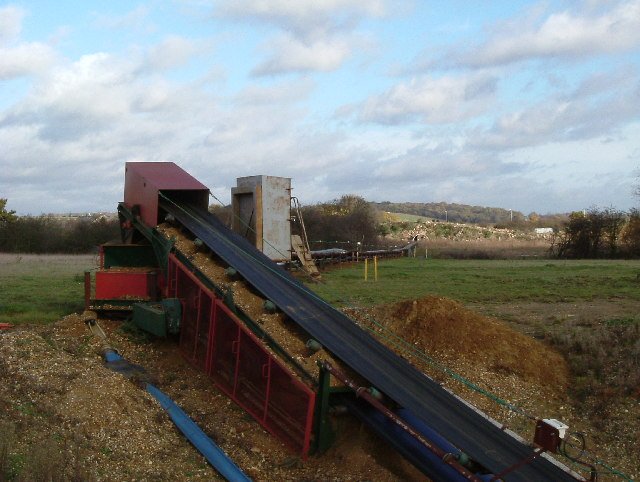
An aggregates company has been ordered to pay £67,000 after a worker was pulled into a conveyor and killed at its depot in Dagenham.
Manjit Kumar, 34, was employed by Gill Aggregates Limited at the firm’s Halyard Street site when the incident happened on June 24, 2020. He was using a bag-flattening conveyor system when he was drawn into the compression conveyor through an opening in the machine’s guarding.
Colleagues raised the alarm and stopped the machinery, but the guarding had to be dismantled before Mr Kumar could be retrieved. He was taken to hospital, where he died from his injuries a few days later.
Risk identified two months before the tragedy
An investigation by the Health and Safety Executive (HSE) found that Gill Aggregates had identified the risk of entrapment just two months earlier — but had failed to include the guarding as a control measure. The company, which supplies pre-packed and loose aggregates and haulage services, was found to have failed to prevent access to dangerous parts of the machinery.
Although a fixed guard was fitted to the compression conveyor, inspectors found it included an opening measuring approximately 600mm wide by 335mm high, allowing access to the dangerous moving parts inside. Following the incident, the company installed further guarding to prevent access to the compression conveyors.
Guilty plea at Snaresbrook Crown Court
At Snaresbrook Crown Court on September 28, Gill Aggregates Ltd, of Botany Marsh, Northfleet, Kent, pleaded guilty to breaching Regulation 11(1) of the Provision and Use of Work Equipment Regulations 1998.
The company was fined £24,000 and ordered to pay £43,000 in costs, bringing the total financial penalty to £67,000.
HSE inspector Adepeju Sogadgi said: “This was a tragic incident that resulted in Manjit losing his life. The risks associated with dangerous moving machinery are well known. Employers must ensure that effective measures are in place to prevent workers from gaining access to dangerous parts.”
Why conveyors are so dangerous on aggregates sites
Conveyor systems are the workhorses of quarries and aggregates depots, shifting huge volumes of stone, sand and gravel around a site. But they are also among the most hazardous machines in the industry: nip points, rotating rollers and compression conveyors can trap a worker in seconds, and once caught in moving machinery there is rarely time to escape.
Under the Provision and Use of Work Equipment Regulations, employers must fit guards that prevent access to dangerous parts wherever practicable — and those guards must leave no gap through which a person can reach into the danger zone. An opening of 600mm by 335mm, as found at the Dagenham depot, is more than large enough for a worker’s upper body to pass through.
The case is a reminder that identifying a hazard on paper is not the same as controlling it. Health and safety law requires not just a risk assessment, but effective measures that actually keep people away from danger.
A warning to site operators across east London
The prosecution over the Dagenham conveyor death sends a clear signal to operators of industrial sites: where a company knows about an entrapment risk and still fails to put the guarding in place, the courts will treat that knowledge as an aggravating factor. The £43,000 costs order, on top of the fine, also reflects the scale of the HSE’s investigation into what went wrong.
It is the latest courtroom outcome involving a Dagenham business, after a property owner in the borough was ordered to pay more than £29,000 over a planning breach conviction. And it follows other recent prosecutions over fatal incidents in the capital, including the prosecution of TfL over a fatal bus crash in Walthamstow.
The case also comes amid a busy period for London’s courts, with three more men recently charged over a fatal shooting in Newham.
Gill Aggregates has since installed additional guarding at the depot to prevent any repeat of the tragedy.