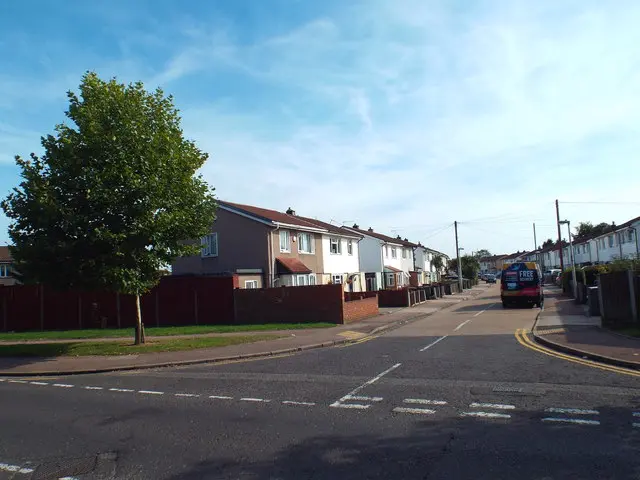
A Dagenham property owner must pay more than £29,000 after a home was split into two dwellings without planning permission and an order to restore it was not followed.
Faikul Choudhury, owner of the property in Trinidad Gardens, was sentenced at Snaresbrook Crown Court on 17 September 2026. The court made a confiscation order of £29,523.32, awarded Barking and Dagenham Council £2,000 in costs, and imposed a 12-month conditional discharge plus a £26 victim surcharge.
Those details are set out by Barking and Dagenham Council. The case shows how a planning dispute can end in criminal court when instructions to put things right are left unanswered.
How the case built up
The case started in 2019 after residents raised concerns about the Trinidad Gardens property. Council planning enforcement officers inspected the address and found it had been subdivided internally into two separate homes, even though no planning permission had been granted for that change.
Mr Choudhury was served with an Enforcement Notice requiring the property to be returned to a single dwelling. The council says he was given time to comply, but follow-up inspections found it was still divided into two units.
With the notice still not complied with, the council began legal proceedings. Mr Choudhury appeared at Barkingside Magistrates’ Court on 22 July 2025, pleaded guilty, and magistrates sent the case to Snaresbrook Crown Court for sentencing and confiscation to be dealt with.
The court order in plain English
Three parts of the outcome are often confused: the sentence, the confiscation order and costs. They do different jobs.
The sentence was a 12-month conditional discharge. That means no immediate penalty for the offence itself as long as no further offence is committed during those 12 months. If there is another offence in that period, the court can sentence for the original matter as well. The £26 victim surcharge is a routine addition that helps fund victim services.
The confiscation order, under proceeds-of-crime law, is not the same as a fine. A fine punishes, while confiscation aims to strip away benefit gained from crime so wrongdoing does not pay. In unlawful conversion cases that benefit can include income linked to the illegal use, as assessed by the court. Here the amount is £29,523.32, payable within three months, with three months in prison in default if it is not paid.
Costs are separate again. The £2,000 awarded to the council is a contribution towards the public money spent investigating and bringing the case.
What enforcement notices mean
An enforcement notice is a formal legal step a council can take when planning rules have been breached, for example by changing how a building is used without consent. It explains what is wrong, what must be done to put it right, and by when.
Receiving one does not have to mean court. Owners usually have routes to challenge a notice by appealing to the Planning Inspectorate within the time limit stated, and an appeal generally pauses the notice while it is considered. Advice should be taken quickly, because deadlines matter.
If a notice takes effect and is ignored, however, the owner risks prosecution. Courts can then impose penalties and, where money has been made from the breach, the prosecution can ask for confiscation, as happened here.
Where things stand now
Councillor Syed Ghani, the cabinet member for enforcement and community safety, has presented the result as a warning that the borough will act when planning rules are flouted.
Planning disputes over residential conversions continue to surface across London. In Welling, a family home could become a six-bed HMO with no parking under new plans, while in Wandsworth the council has faced Ombudsman rulings over its treatment of vulnerable people.
On restoration, the council account records that inspectors found the property still split into two units before proceedings began. It does not confirm in the published outcome that the home has since been returned to one dwelling, so that work should not be assumed to be complete. London Streets is treating the current position as unverified until the council confirms it.
Updated: 20 October 2026 at 5:31.