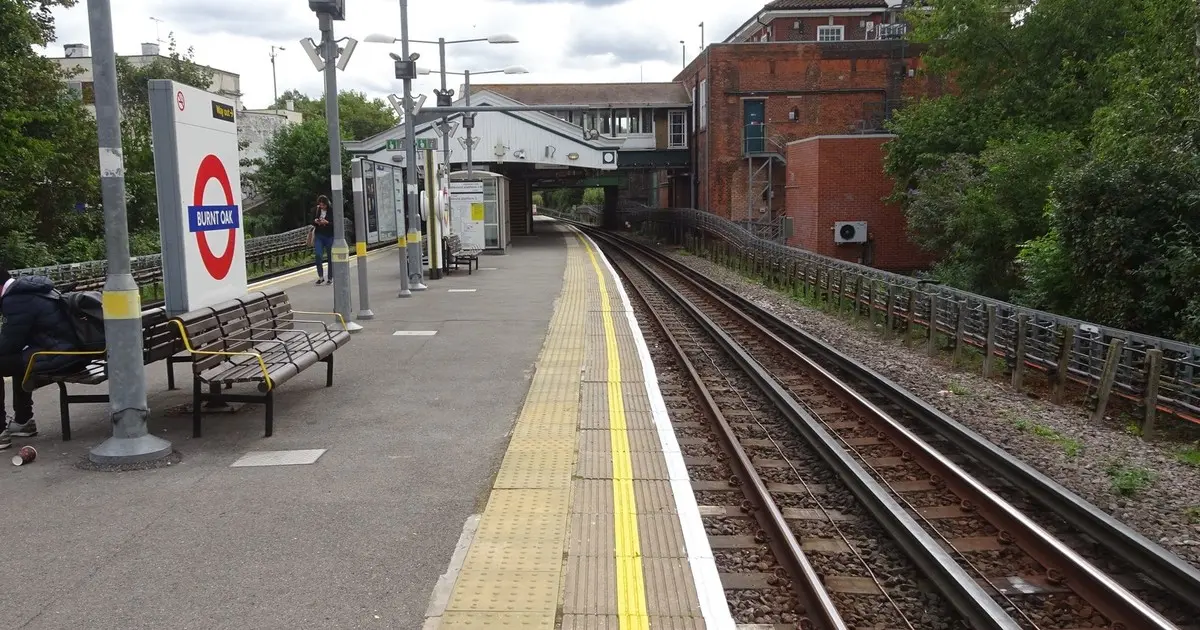
Burnt Oak station on the Northern line will close completely for two weeks from Monday, October 26, as Transport for London carries out works to bring step-free access to the north London Tube stop. The station will stay shut until Sunday, November 8, and is expected to reopen on Monday, November 9.
The closure covers the whole of the October half-term period, and passengers who use the station every day are being told to allow extra time for their journeys and to plan around the closure before it begins.
Trains on the Northern line will keep running through Burnt Oak throughout the fortnight, but none of them will stop. The temporary shutdown is part of a wider project to give the station proper step-free access, including a new walkway, a footbridge and a lift that will take passengers between street level and the platform without using stairs.
Why the station has to close
Burnt Oak’s layout is the reason the closure is unavoidable. The station has an island platform — one platform serving both directions, sitting between the tracks — and TfL says there simply isn’t enough space on it for construction work to continue safely while passengers are moving through the station.
The step-free scheme has been planned for years. When it is finished, the station will become accessible for disabled passengers, older people, parents with pushchairs and anyone travelling with heavy luggage — groups for whom the current stairs-only layout can make the station unusable.
How to travel during the closure
Burnt Oak sits in the London Borough of Barnet on the Northern line’s Edgware branch, between Colindale and Edgware. TfL’s advice to regular users is straightforward: travel via Colindale or Edgware instead.
To bridge the gap, local bus route 204 can be used to travel between Burnt Oak and both neighbouring stations, and extra capacity is being added on the route during the closure to absorb displaced passengers. TfL has also confirmed that automatic fare refunds will apply to eligible bus journeys between Burnt Oak and Colindale or Edgware for the duration of the works, so passengers won’t be penalised for taking the bus instead of the Tube.
For late-night travellers, the N5 night bus offers an alternative during Night Tube hours, when the Underground would normally be running but still not stopping at Burnt Oak.
Part of a bigger step-free push
Burnt Oak is the latest in a long line of Northern line stations to face disruptive engineering works as TfL works through a rolling programme of station upgrades. Step-free projects are among the most disruptive because lifts and footbridges need heavy construction in some of the oldest, most cramped stations on the network — work that often can’t happen while trains are running.
Full station closures during school holidays have become the preferred way to get this kind of work done. Half-term closures mean fewer commuters are disrupted and construction crews can work around the clock without the constraint of keeping the station open. Similar holiday-period shutdowns have been used on other lines across London in recent years, trading two weeks of pain for years of improved access.
Transport disruption is piling up across London this week. GWR is cutting West Country services back to Plymouth on Friday as Storm Austen brings 80mph gusts, the SWR network is recovering from a police incident that closed all lines at Brookwood, and the Elizabeth line suffered delays from a faulty train at Custom House. Anyone heading away from London for the weekend should check before they travel.
What happens next
The station is expected to reopen on Monday, November 9 — but reopening won’t mean the project is finished. Step-free works at Burnt Oak continue beyond the closure, and passengers should expect the station to look and feel like a building site for some time after the barriers reopen.
TfL hasn’t yet given a completion date for the full step-free scheme. For now, the fortnight’s shutdown is about clearing the most dangerous construction phase out of the way — and giving north London commuters two weeks to remember what the 204 bus route looks like.
File photo: Burnt Oak station by Nigel Thompson, CC BY-SA 2.0, via Wikimedia Commons.