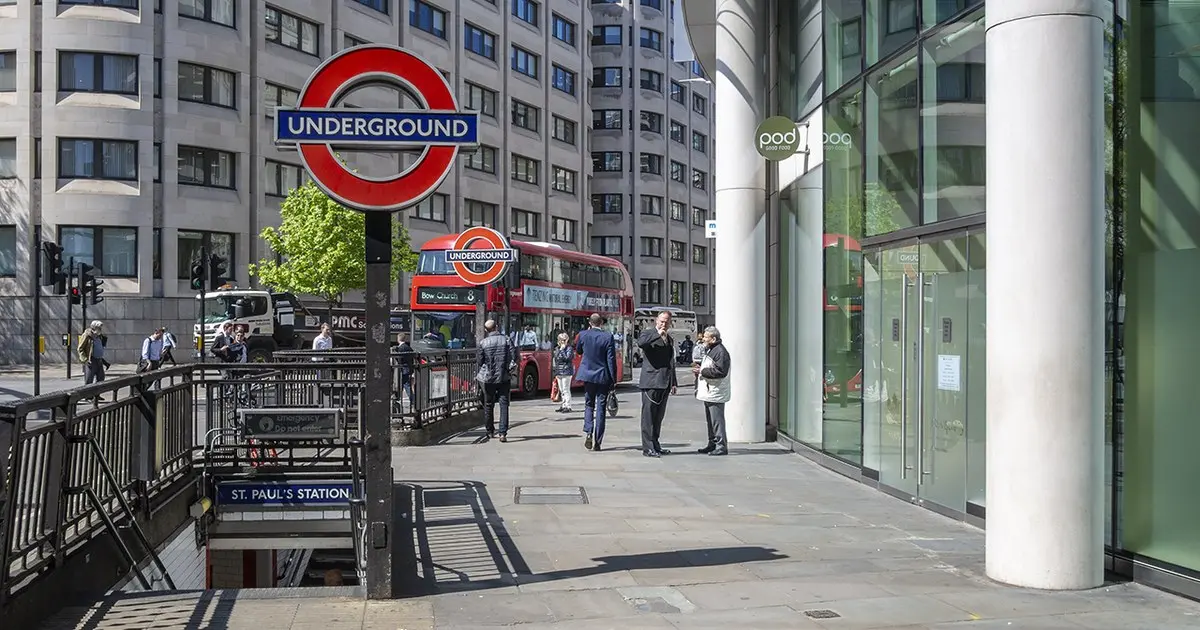
Six London boroughs have no Tube station at all — and every one of them sits south of the River Thames.
Bexley, Bromley, Croydon, Kingston upon Thames, Lewisham and Sutton are the only boroughs in the capital without a single Underground station in 2026, according to a Greater London Authority borough-by-borough breakdown.
Despite the Underground serving hundreds of stations across the city and beyond, these six areas remain disconnected from the network, relying instead on other forms of public transport.
Bexley, in south-east London, is one of them. Areas like Bexleyheath, Sidcup, Welling, Erith and Crayford rely heavily on Southeastern railway services, with stations at Bexleyheath, Welling, Sidcup, Bexley, Crayford and Erith providing connections towards central London.
The borough also benefits from the Elizabeth line at Abbey Wood, which opened in May 2022 as part of the railway’s major expansion. Although Abbey Wood provides direct connections towards Canary Wharf, Liverpool Street, Paddington and Heathrow, the Elizabeth line is not part of the London Underground — which means Bexley remains officially without a Tube station.
Bromley, despite being London’s largest borough by area, is another south-east London borough without a Tube station. The borough includes Bromley town centre, Orpington, Beckenham, Chislehurst and Penge.
Residents use an extensive National Rail network, with services from stations including Bromley South, Bromley North, Orpington and Beckenham Junction. London Overground services also operate from stations including Crystal Palace, Anerley and Penge West, and parts of the borough are served by London’s tram network, including Beckenham Junction and Elmers End.
However, none of these services counts as a London Underground line, leaving Bromley without a Tube station.
Croydon is one of south London’s major transport hubs, yet it still does not have an Underground station. The borough is served by busy railway stations including East Croydon, West Croydon, South Croydon and Norwood Junction, which provide connections towards London Victoria, London Bridge and other destinations.
Croydon is also at the heart of London’s tram network, which links areas including New Addington, Wimbledon, Beckenham and Elmers End, and London Overground services reach West Croydon. Despite these connections, there is no Northern, Victoria, Jubilee or other Underground line operating within the borough.
Kingston upon Thames, in south-west London, is another borough that remains without a Tube station. The borough includes Kingston, Surbiton, New Malden and Chessington, and residents rely mainly on South Western Railway services, with stations including Kingston, Surbiton, New Malden and Chessington South.
Surbiton provides frequent rail connections towards London Waterloo, while Kingston also benefits from an extensive bus network. Although the nearby borough of Richmond has Underground services, Kingston itself remains outside the Tube network.
Lewisham is particularly interesting because it previously had stations on the London Underground network. New Cross and New Cross Gate were once served by the East London line when it was part of the Underground, but the line closed for conversion and became part of London Overground in 2010.
As a result, Lewisham no longer has any Underground stations. Today, the borough is served by Southeastern rail services, London Overground and the DLR. Lewisham station provides connections towards central London, while the DLR links the area with Canary Wharf and Bank. Despite these services, the borough is still officially without a Tube station.
Sutton completes the list. The south London borough includes Sutton town centre, Carshalton, Wallington and Cheam, and residents mainly rely on National Rail services, with connections towards London Victoria, London Bridge and other destinations.
Unlike Croydon, Sutton does not currently have a tram service operating within the borough. The Northern line terminates at Morden in the neighbouring borough of Merton, meaning residents in some parts of Sutton can reach the Underground by bus — but there are no Tube stations within Sutton’s boundaries.
The uneven spread of the Underground network is partly down to the way London’s railways developed. Much of south London already had an extensive network of suburban railway lines when the Underground began expanding, so the Tube developed more extensively across north, west and central London, while southern boroughs continued to rely on conventional rail services. The geography of the Thames and the cost of building new tunnels also influenced how the network expanded.
There have been proposals over the years to improve Underground connections in parts of south London. One example is the proposed Bakerloo line extension from Elephant and Castle towards Lewisham, via Old Kent Road and New Cross Gate, which would bring Underground services to Lewisham for the first time since the East London line became part of London Overground. However, the project does not currently have a confirmed opening date, and construction funding has not been secured. The extension has previously won backing in the capital’s budget, but the money to build it is not yet in place.
Other proposals to improve transport connections across south London have included tram extensions and upgrades to existing rail services. For now, Bexley, Bromley, Croydon, Kingston upon Thames, Lewisham and Sutton remain the only six London boroughs without an Underground station.
Passengers can check routes and journey options using the TfL journey planner. The picture is a reminder of how much of the network’s future still depends on investment — new Tube strike dates have also been announced into the new year.