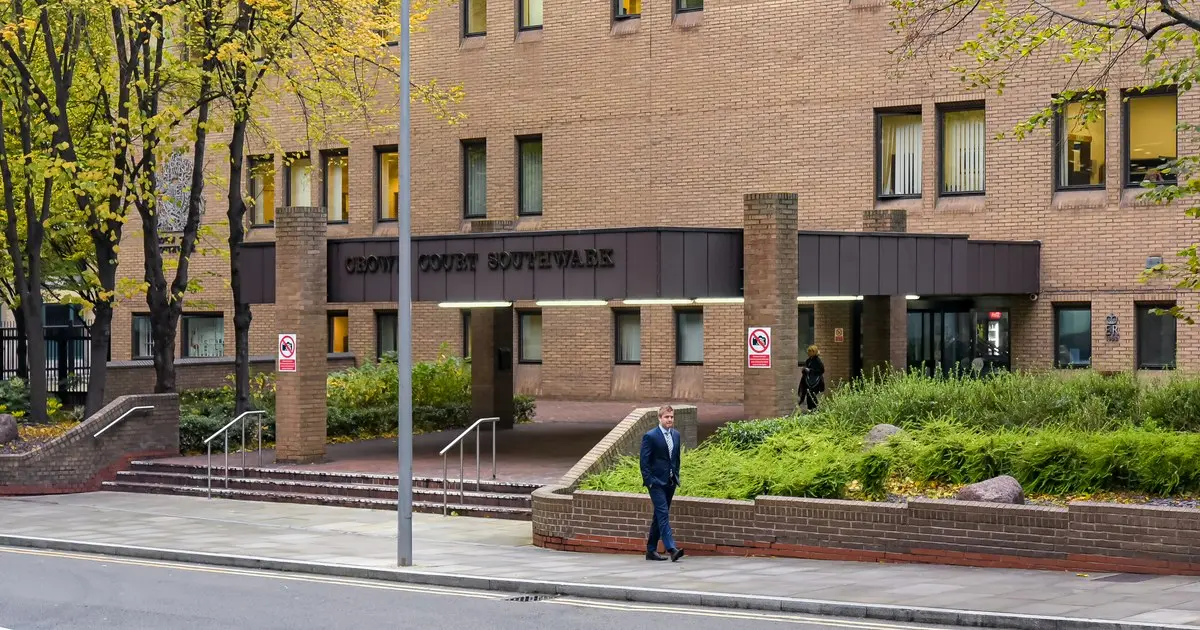
A judge has directed a jury to clear Russell Brand of one count of indecent assault at the midway point of his trial at Southwark Crown Court.
Mr Justice Bennathan gave the direction on Tuesday morning, 27 October, after ruling that there was insufficient evidence to sustain the charge, known as count two.
The count related to a 2001 incident in which Brand, 51, allegedly grabbed a female MTV worker by the arm and tried to pull her into a toilet.
Addressing the jury, the judge said: “Not to decide whether the evidence is accurate or false, whether the defendant is guilty or not, but to review whether there is evidence that the jury could return a verdict.”
He continued: “In respect of count 2, I have reached the decision there is insufficient evidence of indecent assault. That is my decision, not yours. You will be directed to return a not guilty verdict in count two.”
One juror was then selected to formally deliver the not guilty verdict on the original count.
The count has been replaced with a lesser charge of attempted indecent assault, to which Brand has pleaded not guilty. The judge told jurors: “The defendant Russell Brand has entered a not guilty plea to this count.”
Brand now faces seven charges involving six women: three counts of rape, three counts of sexual assault, and the new attempted indecent assault count. The allegations cover the period from 1999 to 2009. He has pleaded not guilty to every charge and denies all the allegations.
The ruling came at the close of the prosecution case, with the defence case due to open next. Before the ruling, the jury heard the contents of four police interviews Brand gave between November 2023 and July 2025, in which he denied all the allegations.
Complainants in sexual offence cases are entitled to lifelong anonymity under British law, which is why the woman at the centre of count two has not been named in court reporting of the trial.
The trial is being heard at Southwark Crown Court, where a former Metropolitan Police officer was convicted of sexual offences earlier this week.
What a directed verdict means
A directed verdict comes at the close of the prosecution case, when the judge tests whether the evidence presented is legally sufficient for a jury to convict. It is a question of sufficiency, not of whether the jury believes or disbelieves a witness: the judge alone decides whether the case on that count can properly continue.
If the evidence cannot support a conviction, the judge directs the jury to return a not guilty verdict, as happened here with count two. The direction is the judge’s decision, not the jury’s own conclusion on the facts, and it does not involve the jury weighing the evidence for itself.
Such rulings are made after the prosecution has finished presenting its evidence and before the defence opens its case, which is why the direction in this trial came at its midway point rather than at the end.
What happens next
The replacement charge of attempted indecent assault relates to the same 2001 incident, but it is a separate, lesser charge that the jury will still have to decide. Nothing about Tuesday’s ruling ends the trial: Brand remains on trial on the remaining counts, and the defence case is still to be heard.
Appeals for information are a routine part of sexual offence investigations, and British Transport Police issued a similar CCTV appeal this week after a reported attack at Wimbledon station. In this case, the court will hear the defence case next, with the remaining charges still to be determined by the jury.