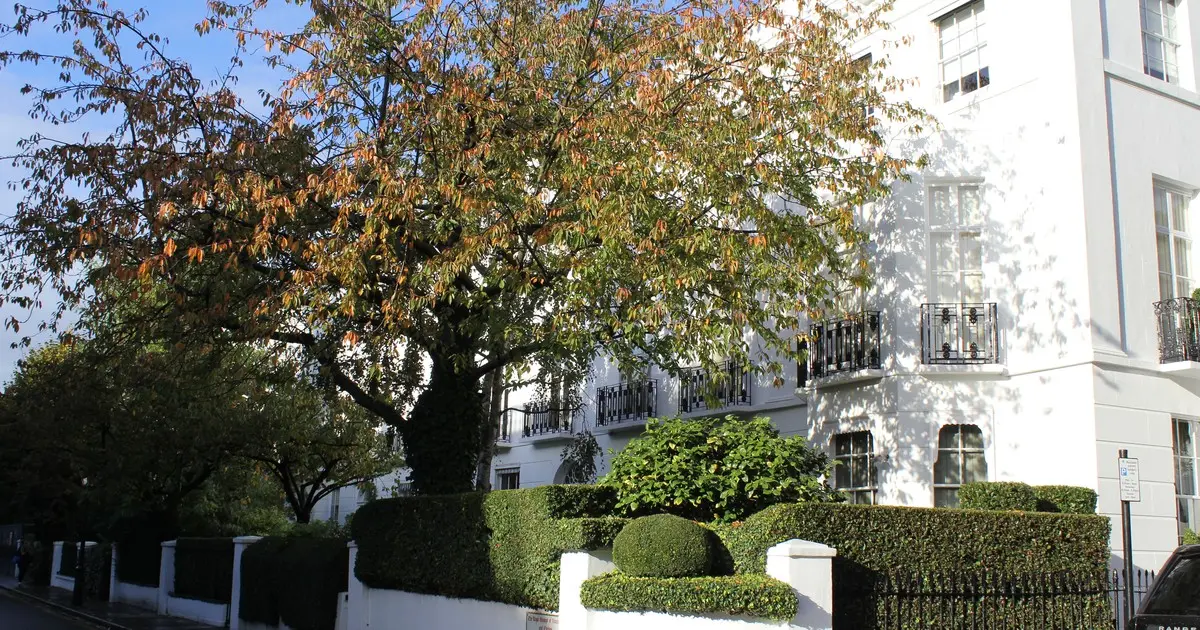
Buying a home in Kensington and Chelsea costs more than 20 times what local people earn, making the borough the least affordable place to live in England despite a sharp fall in prices over the past year.
New figures from the Office for National Statistics, covering the year to August, put the house-price-to-income ratio in Kensington and Chelsea at 20.6. The average home there still costs £1.2 million, even after prices dropped by 13.8 per cent in a year, while average annual earnings stand at £58,502.
Put simply, a buyer on typical local earnings would need more than 20 years of gross salary to match the price of an average property in the borough — before a deposit, fees or a single mortgage payment are taken into account.
The scale of the fall is itself striking. A 13.8 per cent drop on a £1.2 million average implies that the equivalent average a year earlier was around £1.39 million, a decline of roughly £190,000 in twelve months. Yet even after that correction, Kensington and Chelsea remains in a league of its own.
Richmond, Camden and Westminster follow
Richmond upon Thames is the next least affordable area in the country, with a ratio of 14.5. The average property there costs £814,000 against average annual earnings of £56,121.
Camden follows at 13.8, then Westminster at 13.4 and Hammersmith and Fulham at 13.3. The top five places in England are all London boroughs, and the gap between first and second — 20.6 against 14.5 — is wider than the gap between second and sixth.
The pattern holds beyond the capital too. Elmbridge in Surrey records a ratio of 12.7, with an average house price of £736,000 and average earnings of £57,962 a year, while neighbouring Mole Valley follows closely at 12.6. The commuter belt around London, in other words, is nearly as stretched as the capital itself.
The other end of the London scale
The contrast with the cheapest end of the London market is stark. Bexley is joint-cheapest in the capital on the same measure, with homes costing 8.5 times local earnings — an average price of £415,000 against earnings of £48,966. Tower Hamlets shares that 8.5 figure, with an average price of £448,000 and earnings of £52,603. Even those boroughs sit well above the national average ratio of 6.7, a reminder that nowhere in London is cheap by national standards.
The Kensington and Chelsea figures also sit alongside a wider cooling in the London market. Zoopla’s latest index found 85 per cent of London homes in areas where prices fell year on year, with the capital’s average price down one per cent to £523,100. Across the UK as a whole, 35 per cent of homes are now in areas seeing annual price falls, up from 12 per cent a year ago, while the number of homes for sale is up seven per cent on last year, giving buyers more choice and more room to negotiate.
That wider picture makes the Kensington and Chelsea result more, not less, striking. In a market where falling prices are becoming common, and where sellers in much of London are having to price keenly to secure a sale, the borough’s average home is still worth more than double the London average — and more than four times the UK average of £273,100.
What the figures mean for buyers
Affordability ratios like these are a blunt tool. They compare average prices with average earnings, and neither figure describes any individual household: some buyers earn far more than the average, some homes sell for far less, and many purchases involve two incomes, family help or equity from a previous home.
But as a measure of how far ordinary earnings stretch, the figures show why the debate about housing in west London keeps returning to the same point. Prices in Kensington and Chelsea would have to fall much further, or earnings rise much faster, before an average home there came within reach of an average local salary.
For now, the borough keeps its position at the top of a table nobody wants to top, with Richmond, Camden and Westminster close behind — and with the rest of the country, including Surrey’s commuter belt, some way behind them.