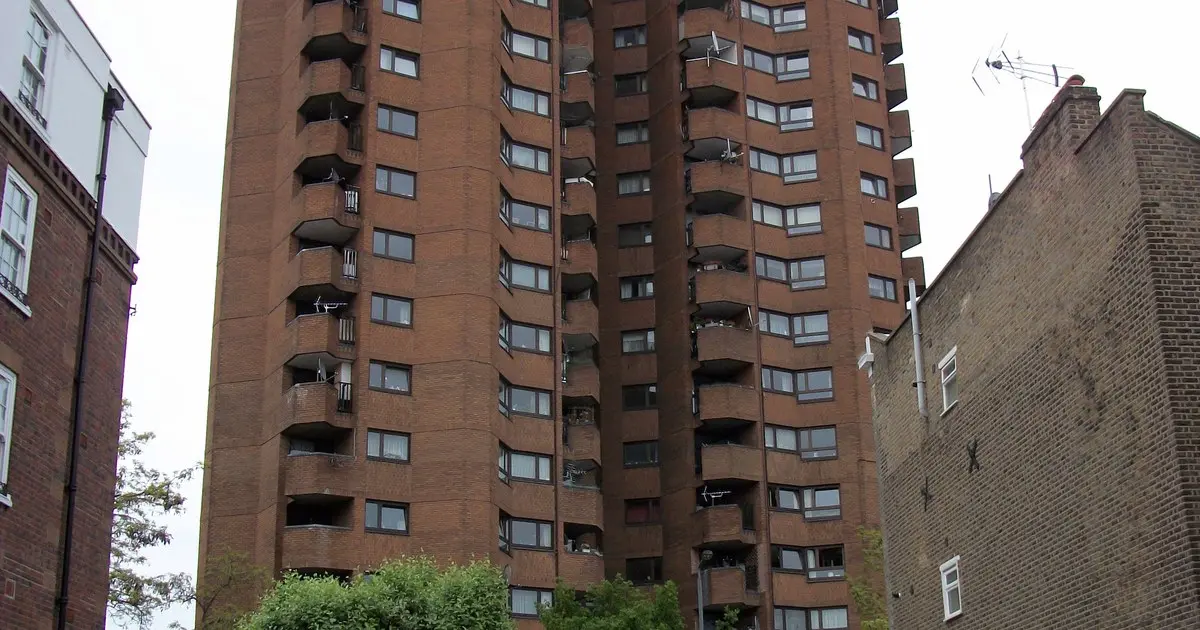
Seven of Chelsea’s most recognisable tower blocks are in line for a £20 million overhaul after the Royal Borough of Kensington and Chelsea signed off a programme that will touch the lives of hundreds of residents over the next two years.
The World’s End estate, at the western end of King’s Road, will see improvements to its 750 homes spread across seven tower blocks. The refurbishment is set to begin in March 2028 and run until February 2029.
The works include new kitchens and bathrooms, roof renewals, and redecoration of communal areas. The tower blocks will also receive central heating upgrades, £3.8 million worth of lift upgrades, and £500,000 worth of electrical and fire safety improvements.
The estate, built between 1969 and 1977, is one of London’s most distinctive post-war housing estates. Its brick towers have stood at the end of King’s Road for nearly 50 years, and the planned investment is being presented as a long-term bet on the estate’s future.
A report to the council’s Housing and Communities Select Committee said: “The World’s End Estate programme represents a major long-term investment in the estate’s fabric, safety and infrastructure.”
With over £20 million of planned investment, the programme is one of the largest single-estate refurbishments the borough has approved in recent years.
What the £20m will cover
The breakdown of the programme shows where the money is going. The £3.8 million lift upgrade reflects the age of the estate’s vertical transport — many residents in the towers rely entirely on lifts, and breakdowns can leave older or disabled residents effectively cut off from their homes.
The £500,000 earmarked for electrical and fire safety improvements comes as councils across London continue to upgrade tower blocks in the wake of tightened safety expectations. Roof renewals and new kitchens and bathrooms address the day-to-day fabric of the 750 homes.
Tailored support will be provided to residents most affected by the works, including respite and decant options — meaning some households may be temporarily moved out while the most disruptive phases are carried out in their blocks.
Leaseholders will have to pay their share
One detail that will matter to many residents: leaseholders will also be required to contribute towards the repairs, though the exact amount is yet to be confirmed.
Major-works contributions are a familiar anxiety on estates across London, where leaseholders — who own their flats but not the building — can face bills running into tens of thousands of pounds when councils carry out large-scale renewals. How Kensington and Chelsea sets the contributions, and whether it offers payment plans or hardship support, will be watched closely by leaseholders on the estate.
The borough has faced pressure on leaseholder charges before, and similar programmes in other boroughs have sparked protracted disputes over who pays for what.
Part of a wider housing investment picture
The World’s End announcement comes as London’s boroughs continue to balance the books on their housing stock. Tower Hamlets is currently buying four Canary Wharf office blocks to convert into 180 temporary homes, while in Croydon a proposal to convert a home on Sunnydene Road into a five-bedroom HMO was refused this month after 65 objections from residents.
The contrast is instructive: some boroughs are scrambling for any homes they can get, while others are investing heavily in the ones they already have. Kensington and Chelsea’s £20 million commitment puts it firmly in the second camp — choosing to secure the future of its existing towers rather than let them decay.
For the residents of World’s End, the next two years will bring noise, scaffolding and disruption. The promise is that what emerges at the other end will be a safer, warmer estate that can serve Chelsea’s community for decades to come.