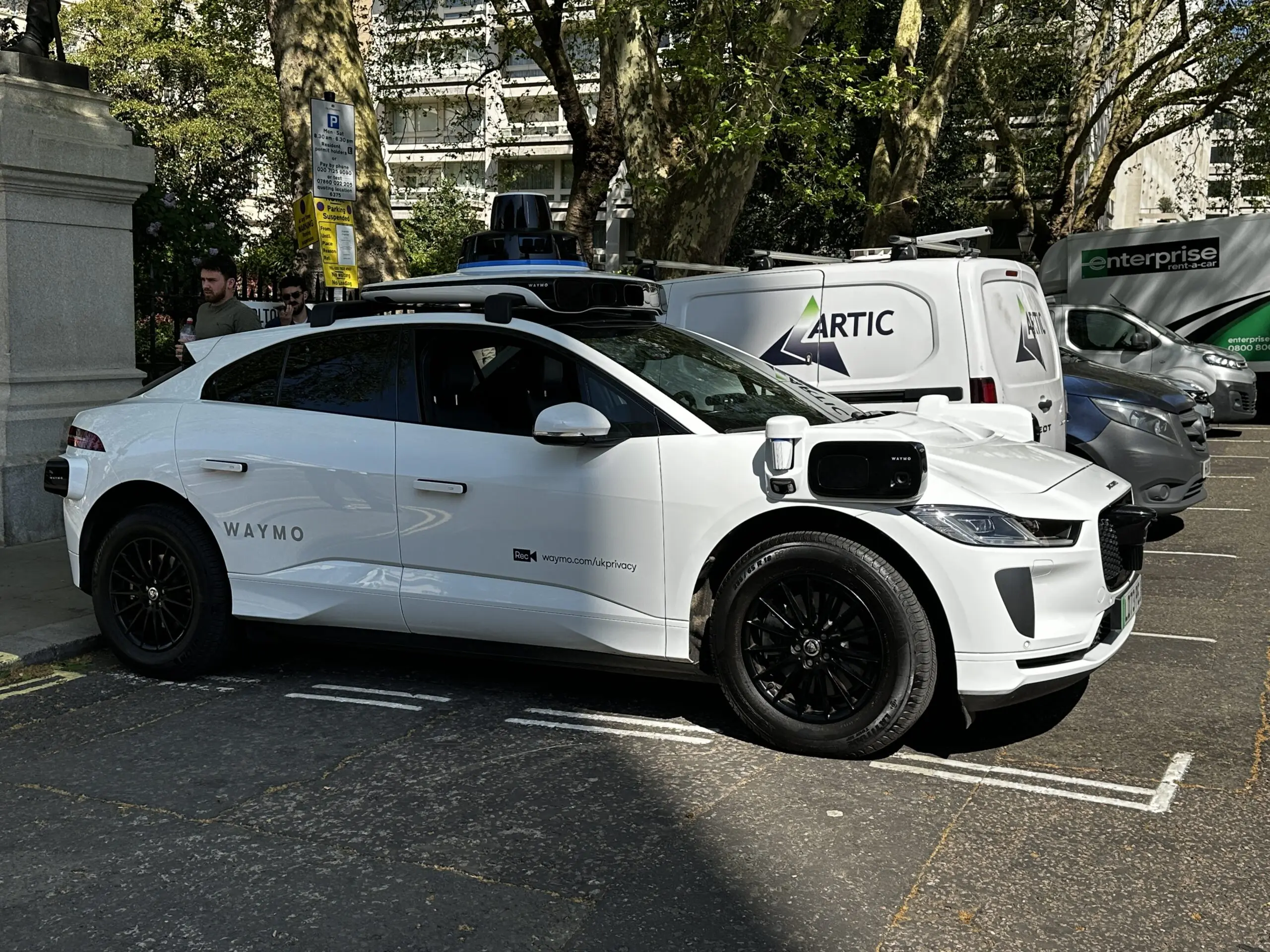
The London Assembly’s Transport Committee has published a major new report on autonomous passenger vehicles, setting out what amounts to a roadmap for how driverless cars could one day operate across the capital – while warning that London is not ready to welcome them yet.
The report, Who’s driving the future of autonomous transport in London?, was released on Friday (9 October), a few days ahead of the date originally announced by City Hall. Its central recommendation is that the government should give Transport for London the power to set a cap on the number of autonomous passenger vehicles that operators can deploy in London, alongside devolving the power to issue Automated Passenger Services (APS) permits to TfL.

Driverless test vehicles are already a familiar sight in parts of the capital, with operators trialling sensor-equipped cars on London streets ahead of any commercial launch.
Both powers would take effect when the full regulations under the Automated Vehicles Act are put in place in 2027. Until then, the committee says the current APS permitting framework should be regarded as transitional, suitable only for the initial small-scale pilot phase.
Not convinced London should welcome robocabs
The committee’s scepticism is explicit: it says it has not heard sufficient evidence to be persuaded that London should welcome autonomous passenger services at all. Rather than simply accepting the operating model proposed by driverless car companies, the report argues that London should start from the transport problems it is trying to solve and then consider what role the technology could play.
“The London Assembly Transport Committee is not convinced that London should welcome autonomous passenger services,” said committee chair Caroline Russell AM.
The committee also wants TfL to think more imaginatively about how driverless technology could be applied in the capital, arguing that the transport authority is not currently shaping the agenda and needs to get into the driving seat.
TfL permit powers and fleet caps
Under the committee’s proposals, once the 2027 regulations are in place, ministers would hand TfL the authority to issue and withdraw APS permits and to set the conditions under which operators can deploy autonomous passenger vehicles. The report says it is vital that TfL gets these powers, given that such services are expected on London’s roads imminently.
The proposed fleet cap would give the capital a lever to control how quickly driverless services scale – a power the committee believes should sit with London’s transport authority rather than Whitehall. The demand for local control echoes long-running debates over how the capital’s licensed private hire trade is regulated.
Safety incidents and the 24-hour rule
TfL should establish a formal definition of safety incidents involving autonomous passenger vehicles, covering crashes and near misses as a minimum, the report says. As a condition of granting consent, operators would be required to hand over details of any incident – including the vehicle’s decision-making processes that led to it – within 24 hours.
The committee also wants TfL to work with the Metropolitan Police Service, the London Ambulance Service NHS Trust and the London Fire Brigade to establish a standard framework for how autonomous vehicles interact with emergency services.
Empty miles and congestion
Congestion is another flashpoint. The report recommends that “empty miles driven” – journeys made with no passengers on board – become a core reporting metric attached to APS permits. TfL would continuously monitor and publish the data alongside figures on traffic levels and congestion, at a time when bus speeds in the capital have fallen to their lowest in more than a decade.
If TfL is granted the full regulatory powers the committee is calling for, negative impacts on congestion should be grounds for withdrawing an operator’s consent. The committee’s concern is that fleets of driverless cars circulating without passengers could add to the capital’s traffic rather than easing it.
The prospect of robocabs operating at scale also raises questions for the capital’s existing taxi and private hire trade, which has faced fears of a black cab shortage in recent years.
What happens next
The report follows a committee investigation that included a survey of Londoners’ attitudes to autonomous passenger vehicles, commissioned to gauge public confidence in the technology.
The committee’s recommendations are aimed at both the government, which controls the legislative timetable for the Automated Vehicles Act, and TfL, which would need to build the regulatory machinery for permits, safety reporting and data publication. Read the report in full on the London Assembly website.