


The long-running Dieselgate saga returns to the High Court this week, as lawyers acting for around 1.6 million British motorists ask the court for permission to appeal a landmark ruling that cleared almost all of the diesel cars put on trial of breaking emissions law.
The two-day hearing, on 7 and 8 October, will see the claimants’ legal teams argue that the trial judge applied too narrow a definition of what counts as a “prohibited defeat device” — and that her interpretation has left drivers in England and Wales with weaker protection than motorists anywhere else in Europe.
The judgment under challenge was handed down on 10 July by Lady Justice Cockerill, following a 13-week trial described as one of the largest group actions in English legal history. Twenty sample vehicles made by Mercedes-Benz, Renault, Nissan, Ford and Peugeot-Citroën were examined in microscopic detail. Of those 20, the judge found that just three — one Mercedes and two Peugeot-Citroëns — contained prohibited defeat devices designed to cut emissions under test conditions while allowing higher pollution on the open road.
The other 17 cars were found to use emissions-control strategies that did not meet the court’s definition of such a device. The claimants say the judge’s reading of Article 3(10) of the Emissions Regulation wrongly demanded evidence of a specific test-recognition system of the kind Volkswagen was caught using in 2015 — a bar they argue few real-world engine calibrations could ever clear.
“Our appeal will argue that the judge applied too narrow a definition of what constitutes a prohibited defeat device,” said Martyn Day, senior partner at Leigh Day, which represents a large share of the claimants. He warned the ruling had put England and Wales at odds with established European case law, and urged the judge to let the appeal proceed to avoid Britain becoming, in his words, the only place in Europe where carmakers may build and sell cars containing such devices.
Pogust Goodhead, another of the lead firms, pointed to the judge’s own fallback findings. Anna Varga, the firm’s lead partner on the case, noted that Lady Justice Cockerill had set out what would follow if her interpretation of the law turned out to be wrong — and that on that alternative reading, a majority of the sample cars would contain unlawful defeat devices. “That is not a minor point of law,” Varga said. “It goes to the heart of these claims and deserves to be tested.”
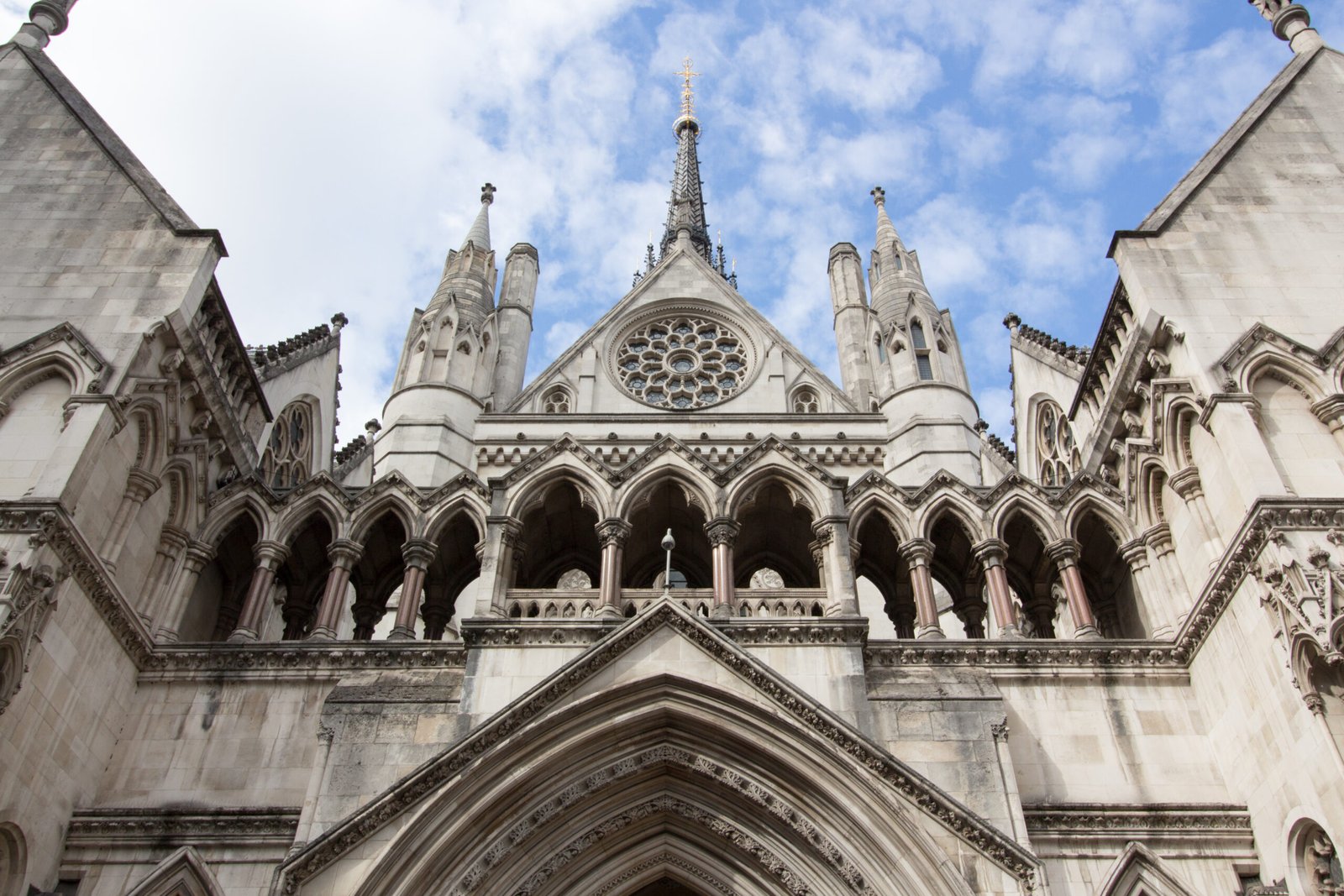
So what does “permission to appeal” actually mean? In England and Wales, losing a High Court case does not buy an automatic ticket to a higher court. The losing side must first persuade either the trial judge or the Court of Appeal that its appeal has a real prospect of success, or that there is some other compelling reason — such as an important point of legal principle — for it to be heard. If Lady Justice Cockerill refuses permission this week, the motorists’ lawyers can renew the application directly to the Court of Appeal. If she grants it, the dispute climbs the judicial ladder and the question of who owes compensation to millions of drivers stays live. The hearing takes place at the Royal Courts of Justice on the Strand — the High Court’s London home, recently in the headlines after MI5 admitted giving false evidence in court proceedings.
The stakes reach well beyond the 20 cars examined at trial. The wider group litigation also covers models made by Opel and Vauxhall, Volkswagen and Porsche, Jaguar Land Rover, BMW, Volvo, Hyundai-Kia, Toyota and Mazda. A separate trial dealing with the consequences of any breaches, and the question of damages, had been pencilled in for October.
For the motorists signed up to the claim — most of them in England and Wales, who bought, leased or otherwise acquired diesel cars built from 2009 onwards — the case lands at a painful moment. Keeping a diesel on the road has rarely felt more punishing, and many joined the litigation feeling they were misled twice over: once about what came out of the exhaust, and again about what it would end up costing them.
How Britain’s Dieselgate battle got here
- September 2015 — The US Environmental Protection Agency accuses Volkswagen of fitting “defeat devices” that sensed test conditions and cut nitrogen oxide emissions, then switched the controls off on the open road. VW later admits the software was fitted to some 11 million cars worldwide.
- 2020 — The High Court rules in an earlier UK hearing that Volkswagen did use defeat devices.
- October to December 2025 — The 13-week “Pan-Nox” liability trial puts 20 representative vehicles from five manufacturers under the microscope; closing arguments are heard in March 2026.
- 10 July 2026 — Lady Justice Cockerill hands down a 369-page judgment: only three of the 20 sample cars broke the law.
- 7–8 October 2026 — Claimant lawyers seek permission to appeal.
The manufacturers have consistently denied deliberate wrongdoing. Mercedes welcomed the July ruling but said it disagreed with the finding against one of its four sample cars and was weighing its own appeal.
Whatever happens over the next two days, the story is far from over. Grant permission, and the Court of Appeal will have to decide whether post-Brexit Britain should follow Europe’s stricter line on defeat devices — a ruling that could reopen compensation claims on a vast scale. Refuse it, and the July judgment stands, with damages arguments confined to the small number of models found to have broken the law. Either way, more than a decade after the scandal broke, Britain’s diesel drivers are still waiting for an ending.