


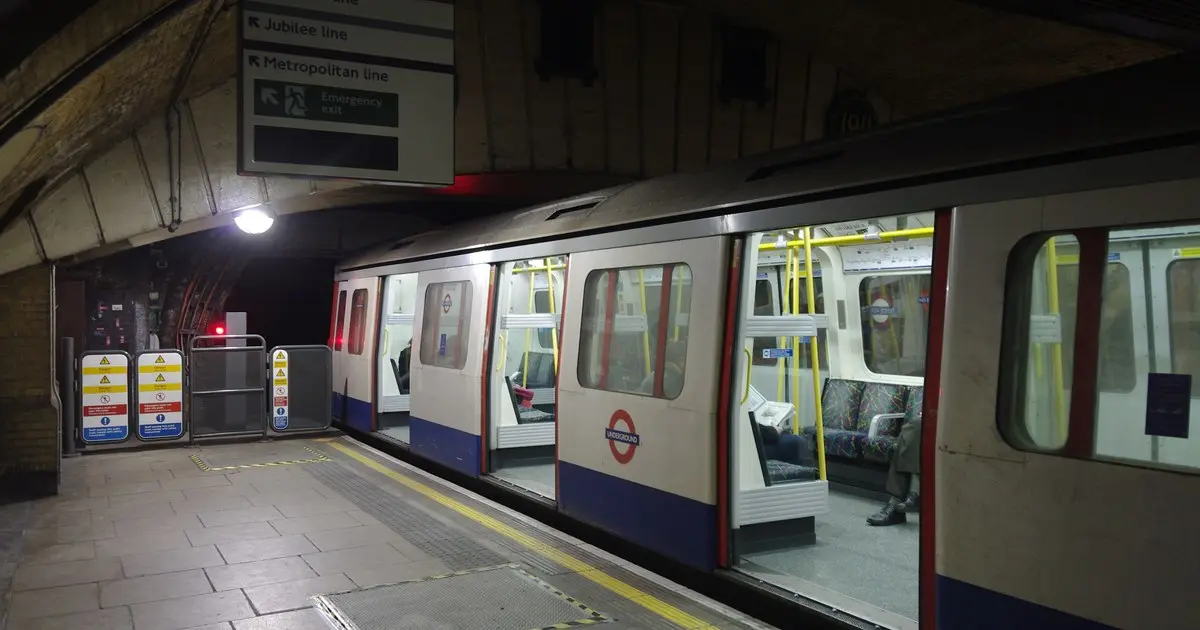
How to get across London during the Tube strike — every alternative route
Londoners face two days of disruption as Tube drivers walk out from midday on Thursday, but the Underground is not the only way to get around the city. Buses, National Rail, the Elizabeth line and London Overground are all expected to keep running, offering alternatives for most journeys.
Members of the Rail, Maritime and Transport (RMT) union are scheduled to begin a 24-hour walkout at midday on Thursday, 26 November, continuing until 11.59am on Friday, 27 November. The walkout is expected to disrupt journeys across the city, meaning longer journeys, crowded services and disruption to usual routes.
However, disruption is expected to begin before the strike officially starts and continue after it finishes, so passengers should plan ahead and check for updates before travelling.
What will run — and what will not
According to TfL and National Rail, a normal service is expected on most lines before 10am on Thursday, with services beginning to reduce from 10am to midday.
From midday, there will be disruption across all Tube lines, with no service on the Piccadilly or Circle lines all day. From midday, there will be no Waterloo & City line service, and after 9pm, no Underground services are expected to operate.
On Friday, 27 November, there will be no Tube services expected before 7am. From 7am, some lines will gradually begin operating. Until midday, there will be no Circle, Piccadilly or Waterloo & City line services. In the afternoon, services will gradually return, although disruption is expected. Normal services are expected to resume around 6pm.
These arrangements could change, and passengers should check for updates before travelling.
The Elizabeth line
The Elizabeth line is expected to operate normally on Thursday and Friday, making it one of the main alternatives for passengers.
The line connects several major London destinations, including Paddington, Bond Street, Tottenham Court Road, Farringdon, Liverpool Street, Canary Wharf and Stratford. It also provides services to Heathrow Airport, Abbey Wood, Reading and Shenfield.
However, TfL has warned that services could be significantly busier than usual, particularly during the morning and evening rush hours. Passengers should also be aware that interchange arrangements at stations shared with the Underground could be affected.
London Overground, buses and the DLR
London Overground services are also expected to operate normally during the strikes. This includes all six lines: Lioness line, Mildmay line, Windrush line, Weaver line, Suffragette line, and Liberty line.
These routes could be particularly useful for passengers travelling between outer London boroughs without needing to pass through central London. However, trains may be more crowded as passengers avoid the Underground.
London’s bus network is expected to operate normally throughout the industrial action. Buses could provide an alternative for passengers travelling shorter distances or reaching areas without direct rail connections. However, some routes may experience heavier demand, particularly those serving major railway stations and central London. Passengers should allow additional time, as road congestion and increased passenger numbers could make journeys slower.
The Docklands Light Railway (DLR) is expected to operate normally. It could be particularly useful for passengers travelling around east and south-east London, including Canary Wharf, Greenwich, Lewisham, Woolwich Arsenal, Stratford and London City Airport. However, DLR trains may become busier as passengers switch from Underground services.
Reaching London’s main stations without the Tube
Passengers travelling outside London on Thursday or Friday may need to find alternative ways to reach major railway terminals. Several stations can be reached without using the Underground.
These include Paddington via the Elizabeth line, Liverpool Street via the Elizabeth line and London Overground, London Bridge via Thameslink, Victoria via Southern, Waterloo via South Western Railway, King’s Cross and St Pancras via Thameslink to St Pancras, Euston via the London Overground Lioness line, Stratford via the Elizabeth line, and Farringdon via the Elizabeth line and Thameslink.
Passengers should check their individual journeys, as some connections may require walking between stations.
Getting to Heathrow
With the Piccadilly line expected to be closed throughout Thursday, passengers travelling to Heathrow Airport will need alternative transport.
The Elizabeth line provides direct services to Heathrow from stations including Paddington, Bond Street, Tottenham Court Road and Liverpool Street. Heathrow Express also operates between London Paddington and Heathrow Airport.
Passengers should check which Heathrow terminal they need and allow additional time for their journeys.
Walking and cycling
For shorter journeys, walking or cycling could help passengers avoid crowded public transport. Santander Cycles will remain available across central London, with bikes accessible from docking stations.
Those unfamiliar with cycling in London should consider quieter roads and designated cycle routes where available.
The latest information can be found through the TfL strike information page and the TfL Go app.
Why the strike is happening
The strikes are part of a dispute over proposed changes to Tube drivers’ working arrangements, including options for a voluntary four-day working week.
Further strike dates have been announced for December, January and February, although negotiations could still lead to changes. Talks between the union and TfL were taking place on Tuesday, ahead of the walkout.
Our earlier report sets out the full strike timetable and the seven further dates, and National Rail timetable changes come into force from Sunday 13 December.