


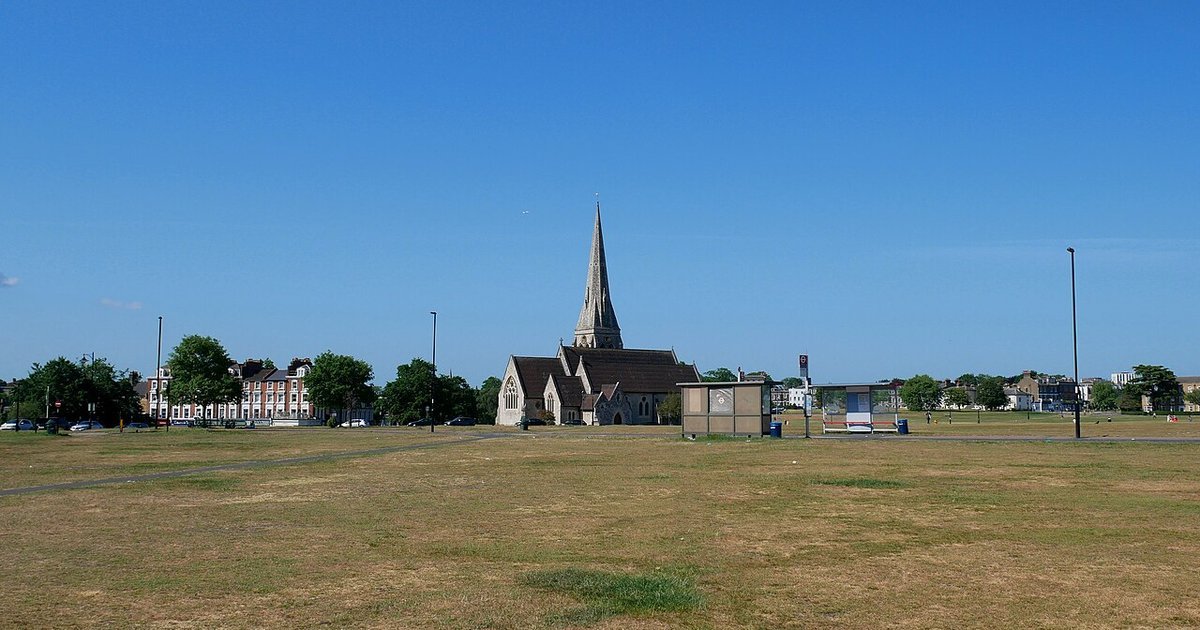
Generations of south-east Londoners have grown up hearing the Blackheath plague pit myth — the chilling playground story that the great sweep of open grass between Lewisham and Greenwich is one vast burial ground, and that plague victims by the thousand lie beneath the turf.
The tale has been told and retold for so long that many locals treat it as settled fact. It even comes with a ready-made explanation for the landscape: the reason 275 acres of prime London land were never built on, the story goes, is that nobody would dare disturb the dead.
But historians say the whole thing is nonsense — and the evidence has been hiding in plain sight for centuries.
The name came first
The name is the first problem. Despite what generations of schoolchildren have been told, Blackheath was not named for the Black Death. “Blachehedfeld” appears in written records as early as 1166 — nearly 200 years before the plague reached England in 1348.
Lewisham Council’s historical archives firmly dismiss any link between the name and the pandemic, tracing it instead to the dark, scrubby look of the land beside the greener fields nearer the Thames. The London Geodiversity Partnership has likewise branded the plague-origin story a myth.
So much for the name. But what about the bodies said to lie beneath?
No bodies on the heath
Rumours of plague victims buried under the heath have swirled for centuries, yet one of the area’s most respected historians spent years dismantling them. Neil Rhind, whose research is archived by the University of Greenwich’s Ideal Homes project, concluded that while the outbreak of 1348–49 devastated the local population, its victims were “not buried on the heath itself”.
His argument was practical as much as scholarly. Dragging large numbers of corpses uphill to Blackheath’s hard, pebbly ground, he reasoned, would have made little sense when softer earth lay far closer to the river. And the ground itself backs him up: after decades of trenching, building work and landscaping, no trace of mass graves has ever been found beneath the heath.
READ MORE: Smart motorway cameras never switch off — the myth risking fines and bans for London drivers
A grain of truth
That is not to say plague is entirely absent from the area’s past. The Blackheath Society has recorded that Maidenstone Hill, just north of Blackheath Hill, once held a pest house and workhouse alongside a plague pit. Historic UK also lists Blackheath among the places traditionally linked to plague burials — while cautioning that the evidence for exactly where victims were laid to rest is far thinner than the legend allows.
In other words, there is a grain of truth — just not where the storytellers put it. A genuine plague pit nearby may well be the seed from which the grander myth grew.
The pits have an innocent explanation
The heath’s strange, pockmarked surface has done the rest. Blackheath is dimpled with hollows, dips and depressions, and it takes little imagination to read them as grave pits. Generations of children have played in them — one dip was fondly known to local youngsters as “Cowboy Land”.
Their real origin is far less sinister. For centuries the heath was quarried for chalk, gravel and stone, and the thin soil was never much good for farming. The digging left deep scars: some pits filled with water and became ponds, while others were packed with rubble after the Second World War. The London Geodiversity Partnership confirms that gravel pits once dotted both Blackheath and neighbouring Greenwich Park. Most were backfilled, though the Vanbrugh Pits survive today. Seen from above, the hollows look mysterious. They are not mass graves.
Why the story won’t die
So why does the legend refuse to die? Partly, it seems, because it is simply too good to let go. The Black Death remains one of the deadliest pandemics in human history, and genuine plague pits do exist elsewhere in London. Add an ancient, ominous-sounding name, an eerie landscape and centuries of fireside retelling, and the tale practically writes itself.
Not everyone is taken in — some locals have long pushed back, noting the name predates the plague by two centuries. But the believers remain vocal. One recent commenter summed up the mood: “Black death burial site without clicking the article? That’s what I was always told. Love a good rumour, probably bollocks.”
The irony is that the real explanation for the heath’s survival is a story in its own right. Why the heath’s 275 acres were never built on has everything to do with ownership history, stubbornly poor soil and, eventually, legal protection — and nothing to do with the dead.
For now, the whispers continue and the Blackheath plague pit myth shows no sign of loosening its grip. Walk the heath at dusk and you may still meet a local happy to tell you what lies beneath your feet — and a stroll across it remains one of the capital’s best free days out. Just don’t expect the historians to agree.