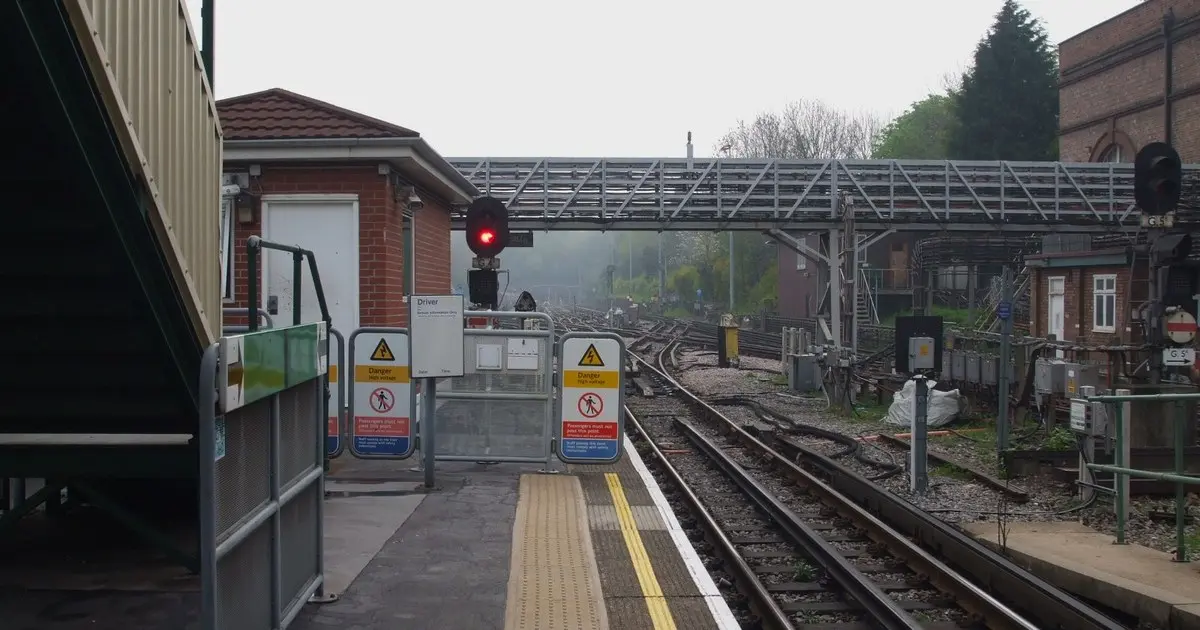
Passengers on London’s transport network are losing more than 800,000 hours every week because of deteriorating tracks, trains and signals — and the bill to fix the problem has reached £6.5 billion.
The London Assembly’s Budget and Performance Committee set out the figures in a letter to the Mayor on 21 October, warning that the capital’s ageing network is becoming less reliable every year.
Transport for London estimates that its renewals backlog — the work needed to bring tracks, trains, signals, structures and other assets back to a good state of repair — has reached £6.5 billion, and is projected to keep growing under current funding assumptions.
The committee says the backlog is forecast to rise from £6.5 billion in March 2026 to £7.4 billion by March 2030, before inflation is taken into account.
“Deteriorating assets are making TfL services less reliable every year, leaving Londoners and visitors trying to get around the capital to suffer ever more stressful and uncertain journeys,” said Neil Garratt, who chairs the Budget and Performance Committee.
“With 42% of TfL’s track classed as very poor condition and a further 17% in poor condition, TfL customers are losing over 800,000 hours per week on average this year. We need urgent action.”
At that rate, passengers are losing more than 41 million hours over the course of a year — time spent waiting on platforms, or on trains held between stations, rather than a condition score on an engineering spreadsheet.
The track alone accounts for more than £3.2 billion of the total backlog. The committee drew on TfL’s own asset condition data, which classes 42 per cent of track as being in “very poor” condition and a further 17 per cent as “poor” — meaning fewer than half the network’s track sits outside those two categories.
The problem is not confined to the Tube. Almost £1.1 billion of the backlog is road network structures, and the committee named Vauxhall, Westminster and Lambeth bridges, the Croydon Flyover, the A40 Westway and the Rotherhithe Tunnel among the structures affected.
“Worryingly, even if the money to fix the £6.5 billion backlog arrived tomorrow, it would likely take at least a decade to complete the work, meaning these reliability problems are set to continue,” Mr Garratt said.
“The consequences of underinvestment include congestion, slower journeys, road restrictions, reduced accessibility and reduced reliability. The longer we allow TfL assets to deteriorate, the greater economic impact it will have on our city.”
The committee heard from TfL’s chief finance officer, Patrick Doig, that the organisation has been underinvesting in its assets since around 2017, after the government operating grant was withdrawn. In 2020, TfL invested about £400 million in renewing its assets, against a target of £1.1 billion to £1.2 billion a year. Investment has risen every year since, reaching about £800 million this year — but it remains below the level needed to keep assets in a good state of repair.
TfL has said investment in capital renewals will average £860 million a year across the duration of its business plan. The committee says that is still well short of the £1.1 billion to £1.2 billion a year needed, and that investment is expected to remain below the level required to stabilise the backlog until at least 2029-30.
TfL’s 20-year capital investment programme sets out total spending of £121 billion, including £51 billion for capital renewals at an average of about £2.6 billion a year. TfL has said safety will continue to be maintained, but the committee says declining asset condition is already affecting operational performance, reliability and maintenance costs.
The committee, which examined TfL’s capital renewals programme with TfL and BusinessLDN representatives on 16 September, has asked TfL to publish a clear strategy for preventing further growth in the backlog and returning key assets to a sustainable state of good repair, in its 2027-28 Budget submission to the Mayor in November.
“With the Mayor’s 2027-28 budget on the way, we must see progress from TfL and the Mayor to ensure funding is in place to reduce this £6.5bn figure,” Mr Garratt said. “This will allow for improvements in service reliability, boost passenger numbers and generate additional fare revenue, allowing TfL to reinvest in and enhance the services available to London.”
The committee has asked the Mayor to respond by 23 November, ahead of its consideration of the draft 2027-28 budget.
The warning comes as Londoners face further disruption on the network, with new Tube strike dates announced into the new year. It also underlines why long-promised upgrades matter — including the proposed Bakerloo line extension towards Lewisham, which would bring Underground services to one of the six London boroughs that still have no Tube station.