


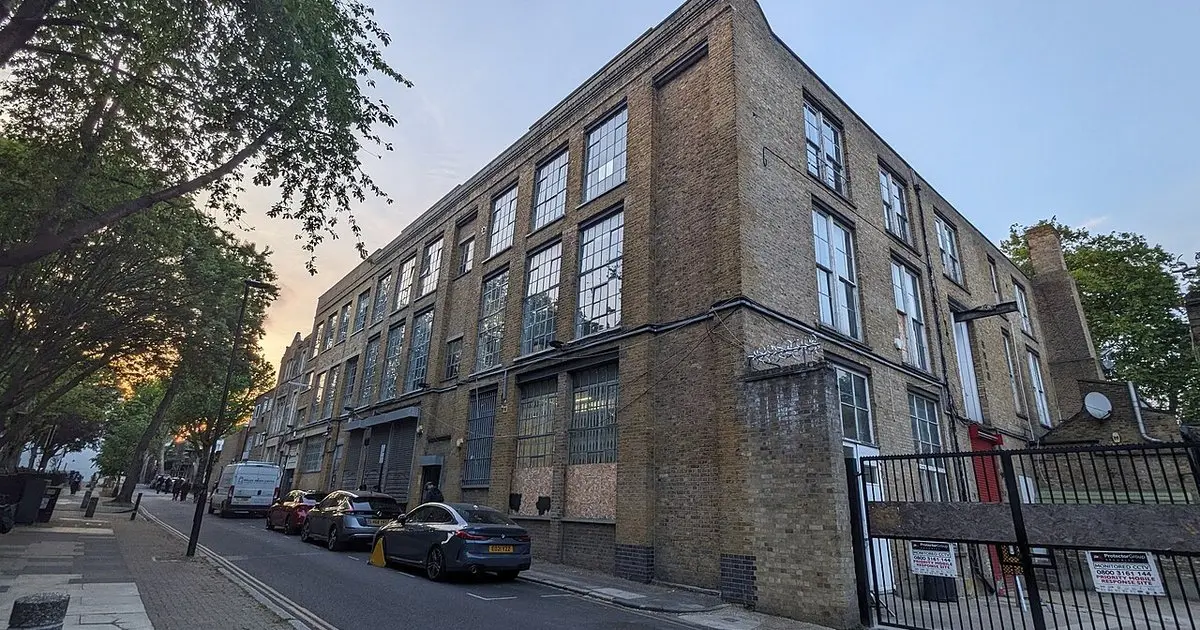
A historic recording studio established by Pink Floyd could soon be transformed into new housing, under plans submitted to Islington Council.
Plans have been submitted to redevelop 35–53 Britannia Row, the former site of Britannia Row Studios, into around 35 new homes, along with ground-floor commercial space.
The site, which has been vacant for 12 years, is best known as the recording location for parts of Pink Floyd’s iconic albums Animals and The Wall.
What the developer is proposing
Developer Har-monic has proposed a sensitive refurbishment and extension of the Victorian-era buildings, which include a locally listed Mission Hall.
The developer intends to retain and restore the historic structures while introducing modern upgrades to improve environmental performance and preserve the site’s cultural heritage.
Plans include a mix of one-, two- and three-bedroom homes, a landscaped courtyard, green roofs, improved insulation and cycle parking.
The proposals also include a new ground-floor unit with potential for community and cultural use.
Kamel Jaber, co-founder of developer Har-monic, said: “This application is about bringing a much-loved but neglected Islington building back into long-term use.
“The proposals will deliver new homes, restore and improve the existing buildings, introduce new activity at street level and secure the future of a site with an extraordinary cultural history.”
A studio with an extraordinary history
Britannia Row Studios was established by Pink Floyd in the 1970s, and parts of two of the band’s most celebrated albums were recorded there: Animals, released in 1977, and The Wall, released in 1979.
The Wall went on to become one of the best-selling albums of all time, and the studio’s association with it has made the Britannia Row building a place of pilgrimage for Pink Floyd fans from around the world.
The buildings themselves date from the Victorian era, and the locally listed Mission Hall is part of the site’s historic fabric. Under the proposals, those structures would be kept and restored rather than demolished, with new homes built through refurbishment and extension.
The scheme also promises new activity at street level, with the ground-floor unit intended for community or cultural use — a nod to the building’s creative past.
Islington Council will now consider the application. If approved, the redevelopment would bring a building that has stood empty for more than a decade back into daily use, while keeping its historic character intact.
Har-monic has already allowed creative organisations to use the space temporarily, offering it to arts groups at a peppercorn rent of £1 per year.
The Florence Trust has been operating studios, exhibitions and workshops from the building, alongside another arts organisation that recently joined the site.
A spokesperson for Har-monic said the buildings, constructed between the 1870s and 1890s, are in urgent need of repair and refurbishment after more than a decade of vacancy.
The company describes itself as a “regenerative developer and place-maker” focused on bringing neglected buildings back into use through careful refurbishment and long-term investment.
Three interconnected warehouse buildings, the Mission Hall and associated yards make up the Britannia Row site. They became internationally known in the 1970s as Britannia Row Studios, founded by Pink Floyd.
If planning approval is granted, construction is expected to begin in 2027.
Read more: Work starts on 149 homes at Harrow’s Byron Quarter
Read more: 116 affordable homes open in Custom House as Newham marks milestone