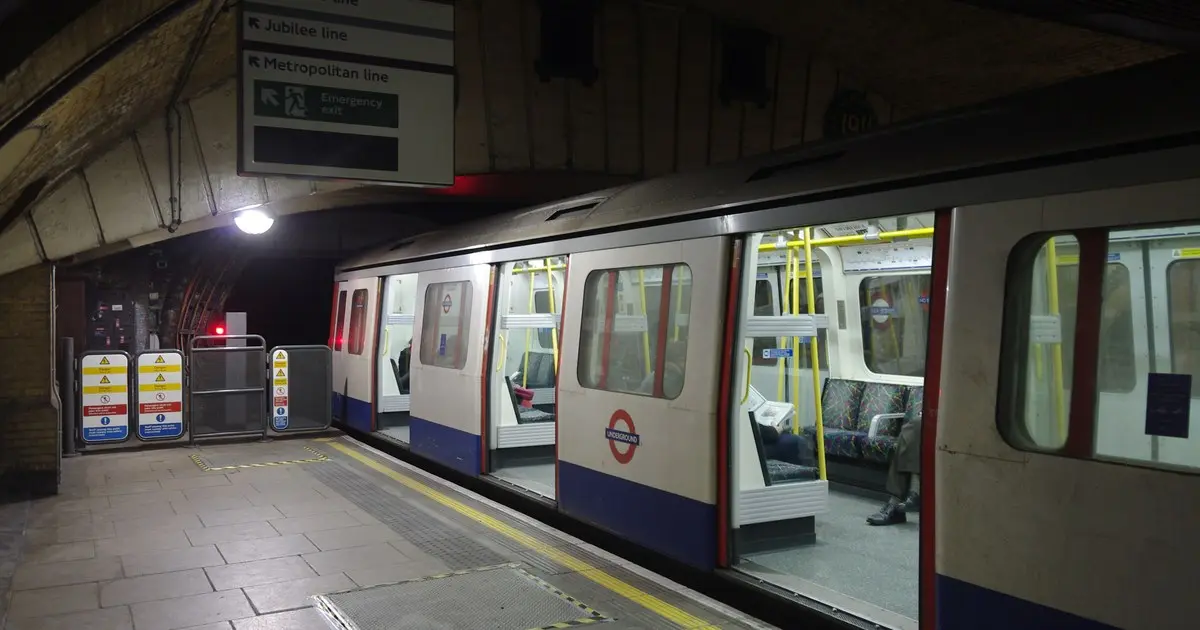
Ten years of late-night London have been charted in a new report from Transport for London and Time Out, showing how the Night Tube has helped reshape the capital’s nightlife since its launch.
The report, titled “London After Dark”, has been produced jointly by TfL and Time Out following the tenth anniversary of London Underground’s Night Tube service in August 2026. It sets out how public transport is playing an important role in helping the capital’s night-time economy to change for the better.
Night Tube has run on Friday and Saturday nights over the last decade, except for a period during which it was closed during the Covid-19 pandemic. Launched in August 2016, it turned parts of the Underground into a round-the-clock weekend service for the first time — and a decade on, the report traces what that has meant for how Londoners spend their nights.
One of the report’s headline findings is that 88 per cent — around eight in every nine — of Londoners questioned by researchers said they have stayed out later at night because they were aware that public transport was running. The research study involved around 200 Londoners from the Time Out Loud community sharing their experiences of London after dark, through surveys, diary entries, creative tasks and personal stories. Researchers also interviewed experts from across London’s night-time economy.
Shortly before the report was published, Time Out produced a ranking of 26 European cities which showed how strong each city’s nightlife and public transport are. The analysis took into account 5,848 responses and gave equal weight to nightlife and public transport. London was ranked first, ahead of Vienna and Paris. Earlier this year, London was also ranked the top city in the world for culture.
TfL says the Night Tube has been a defining feature of London as a world-leading 24-hour city over the past decade — helping Londoners and visitors enjoy what the capital has to offer, and supporting workers and businesses to boost the night-time economy. The report highlights how the service connects people with cultural venues and events in new parts of the capital, while ensuring they can travel home safely and affordably at any hour.
That late-night connection matters beyond a night out. For night workers — hospital staff, hospitality workers, cleaners and security staff — a running Tube on Friday and Saturday nights is the difference between an affordable journey home and an expensive taxi or a long night-bus ride. For venues, it widens the catchment: audiences can travel in from outer London and stay for the last set, the late film or the final round, knowing there is a train home. And for outer-London commuters, it turns a central-London evening from a logistical puzzle into something spontaneous.
The report’s message is that the Night Tube is now part of the city’s infrastructure in the same way as its daytime network — a service that, a decade after its launch, continues to drive economic activity and open up new opportunities across the capital’s night-time economy.
Related: Thameslink unveils poppy train tribute to Armed Forces
Related: Chelsea Bridge Road crash closes road with bus diversions