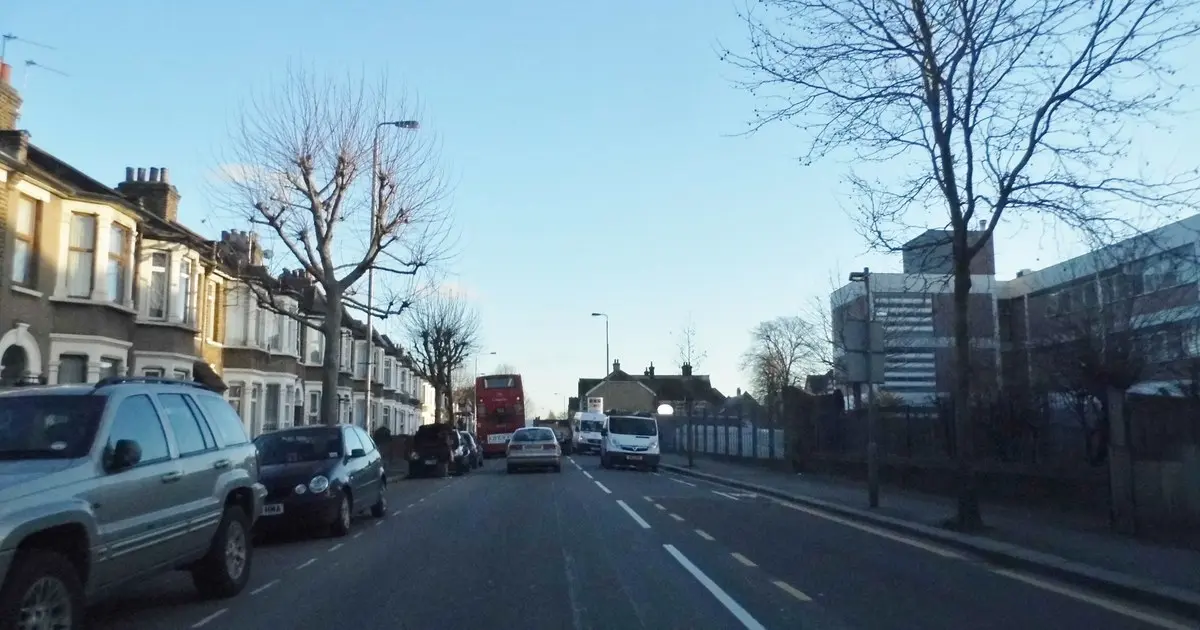
A 15-year-old boy is in hospital receiving treatment for potentially life-changing injuries after a stabbing on Church Road in Leyton, police have said.
Officers were called to reports of a boy with injuries in Church Road at 5.53pm on Tuesday, 27 October. They attended alongside the London Ambulance Service and found the teenager with stab wounds.
A Metropolitan Police spokesperson said: “At 17:53hrs on Tuesday, 27 October, officers were called to reports of a boy with injuries in Church Road, Leyton. Officers attended the scene alongside the London Ambulance Service and located a 15-year-old boy with stab wounds. He was taken hospital where he is receiving treatment for potentially life-changing injuries.”
The London Ambulance Service said it was called at 5.52pm on 27 October to reports of a stabbing on Church Road, Leyton, E10, and sent an ambulance crew and a paramedic in a fast response car. Crews treated a patient at the scene and took him to a major trauma centre as a priority.
A second 15-year-old boy has been arrested on suspicion of grievous bodily harm and remains in police custody. No charge has been announced, and the arrested teenager has not been named. Under the law, a person arrested on suspicion of an offence is not guilty of anything unless and until they are charged and convicted, and nothing in this article should be read as suggesting otherwise.
The condition of the injured boy has been described by police as potentially life-changing rather than life-threatening. Police use the two terms to draw a distinction that matters to families and to the public: a life-threatening injury is one that puts a person’s life at immediate risk, while a potentially life-changing injury is one that doctors believe could leave lasting effects on the person’s health, mobility or daily life, even where their life is not thought to be in danger. The wording is deliberately cautious — “potentially” — because the full impact of an injury often cannot be known in the first hours after it happens, and it can change as treatment progresses.
Church Road runs through a busy residential part of Leyton, close to local shops, bus routes and homes, and an incident of this kind in the early evening will have been seen or heard by people going about their day. That is why police appeals after a stabbing so often ask not just witnesses to the attack itself, but anyone who was in the area around the time, to come forward: a passing detail — someone running, a vehicle leaving quickly, an argument overheard a few minutes earlier — can matter to an investigation even when the person who noticed it did not realise its significance at the time.
When police issue an appeal, they give a reference number — in this case CAD 5427/27OCT — so that any information can be matched to the right incident quickly. CAD stands for the computer-aided dispatch system that logs every call to police, and quoting the reference helps officers connect a new piece of information to the original report without delay. People who prefer not to speak to police directly can pass information anonymously to the independent charity Crimestoppers, which does not ask for names and does not record calls.
Detectives will now be working to establish the full circumstances of what happened on Church Road on Tuesday evening. That will typically include speaking to witnesses, reviewing CCTV from the area and examining the scene, though police have not given further details at this stage and no motive has been suggested publicly.
Anyone with information is asked to call police on 101, quoting CAD 5427/27OCT, or to contact Crimestoppers anonymously on 0800 555 111.
Elsewhere in London, police are also investigating a shooting near the O2 Academy Islington in which two men were injured, while in Stanmore a man has been arrested on suspicion of grievous bodily harm after two people were taken to hospital.
Image: Church Road, Leyton (library photo, Wikimedia Commons).