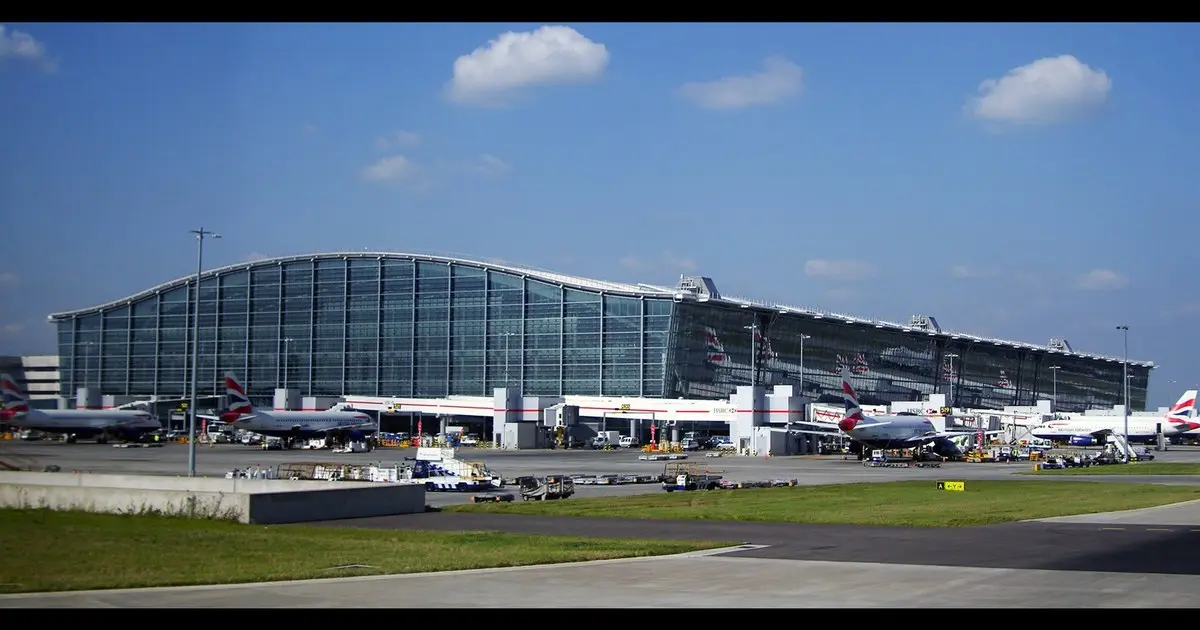
The Home Office has admitted that Nezar Hindawi, the man jailed for 45 years over the 1986 plot to blow up an Israeli jumbo jet leaving Heathrow, was released in 2013 without any licence conditions.
The admission, made this week, ends years of secrecy around the fate of a man once described by a judge as having committed a “grotesque” offence. Hindawi was freed with no monitoring, no reporting requirements and no possibility of recall — and no announcement was ever made.
The 1986 plot
Forty years ago, Hindawi, a Jordanian journalist, turned up at the Kilburn house of his pregnant girlfriend, Irish chambermaid Ann-Marie Murphy, with an offer of marriage and a supposed fairy-tale wedding in the Middle East. She was reluctant to travel alone, as he suggested, but eventually agreed.
A week later she was picked up by taxi and dropped off at Heathrow. Security checks then revealed she was carrying a bomb in her luggage: about 1.5kg of Semtex hidden behind a false panel, timed to go off roughly five hours into the flight. Hindawi had packed the bag himself. An El Al officer, uneasy about its weight, opened it again after it had already passed the airport X-ray check — a decision that saved the lives of the 358 passengers and 17 crew who would have been on board.
Hindawi was convicted at the Old Bailey in the last week of October 1986 and handed what was then Britain’s longest jail sentence: 45 years. The judge described the offence as grotesque. The High Court subsequently described Hindawi as acting as an agent of the Syrian government, which had told him to recruit a woman for the plot. On 24 October 1986, the day he was sentenced, Margaret Thatcher cut off diplomatic relations with Syria.
Ann-Marie Murphy, by then the mother of a baby called Sarah, was the chief prosecution witness. Prosecutor Roy Amlot KC later recalled Hindawi as “a cold calculating figure, without any emotion”, and said that using an innocent young woman, pregnant by him, to carry the bomb was “beyond the pale”.
How he came to walk free
Hindawi became eligible for parole in 2001, when the government obtained a deportation order. Ministers including Jack Straw and Ken Clarke successfully sought to keep him behind bars. But in 2010 new legislation took the power out of ministers’ hands and gave it to the Parole Board.
The maximum time he could have been detained was two-thirds of his term, which would have run to June 2016. Instead, the Parole Board allowed him out three years earlier, in 2013. Normally, a released prisoner remains on licence until the full term runs out — in this case 2031. That condition was waived too. No monitoring, no reports, no recall.
No explanation has been given and no announcement was made. The National Archives, consulting the Crown Prosecution Service, has refused Freedom of Information requests, citing the safety exemption and the personal-data exemption, and warning of a risk of reprisals against witnesses. The earliest the files can be opened is 2069.
All that has changed this week is the admission itself: “Hindawi was released in 2013 and without license conditions”, the Home Office confirmed.
The case remains one of the most notorious in Heathrow’s history, in contrast to more recent airport security incidents such as the Heathrow to Warsaw flight diverted to Modlin over a bomb threat.