


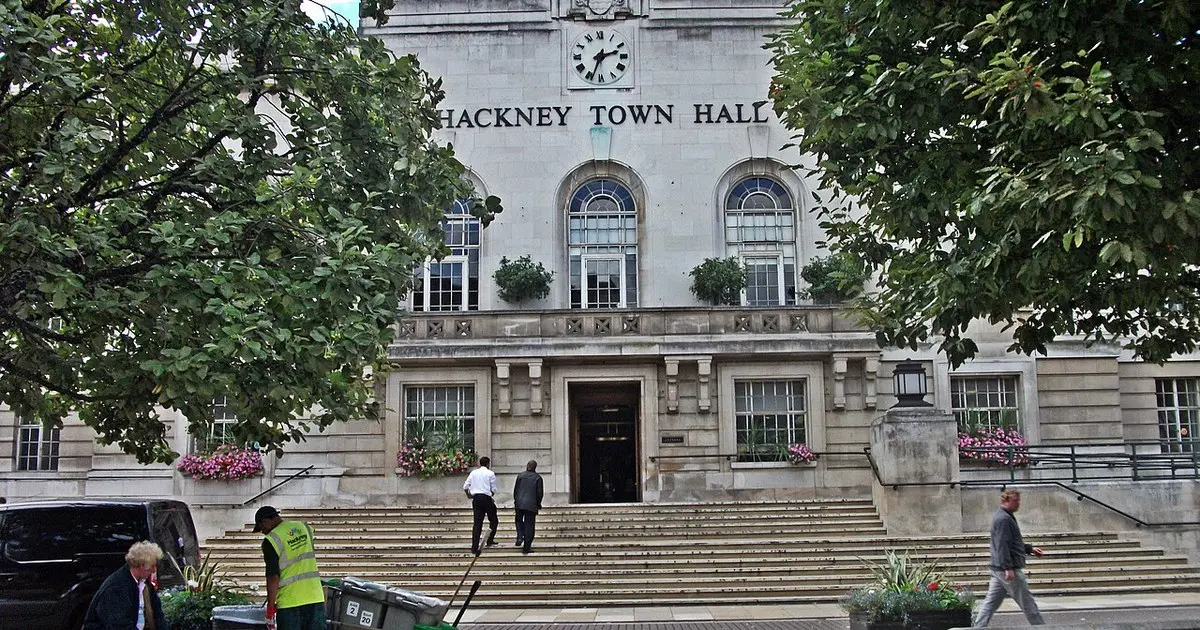
Six months after the Greens swept to power in Hackney, the borough’s mayor has called for the Metropolitan Police to be broken up — as 200 residents protested outside the Town Hall on Wednesday night over the council’s support for low-traffic neighbourhoods.
Zoë Garbett made the call after an independent review published on Wednesday found the Met remains institutionally racist, misogynistic and homophobic, three years on from Baroness Casey’s damning report into the force. The Fairfield Review, led by Dr Gillian Fairfield, rated none of the Casey review’s recommendations as showing good progress, found some progress on nine and limited progress on five.
The review found Londoners still feel separated from their police. Only around half of the Met’s officers and staff live in London, and there were about 61,600 stop and searches of Black people in the capital in the 12 months to August — around 40 per cent of all stops. Junior officers described informal, unwritten targets for stops and arrests.
The Met says it accepts all ten of the review’s recommendations. Commissioner Sir Mark Rowley said standards were higher and London safer than when he took over, and that the force had removed more than 1,800 officers and staff — but he acknowledged trust among Black and LGBT+ communities still lags and closing the gap “requires sustained commitment and structural change”.
Garbett, who contributed to the review while she was a London Assembly member, said: “People in Hackney and across London are made less safe by this policing. As an assembly member and now as Hackney mayor, I have heard the same thing over and over, from community members, experts and even the police: the Met is too big to reform. The solution is clear: break up the Met.”
She wants councils to have more control over how police operate locally, the technology and tactics they use, and how officers are held to account. “Hackney residents continue to raise concerns with me that the police are letting them down,” she said. “For anyone subjected to this kind of police negligence and repression, I will always have your back.”
The review singles out Hackney’s own community police scrutiny panel — set up under the previous Labour administration, which watches officers’ body-worn camera footage and grades each incident — as a model for the rest of London, and asks the Mayor’s Office for Policing and Crime to evaluate it and fund wider adoption. Garbett’s office called the panel a step forward but “still far from a comprehensive solution to racist overpolicing in the borough”.
Not everyone backs a break-up. London Councils stopped short of the call, and the London Assembly’s police and crime committee, chaired by Susan Hall, will question Dr Fairfield in December.
The row came as 200 residents swarmed Hackney Town Hall on Wednesday night, armed with microphones and placards, to protest against the Green council’s support of low-traffic neighbourhoods. LTNs use bollards to cut traffic, pollution and dangerous driving in residential streets, but critics say they disadvantage people who rely on cars, such as carers and those with disabilities. One organiser told the crowd the schemes were “a direct attack on working-class people”.
The Greens took control of the council in May’s local elections, gaining 38 seats as Labour lost 35 and ending a decade of Labour rule. Garbett, a long-time activist and ally of Green Party leader Zack Polanski, became mayor, with 20-year-old Dylan Law as her deputy. It was a landmark moment for the party, which took majority control of five councils and won two mayoralties, in Hackney and Lewisham.
Six months on, the reality of governing is catching up with the bold promises. A pledge to cut council tax to zero for those on the lowest incomes has stalled amid tight finances, and promises to improve childcare have yet to come to fruition. Law admitted governing was proving harder than expected: “I thought it would be an easier situation than it turned out to be. There is a lot of regulation, a lot of bureaucracy, and a lot of rules which we have to adhere to.”
Housing remains the sharpest test. The council has continued to approve large schemes — a 35-storey co-living tower at Old Street got the go-ahead, while a Hoxton community garden is to be moved to make way for 400 new homes — but the Greens’ own promises to dramatically increase social housing are running into the same financial wall.
Plans to divest the council’s pension fund from investments connected to Israel have drawn accusations from council officers and the opposition that the administration is politicising basic services, with a risk of intervention from central government. It is not the mayor’s first clash with Whitehall — earlier this month she accused the Home Office of pressuring council officers over a political event at a council building.
The administration has also been unable to stop the eviction of Charity Oppong and her eight-year-old son, who has severe autism, from a council flat this month, despite Garbett’s promise to keep the family in their home. Councillors have been able only to extend their stay until after Christmas, and Labour leader Anntoinette Bramble has questioned the mayor over what she called a broken promise. Hackney’s mayor has already admitted the family must leave despite the pledge.
Garbett has insisted her administration is “about fixing what’s broken and making people’s lives easier and more affordable”. But with the Town Hall protest, the pension row and the Met review all landing in the same week, the second half of her first year in office looks no easier than the first.