


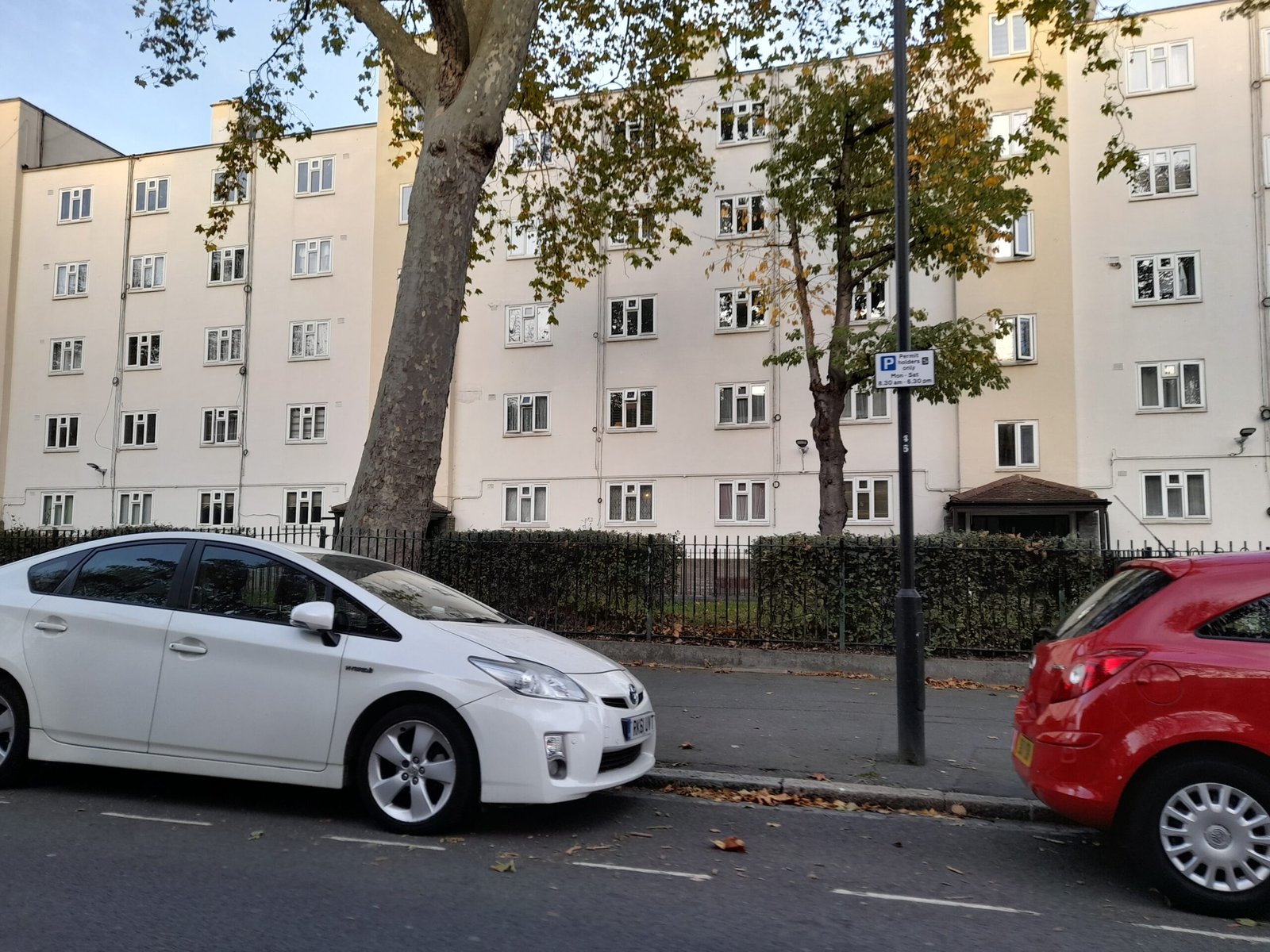
A driver who had inhaled laughing gas before travelling at more than double the speed limit on a residential street in Hackney has been jailed for causing the death of a young cyclist.
Tiffany Treanor-Johnson, 27, was sentenced at Snaresbrook Crown Court to 10 years and nine months in prison after she admitted causing death by dangerous driving. The court also disqualified her from driving for 10 years.
The sentence concerns a death in 2023, not a collision that happened today. Harry Webb, 27, was struck while cycling in Hackney on 10 September 2023 and died in hospital days later. This week’s hearing was about responsibility for that death and the standard of driving that led to it.
What happened in September 2023
Treanor-Johnson, of Bramshaw Road in Hackney, was driving an Audi at 53mph in a 20mph zone when her car hit Mr Webb. The court heard she had inhaled nitrous oxide, commonly known as laughing gas, before the collision, and that fragments of balloons used to inhale the gas were later found inside her car.
After the impact, the Audi mounted the pavement and struck another car. Treanor-Johnson was stopped from leaving the area by people nearby.
There was no trial verdict to report because Treanor-Johnson had pleaded guilty. Her plea meant the court proceeded directly to sentence on the basis that her driving was dangerous and caused Mr Webb’s death.
Mr Webb was studying for a master’s degree at the London College of Contemporary Music, which awarded his degree after his death. A white ghost bike has been placed near the scene, as has become customary in London where a cyclist has been killed, as a quiet memorial and a reminder to other road users.
What the court heard
The hearing was told Mr Webb had been speaking to his father on the phone around the time he was hit, and that a passer-by picked up the phone afterwards and urged his father to return to London. His parents, Mike and Pat Webb, described a family life permanently altered, speaking of the pain of daily life without their son.
Their evidence focused on loss rather than on the mechanics of the collision. Behind every dangerous driving case that reaches a crown court is a family living with an avoidable bereavement, and a community asked to make sense of it.
Sentencing her, Judge Rosa Dean told Treanor-Johnson: “You are solely to blame for the collision.” The judge said she was sure the driver was probably impaired by the balloons she had taken and expressed the hope that her remorse was genuine.
The 10-year disqualification is a significant part of the sentence alongside prison. It is designed as punishment and to protect the public, keeping a driver convicted of such a serious offence off the road for a prolonged period.
Readers who follow our Crime & Courts coverage of recent London prosecutions will recognise the pattern: guilty pleas, lengthy custodial terms where a death is involved, and judges emphasising deterrence as well as punishment.
Why laughing gas matters on the road
Nitrous oxide is sometimes treated casually because its effects are brief, but in a driving context brevity is not reassurance. Even short-lived impairment can affect judgement, reaction time and the ability to judge speed and distance, all critical on streets limited to 20mph because people walk and cycle close to traffic.
In this case the speed alone told a stark story. At 53mph in a 20mph zone a driver covers ground more than two and a half times faster than intended for that environment, with far less time to respond to a cyclist or a pedestrian. When impairment is added to excess speed, the risk multiplies.
The Crown Prosecution Service brings charges of causing death by dangerous driving where driving falls far below the standard expected of a competent and careful driver and causes a death. The Metropolitan Police investigates fatal collisions in London, a reminder that early witness evidence often shapes how quickly a case can be charged.
For anyone tempted to view balloons in a car as harmless, this sentence is a clear warning. If you have inhaled nitrous oxide, do not drive. The courts treat impaired, speeding driving that kills with the utmost seriousness, as this case shows.
Cycling safety in Hackney
Hackney is one of London’s busiest boroughs for cycling, with many residents choosing bikes for short journeys to work, study and the shops. Its streets mix homes, schools, buses and through traffic, which is why 20mph limits and safer cycling have been a focus for Hackney Council and Transport for London in recent years.
That context does not change the facts of this case, but it helps explain why it resonates locally. When a young student loses his life on a familiar street, neighbours understandably ask whether signage, enforcement and road layout are doing enough. Those questions are for the council, TfL and the police to answer through collision data and safety schemes.
Our recent reporting on police arrests in north London and on major police responses in west London shows how varied enforcement is across the capital. Road danger, however, remains one of the most persistent and preventable risks Londoners face.
Mr Webb’s family must now live with a loss no sentence can undo. The court’s role was narrower: to mark the seriousness of dangerous driving after inhaling laughing gas, to punish it, and to send a message that driving in this way in Hackney, or anywhere in London, will lead to prison.